
What Is Anaerobic Wastewater Treatment? A Complete Guide to Oxygen-Free Biological Treatment
Anaerobic wastewater treatment is a biological process in which microorganisms break down organic pollutants in the absence of molecular oxygen, converting them primarily into biogas-a renewable energy source rich in methane . Unlike conventional aerobic treatment, which consumes substantial energy for aeration, anaerobic systems operate with minimal or zero oxygen input, transforming waste treatment from an energy-consuming expense into an energy-generating opportunity .
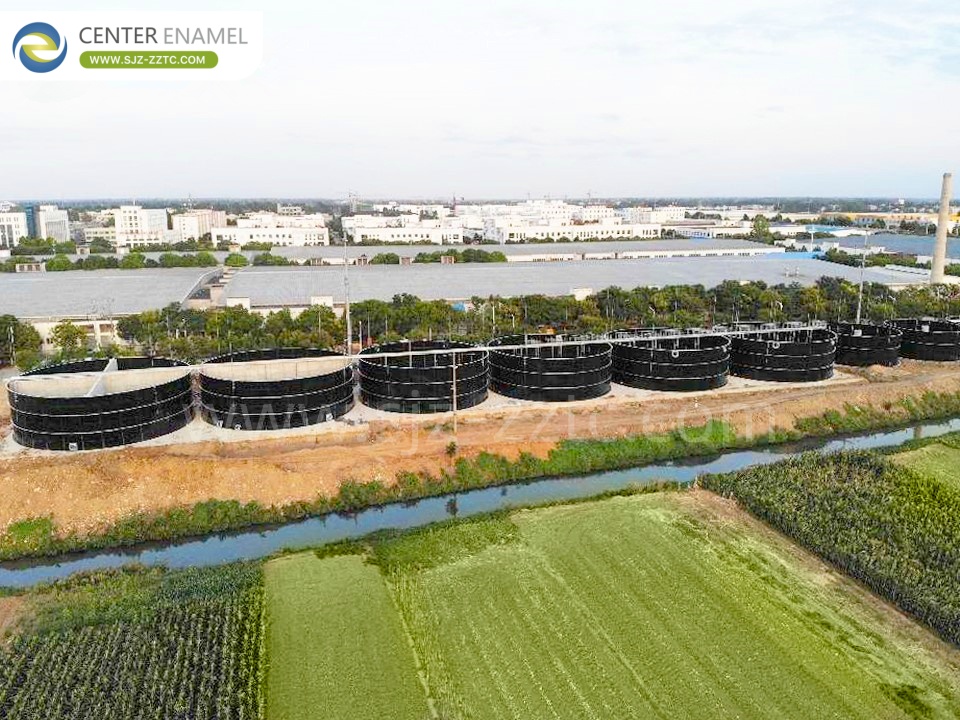
This process has been applied for over a century, evolving from simple low-rate digesters to sophisticated high-rate reactor configurations that separate sludge retention time from hydraulic retention time, enabling compact, efficient treatment even at ambient temperatures . Today, anaerobic technology serves as a cornerstone of sustainable wastewater management, particularly for industrial effluents with high organic loads and, increasingly, for domestic sewage in warm climates and decentralized settings .
The Microbiology Behind Anaerobic Treatment
The anaerobic conversion of organic matter is a complex, multi-step process carried out by distinct groups of prokaryotes working in syntrophic association. Five major functional groups drive the sequential degradation of complex substrates :
Hydrolytic bacteria initiate the process by breaking down complex polymers-polysaccharides, proteins, and lipids-into soluble monomers such as sugars, amino acids, and fatty acids. Fermentative acidogenic bacteria then convert these monomers into volatile fatty acids (VFAs), alcohols, hydrogen, and carbon dioxide. Acetogenic bacteria transform the VFAs and alcohols into acetate, hydrogen, and carbon dioxide-the primary substrates for methanogenesis.
The final and most sensitive step involves methanogenic archaea, divided into two metabolic guilds. Acetotrophic methanogens (such as Methanosaeta and Methanothrix) cleave acetate into methane and carbon dioxide, while hydrogenotrophic methanogens (including Methanoregula, Methanolinea, and Methanobacterium) combine hydrogen with carbon dioxide to form methane . The balance between these groups determines process stability; accumulation of VFAs or hydrogen indicates imbalance and potential acidification.
High-throughput sequencing studies of full-scale systems reveal that methanogenic communities display site-specific specialization. In one comparative analysis across three Chinese full-scale anaerobic systems, Methanosaeta dominated in Yunnan (54.04%) and Hunan (56.38%), while Methanothrix comprised 84.46% of archaeal populations in Anhui-a dominance that correlated with superior biogas yields .
Key Anaerobic Reactor Technologies
The evolution of anaerobic treatment has been driven by the need to retain slow-growing biomass within the reactor independently of hydraulic flow. Several high-rate configurations have achieved commercial maturity and are deployed worldwide .
Upflow Anaerobic Sludge Blanket (UASB) reactors are the most widely applied high-rate anaerobic technology globally, particularly suited for high-strength organic wastes with low suspended solids content . Wastewater enters at the bottom and flows upward through a dense sludge blanket, where biomass contacts and degrades organic matter. A gas-solids separation system at the top collects biogas and allows sludge to settle back into the blanket . UASB systems operate with very low or even zero energy demand, reducing operational costs up to tenfold compared to activated sludge .
Anaerobic Baffled Reactors (ABR) guide wastewater through a series of vertical baffles that create distinct compartments with different microbial populations. This configuration enhances retention of biomass and provides staging that approximates the sequential phases of anaerobic digestion . ABRs have demonstrated robust performance for dairy wastewater treatment in full-scale applications .
Anaerobic Membrane Bioreactors (AnMBR) combine anaerobic digestion with membrane filtration to achieve complete biomass retention and high-quality effluent. While mainstream AnMBR faces challenges at low temperatures, side-stream configurations that concentrate sewage via chemically enhanced primary treatment show promise for energy-positive treatment .
Low-Cost Tubular Digesters represent decentralized, appropriate-technology solutions widely used in South America. Constructed from flexible polyethylene geomembrane and operated without active mixing or heating, these systems achieved up to 83% COD removal and consistent biogas production in a full-scale Ecuadorian Amazon installation .
| Reactor Type | Key Feature | Typical Application | Main Limitation |
| UASB | Upward flow through sludge blanket; gas-solids separator | High-strength industrial wastewater | Requires settleable biomass; long start-up |
| ABR | Multiple compartments with vertical baffles | Dairy, food processing, domestic sewage | Larger footprint; complex flow patterns |
| AnMBR | Membrane retention of all biomass | Concentrated streams; energy recovery | Membrane fouling; higher capital cost |
| Tubular Digester | Flexible, unmixed, unheated | Decentralized rural domestic sewage | Limited nutrient removal; large area |
Performance and Treatment Efficiency
Anaerobic treatment excels at removing organic matter, but its nutrient removal capabilities are limited-an important distinction from aerobic nutrient-removal processes like A2O.
Full-scale performance data demonstrate substantial COD removal across diverse applications. A two-phase anaerobic digestion system treating dairy wastewater achieved biogas yields of 0.48 m³ per kg COD removed, with strong linear correlations between COD removal and biogas production . The UASB treating blackwater in Helsingborg, Sweden, operated at organic loading rates up to 1.5 kg COD m⁻³ d⁻¹, with earlier lab-scale studies achieving 78% COD removal and 54% methanization at 25°C over 951 days .
| Performance Parameter | Typical Range | Notes |
| COD Removal | 60–90% | Higher for industrial than domestic wastewater |
| Biogas Yield | 0.35–0.48 m³/kg COD removed | Correlates strongly with COD removal |
| Methane Content | 55–70% | Balanced with CO₂; trace H₂S and moisture |
| Sludge Production | 3–20 times less than aerobic | Well-stabilized; reduced handling costs |
| Effluent BOD | 50–200 mg/L | Often requires post-treatment for discharge |
The critical limitation is that effluents from anaerobic reactors rarely meet discharge standards for BOD, nutrients, and pathogens without post-treatment . Anaerobic treatment is thus best positioned as a pre-treatment or core treatment step, with aerobic polishing or advanced processes following to achieve full regulatory compliance.
Advantages and Limitations
Advantages:
Anaerobic treatment offers compelling operational and environmental benefits . No oxygen supply is required, eliminating aeration energy costs that dominate conventional treatment. Biogas production yields a renewable fuel that can offset facility energy demands. Sludge production is dramatically lower-three to twenty times less than aerobic processes-reducing biosolids handling and disposal burdens. Nutrient requirements are minimal due to low biomass yields, making the process suitable for nutrient-deficient industrial wastes. The process also destroys pathogens to some extent during mesophilic and thermophilic digestion.
Limitations:
Several factors constrain broader adoption . Nutrient removal is inadequate-nitrogen and phosphorus remain largely unconverted, requiring aerobic or chemical post-treatment. Low-temperature performance deteriorates significantly, limiting application in cold climates without heating or long retention times. Pathogen and odor control may be insufficient for direct discharge or reuse in populated areas. Long start-up periods are required to establish balanced methanogenic communities. Sensitivity to toxic compounds-including ammonia, sulfide, essential oils, and solvents-can disrupt process stability.
Practical Applications and Emerging Directions
Anaerobic treatment is most established for high-strength industrial wastewater from food processing, breweries, distilleries, dairies, and pulp and paper operations . In these applications, the high organic load makes energy recovery economically attractive while the warm effluent temperature supports mesophilic digestion without external heating.
For municipal wastewater, adoption has been slower in temperate climates but is growing in tropical regions and decentralized contexts. Hundreds of full-scale UASB plants operate in Latin America and India, where warm temperatures and lower energy infrastructure favor anaerobic technology . Source-separated blackwater treatment with UASB reactors has demonstrated feasibility in cold Nordic climates when operated at 35°C using district heating .
Emerging developments include bioelectrochemical systems for recovering power and nutrients, integrated microalgal systems for polishing anaerobic effluent, and two-phase configurations that separate acidogenesis from methanogenesis to enhance stability and product recovery . The concept of the energy-positive wastewater treatment plant-where anaerobic carbon capture and biogas generation exceed facility energy demands-represents the aspirational endpoint of this technological trajectory .
Frequently Asked Questions
What is the difference between anaerobic and aerobic wastewater treatment?
Anaerobic treatment uses microorganisms that thrive without oxygen, converting organic matter primarily into biogas (methane and carbon dioxide). Aerobic treatment uses oxygen-dependent microorganisms that oxidize organics into carbon dioxide and water, requiring energy-intensive aeration. Anaerobic systems produce less sludge and generate energy, but their effluent typically requires aerobic post-treatment to meet nutrient and pathogen standards .
Can anaerobic treatment remove nitrogen and phosphorus?
Anaerobic processes have limited capacity for nutrient removal. While some nitrogen is incorporated into biomass and some may be lost as ammonia gas, anaerobic treatment does not reliably achieve nitrification or denitrification. Phosphorus is similarly not removed-it remains in the effluent or is incorporated into sludge. For discharge to sensitive waters, anaerobic effluents require aerobic or chemical post-treatment for nutrient compliance .
What types of wastewater are best suited for anaerobic treatment?
Anaerobic systems perform best with high-strength organic wastewater that is warm and low in suspended solids and toxic compounds. Ideal candidates include food processing, brewery, dairy, and distillery effluents. Domestic wastewater can be treated anaerobically, particularly in warm climates or decentralized systems, but typically requires post-treatment for nutrient removal and pathogen reduction . Cold, dilute, or nutrient-rich wastewaters present greater technical challenges.