
What Is Aquaculture Effluent? Sustainable Treatment Solutions for Modern Fish Farming
What Is Aquaculture Effluent?
Aquaculture effluent is the nutrient-rich, solid-laden wastewater discharged from fish farming operations . As global aquaculture production continues to expand to meet the rising demand for seafood, the management of these waste streams has become one of the industry's most pressing environmental challenges .
The wastewater generated from aquaculture operations contains a complex mixture of dissolved and suspended materials. These include uneaten feed, fecal matter, metabolic waste products, chemicals, and potentially pathogens . In many cases, the effluent is discharged directly into surrounding water bodies, causing significant environmental damage through eutrophication, chemical toxicity, and disruption of aquatic ecosystems .
Why Aquaculture Effluent Matters
With aquaculture now accounting for approximately 46% of global seafood production and projected to reach 62% by 2030, the volume of effluent generated is growing at an unprecedented rate . The environmental consequences of untreated aquaculture effluent discharge include:
Nutrient Pollution and Eutrophication: High concentrations of nitrogen and phosphorus from feed waste stimulate excessive algal growth, leading to oxygen depletion and fish kills in receiving waters .
Chemical Contamination: Medicants, additives, and disinfectants used in farming operations can persist in the environment, potentially affecting both aquatic life and human food safety .
Pathogen Release: The discharge of disease-causing organisms from fish farms poses risks to wild fish populations and neighboring aquaculture operations .
Sediment Accumulation: Solids settle in waterways, smothering benthic habitats and altering the natural ecology of receiving environments .
Many production systems face challenges due to the large volumes of discharge water with relatively low nutrient concentrations, making cost-effective treatment difficult . This highlights the urgent need for integrated treatment approaches.
The Aquaculture Wastewater Treatment Process
Effective treatment of aquaculture effluent typically involves a multi-stage process designed to remove solids, reduce organic matter, and eliminate nutrients before discharge or reuse.
Physical Treatment: Solids Removal
The first stage targets the removal of suspended solids, including uneaten feed and fecal matter. Settlement ponds allow heavier particles to sink, while mechanical screens and filters can achieve a higher degree of removal . However, simple sedimentation approaches are often inefficient at removing dissolved nutrients .
Biological Treatment: Nutrient and Organic Matter Reduction
Biological processes are the most widely used approach for treating aquaculture effluent. These systems leverage natural microbial activity to break down organic matter and remove nitrogen and phosphorus .
Biofloc Technology (BFT) has emerged as a promising solution. Biofloc systems utilize microbial communities to convert excess nutrients into valuable microbial biomass, which simultaneously improves water quality and provides a supplementary food source for fish . This approach reduces solid waste generation and increases dissolved oxygen levels, creating a less favorable environment for harmful bacteria .
Constructed Wetlands and Aquaponic Systems integrate plant and animal production to absorb nutrients from the wastewater, but their effectiveness varies considerably and they require significant land area .
Recirculating Aquaculture Systems (RAS) represent the most advanced approach. These systems treat and reuse water continuously, significantly reducing effluent discharge and providing greater control over nutrient concentrations .
Advanced Treatment Options
For farms seeking zero-waste discharge, advanced technologies include membrane bioreactors and moving bed biofilm reactors, which can achieve high levels of nutrient removal but often at a higher capital cost .
Center Enamel: Your Comprehensive Partner for Aquaculture Wastewater Treatment
Center Enamel provides complete turnkey solutions for aquaculture wastewater treatment projects. With over 36 years of experience as Asia's largest manufacturer of Glass-Fused-to-Steel tanks, we offer the robust, durable infrastructure that modern aquaculture facilities require.
Advanced Treatment Infrastructure
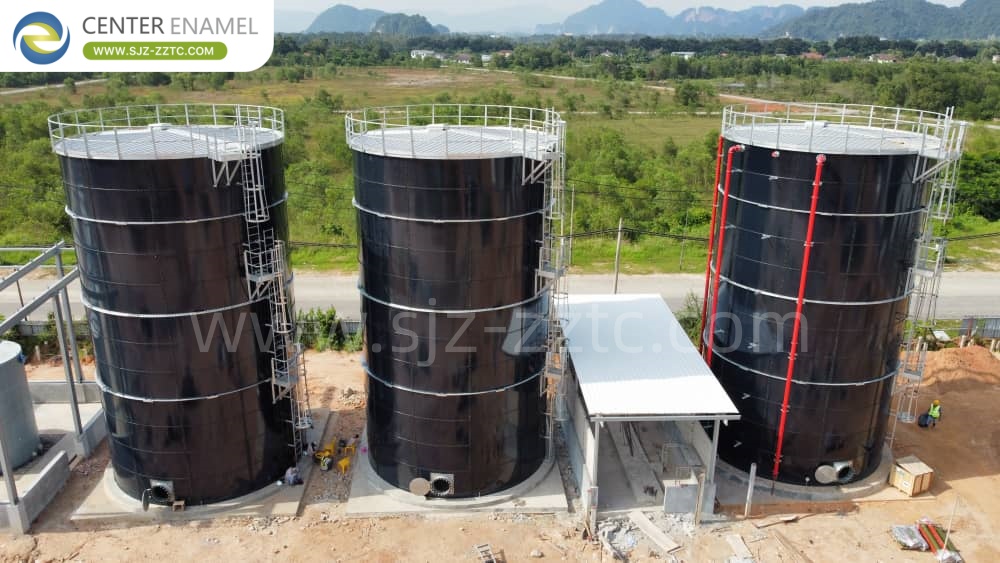
Our core offering includes Glass-Fused-to-Steel (GFS) Tanks, the global benchmark for biological treatment reactors. The glass coating, fused at temperatures exceeding 820°C, creates a chemically inert surface resistant to the organic acids and corrosive conditions found in aquaculture wastewater. With pH resistance from 1 to 14, these tanks provide a service life of over 30 years with minimal maintenance .
Comprehensive Tank Cover Solutions
Center Enamel offers a complete range of storage tank cover solutions to meet the specific needs of aquaculture wastewater treatment facilities. Our Double Membrane Roof systems provide superior air-tightness for anaerobic digestion processes and biogas collection, making them the ideal choice for energy recovery applications. For odor control and long-term durability, our Aluminum Geodesic Dome Roof delivers advanced corrosion resistance and minimal maintenance requirements. Additionally, we provide Glass-Fused-to-Steel Roofs for pressurized structures requiring excellent air-tightness, Stainless Steel Roofs for harsh environments with super anti-corrosion performance, FRP Roofs for applications where air-tightness is not required, and Aluminum Alloy Trough Deck Roofs as economical options for odor control and weather protection.
Proven Engineering for High-Organic-Load Effluents
Our expertise extends to treating the high-strength organic effluents characteristic of aquaculture operations. We supply reactor configurations including the UASB (Upflow Anaerobic Sludge Blanket) process, where wastewater flows through a dense blanket of anaerobic microorganisms that convert organic matter into biogas . The CSTR (Completely Stirred Tank Reactor) process provides reliable treatment through continuous mechanical mixing, preventing the accumulation of solids and ensuring stable biological performance.
Comprehensive EPC Services
Center Enamel offers integrated EPC (Engineering, Procurement, and Construction) services for aquaculture wastewater treatment projects:
Expert Design and Consultation: Systems tailored to your farm's specific waste composition, production scale, and environmental requirements
High-Quality Equipment Manufacturing: All components produced to international standards, including CE/EN1090, ISO9001, and NSF61
Efficient Installation: Modular, bolted tank designs enabling rapid on-site assembly with zero on-site welding
Complete Project Delivery: From initial design through to commissioning, ensuring seamless and efficient execution
Conclusion
Aquaculture effluent presents a significant environmental challenge for the rapidly growing fish farming industry. The discharge of nutrient-rich wastewater contributes to eutrophication, chemical contamination, and ecosystem disruption. By implementing professional treatment solutions, fish farms can reduce their environmental footprint while improving operational efficiency and regulatory compliance. Center Enamel provides the comprehensive infrastructure and engineering expertise to transform aquaculture wastewater from an environmental liability into a manageable part of a sustainable production system. With advanced GFS tanks, gas management systems, and full EPC services, we deliver the solutions necessary for the industry's sustainable future.
Frequently Asked Questions
1. What are the main components of aquaculture effluent?
Aquaculture effluent contains uneaten feed, fish fecal matter, metabolic waste products, chemical inputs, and sometimes pathogens. These contaminants can be dissolved or suspended in the wastewater .
2. Why is biofloc technology effective for aquaculture wastewater?
Biofloc technology uses microbial communities to convert waste nutrients into microbial biomass, improving water quality and providing a supplementary food source. It reduces solid waste, increases dissolved oxygen, and reduces the need for chemical treatments .
3. How can aquaculture farms achieve zero-waste discharge?
Farms can implement recirculating aquaculture systems (RAS), integrate constructed wetlands, or use advanced biological treatment technologies like membrane bioreactors. These approaches treat and reuse water, minimizing or eliminating effluent discharge .