
What Is Beverage Waste? Understanding Its Impact and Sustainable Treatment Solutions
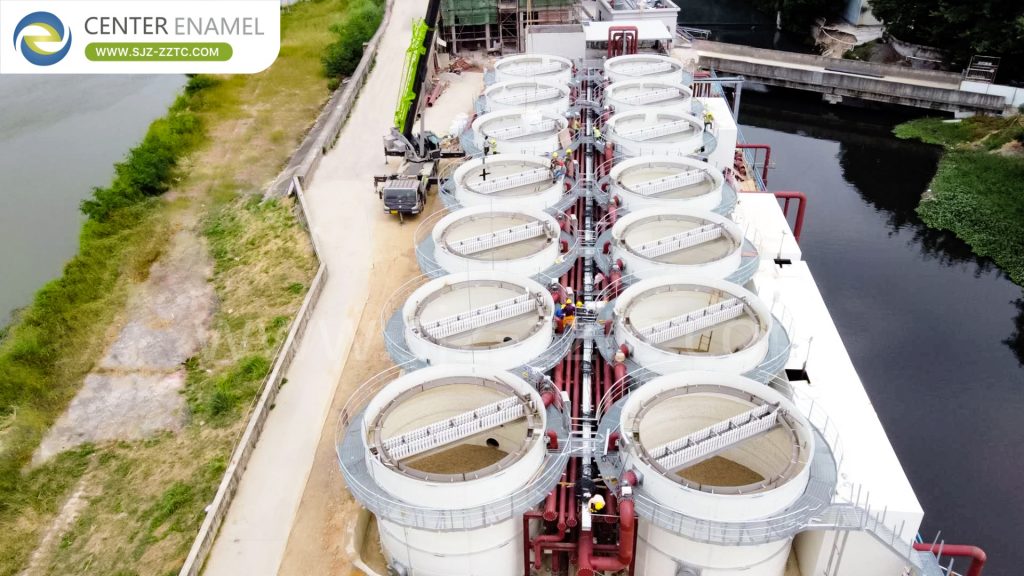
What is beverage waste? This question is becoming increasingly important as the global beverage industry continues to expand. From soft drinks and fruit juices to beer, wine, and bottled water, beverage production generates significant amounts of waste and wastewater that require careful management.
Understanding the nature of beverage waste is the first step toward implementing effective treatment solutions that protect the environment while recovering valuable resources. This article explores the types, characteristics, and treatment of beverage waste, highlighting how advanced technologies-including Center Enamel's Glass-Fused-to-Steel (GFS) Tanks-provide durable, long-term solutions for the beverage industry.
What Is Beverage Waste? A Comprehensive Definition
Beverage waste refers to the by-products, residuals, and effluents generated throughout the beverage supply chain-from raw material processing to production, packaging, and distribution. It encompasses two main categories: process waste and operational waste .
Process waste is generated continuously during normal production activities, including:
Raw material processing residues (fruit pomace, spent grains, coffee grounds)
Wastewater from washing and cleaning operations
Product losses from spills and line changeovers
Packaging waste and rejects
Operational waste, on the other hand, typically occurs when malfunctions happen with machinery, personnel errors, or packaging material defects . Understanding the difference helps beverage manufacturers identify opportunities for waste reduction and resource recovery.
Key Types of Beverage Waste
2.1 Liquid Waste (Wastewater)
The beverage industry is a substantial water consumer, generating large volumes of wastewater. Production of 1 liter of beverage can generate 1 to 5 liters of effluent . This wastewater originates from:
Bottle washing and cleaning operations
Syrup storage tank drains
Equipment and pipe cleaning (CIP cycles)
Floor washing and facility cleaning
Cooling water discharges
Spills and product losses
2.2 Solid By-Products
The beverage industry also generates considerable solid waste, including:
Spent grains from brewing and distilling
Fruit and vegetable pomace from juice production
Coffee grounds and tea leaves
Spent filtration materials
Packaging waste (glass, plastic, cardboard)
These solid by-products, often rich in bioactive compounds such as (poly)phenols and dietary fiber, represent an attractive opportunity for value-added recovery through enzymatic bioprocessing .
2.3 Finished Product Waste
Finished beverage waste-unsold or expired products-represents a significant economic and environmental challenge. Studies indicate that beverage waste accounts for approximately 18.6% of household food waste, with 60% of this considered avoidable . This waste, rich in fermentable sugars, is increasingly recognized as a valuable feedstock for resource recovery .
Characteristics of Beverage Wastewater
Understanding the characteristics of beverage wastewater is essential for designing effective treatment systems. Key characteristics include:
High Organic Load
Beverage wastewater is characterized by an essentially organic and easily biodegradable content, with COD/BOD₅ ratios typically below 2 . This indicates that the organic matter is readily biodegradable through biological treatment processes. Key pollutants include:
Biochemical Oxygen Demand (BOD)
Chemical Oxygen Demand (COD)
Total Suspended Solids (TSS)
Nutrients (nitrogen and phosphorus)
pH Variability
Beverage wastewater often exhibits significant pH fluctuations, particularly due to cleaning-in-place (CIP) cycles. The soft drinks industry, for example, produces wastewater with high pH from bottle washing and syrup storage tank drains . This variability requires robust equalization to protect downstream treatment systems from "shock" loads .
Seasonal Variability
Many beverage production facilities face substantial seasonal variability in both flow rate and contaminant concentration. This is due to:
Seasonal raw material processing cycles (viticulture, fruit processing)
Seasonal consumer demand patterns
Treatment plants must be designed to handle both peak season loads and off-season operation, often requiring dual-mode biological treatment systems .
Environmental Impact and Regulatory Requirements
Untreated beverage wastewater poses serious environmental risks. High organic loads can deplete dissolved oxygen in receiving waters, causing fish kills and ecosystem damage. Nutrients (nitrogen and phosphorus) can trigger eutrophication, while variable pH can harm aquatic life .
Regulatory requirements are becoming increasingly stringent worldwide. Multinational beverage companies must navigate complex international standards, with each country maintaining its own regulatory framework . This creates the need for flexible treatment strategies that can be adapted to meet local requirements while maintaining operational efficiency across all locations .
Beverage Waste Treatment: A Multi-Stage Approach
Effective beverage wastewater treatment requires a multi-stage approach to handle the high organic loads, variable pH, and fluctuating flow rates typical of the industry.
Primary Treatment
The first stage involves equalization and pH stabilization. Beverage effluent often fluctuates in acidity due to cleaning cycles, making stabilization essential to protect downstream biological units from shock loads . This is where robust, corrosion-resistant storage solutions like GFS Tanks prove invaluable.
Secondary Treatment (Anaerobic Core)
High-rate anaerobic reactors represent the industry standard for beverage wastewater treatment. Technologies such as:
IC (Internal Circulation) Process: Breaks down 90%+ of organics in a vertical, space-saving design
EGSB (Expanded Granular Sludge Bed) Process: Ideal for high organic loading with rapid processing speeds
CSTR (Completely Stirred Tank Reactor) Process: Particularly effective for high-solids feedstocks
These anaerobic systems convert organic pollutants into methane-rich biogas, turning a waste problem into a renewable energy opportunity.
Tertiary Treatment (Aerobic Polishing)
Systems such as SBR (Sequencing Batch Reactor) or Activated Sludge remove residual nutrients to ensure effluent meets environmental guidelines for inland or marine discharge .
Advanced Treatment for Reuse
Advanced technologies like MBR (Membrane Bioreactors) allow beverage facilities to reclaim water for non-product contact uses, such as facility cleaning or irrigation . This supports both environmental compliance and operational cost reduction.
Center Enamel's GFS Tanks: The Ideal Solution for Beverage Waste
The success of any beverage wastewater treatment system depends on the integrity and durability of its containment vessels. Center Enamel's Glass-Fused-to-Steel (GFS) Tanks offer an ideal solution for the demanding conditions of beverage waste treatment.
Exceptional Corrosion Resistance
Beverage wastewater can be highly acidic and corrosive. GFS tanks feature a titanium-rich glass coating fused to steel at over 860°C, creating an inert, non-porous barrier with resistance across the pH 1 to 14 range . This provides outstanding protection against:
Organic acids from fermentation
Caustic cleaning agents used in CIP cycles
Hydrogen sulfide produced during anaerobic digestion
Logistical Efficiency
Beverage production facilities are often located in diverse geographical regions with challenging logistics. GFS tanks are shipped in modular bolted panels, making them significantly easier to transport compared to heavy pre-cast concrete structures . This allows for rapid installation even in remote locations.
Long Service Life and Low Maintenance
GFS tanks have a proven service life of over 30 years and require minimal maintenance . Unlike concrete tanks that suffer from micro-cracking and seepage, GFS tanks maintain structural integrity and gas-tight seals for decades. The glass-smooth surface prevents biofilm buildup, reducing cleaning requirements.
Seismic Resilience
Engineered to meet international standards such as AWWA D103-09, GFS tanks provide superior performance even in challenging seismic environments .
Center Enamel's Extensive Experience in Industry Wastewater Treatment
With over 35 years of industry experience, Center Enamel has established itself as a global leader in wastewater treatment infrastructure. The company has successfully delivered projects across more than 100 countries, including:
Case1: Uruguay Industrial Wastewater Treatment Project
Tank dimensions: φ22.15 m × 6 m (H) (2 units)
Total volume: 4,622 m³
Completion year: 2024
Case2: Russia Industrial Wastewater Treatment Project
Tank dimensions:
φ2.4 m × 10.5 m (H) (1 unit)
φ5.35 m × 21 m (H) (1 unit)
Total volume: 519 m³
Completion year: 2024
Center Enamel's status as a top-tier EPC contractor is validated by significant industrial presence and a proven track record of delivering high-quality, turnkey solutions for the beverage industry worldwide .
The Future of Beverage Waste Management
The beverage industry is increasingly shifting from waste disposal to resource recovery. Advanced treatment systems that capture biogas for energy generation and reclaim water for reuse represent the future of sustainable beverage production . Center Enamel continues to develop innovative solutions that help beverage facilities reduce their environmental footprint while improving operational efficiency.
Conclusion
What is beverage waste? It is a complex challenge-and a significant opportunity. The beverage industry generates substantial quantities of organic-rich liquid and solid waste that, if left untreated, poses serious environmental risks. However, with appropriate treatment systems, this waste can be converted into valuable resources: biogas, reclaimed water, and recovered bioactive compounds.
Center Enamel's GFS tanks offer the durable, corrosion-resistant, and logistically efficient containment solution that beverage producers need to implement effective wastewater treatment. With over three decades of experience and a proven track record across more than 100 countries, Center Enamel stands ready to help beverage manufacturers turn their waste challenge into a sustainable asset.
Frequently Asked Questions (FAQs)
Q1: What is the difference between process waste and operational waste in beverage production?
Process waste is generated continuously during normal production activities, including wastewater from cleaning, product spills, and raw material processing residues. Operational waste typically occurs only when malfunctions happen with machinery, personnel errors, or packaging material defects .
Q2: Why is beverage wastewater treatment challenging?
Beverage wastewater is challenging due to its high organic load (high BOD and COD), significant pH fluctuations from cleaning cycles, and seasonal variability in both flow rate and contaminant concentration. Treatment systems must be robust enough to handle these variations while meeting increasingly stringent regulatory requirements .
Q3: Can Center Enamel's GFS tanks be used for both anaerobic digestion and equalization in beverage treatment?
Yes. GFS tanks are widely used as various aerobic and anaerobic reactors (UASB, EGSB, SBR, BAF, USR, CSTR), as well as equalization tanks, clarifiers, and sludge holding tanks in beverage wastewater treatment . Their corrosion resistance and modular design make them versatile solutions for the entire treatment process.