
What Is Cassava Waste?
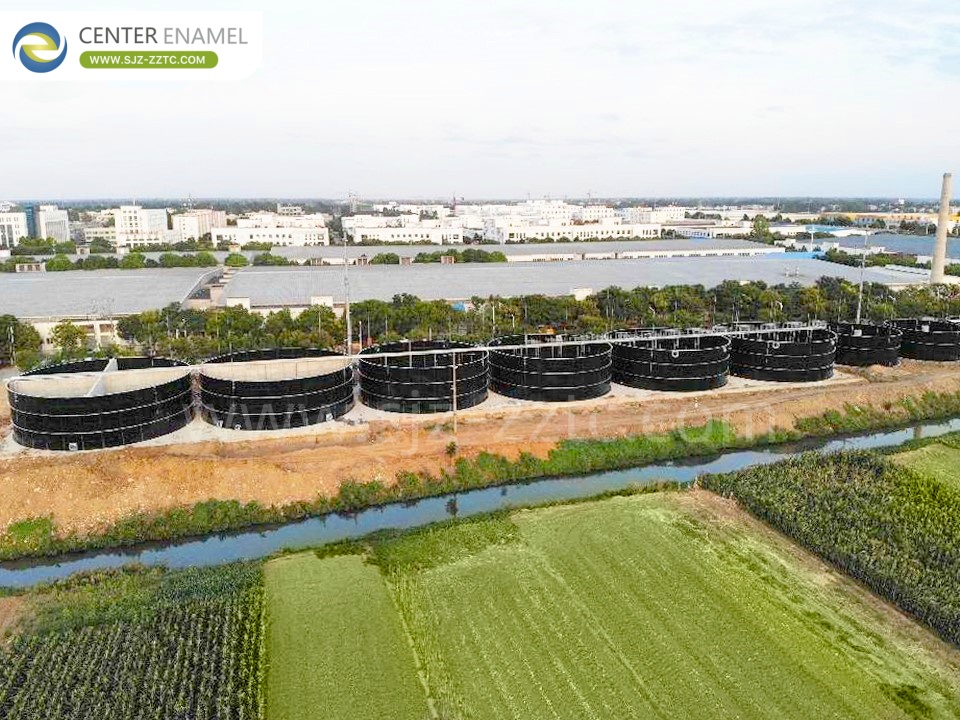
What is cassava waste? Cassava waste refers to all solid residues and liquid wastewater produced during cassava planting, harvesting, starch processing, flour production, and cassava deep processing. As one of the most important cash crops in tropical and subtropical regions, cassava generates huge amounts of by-products every year. Without proper disposal, cassava waste causes severe water pollution, soil degradation, odor emissions, and greenhouse gas release.
However, cassava waste is rich in starch, cellulose, organic matter and nutrients, making it an excellent raw material for resource utilization, especially biogas production. This article explains the definition, main types, comprehensive uses, biogas conversion benefits, and mature anaerobic solutions provided by Center Enamel.
What Is Cassava Waste? Main Types & Composition
Cassava waste is divided into solid waste and liquid wastewater, with high organic content, high COD, high moisture, and easy acidification.
1. Solid Cassava Waste
Cassava peels: Produced during raw material cleaning and peeling, rich in fiber and starch.
Cassava pulp: Residual fiber and starch after starch extraction, the largest proportion of solid waste.
Cassava stems and leaves: Agricultural residues from farm harvesting, containing abundant cellulose.
Residue scraps: By-products from cassava flour and food processing.
2. Cassava Wastewater
Produced during washing, grinding, starch separation and processing. It features high chemical oxygen demand (COD), high BOD, suspended solids, and dissolved starch. Direct discharge leads to river eutrophication and severe ecological damage.
Overall, cassava waste contains large amounts of carbohydrates, protein, fiber and organic nutrients, which are easy to decay and ferment, and ideal for anaerobic digestion and biogas generation.
Comprehensive Utilization of Cassava Waste
Cassava waste can be recycled in multiple ways to realize “waste to treasure”.
Animal Feed: Cassava pulp and peels can be dried and processed into high-quality feed, replacing corn and soybean meal, reducing breeding costs.
Organic Fertilizer: After composting or anaerobic fermentation, cassava waste becomes nutrient-rich bio-fertilizer, improving soil structure and reducing chemical fertilizer reliance.
Edible Fungi Cultivation: Cassava residue is an excellent culture medium for mushrooms and other fungi, widely used in rural planting industries.
Bioethanol Production: Rich starch in cassava waste can be fermented into industrial ethanol for clean fuel.
Biogas Energy Production: This is the most valuable and widely applicable method. Solid cassava waste and wastewater are sent to anaerobic reactors to produce biogas for power generation, heating and factory energy supply.
Advantages of Cassava Waste Generating Biogas
Converting cassava waste into biogas through anaerobic digestion has outstanding environmental, economic and industrial benefits.
1. Solve Industrial Pollution Fundamentally
Cassava processing wastewater has extremely high COD value. Traditional discharge causes serious water pollution. Sealed anaerobic biogas treatment decomposes organic matter, eliminates odor, avoids river eutrophication and protects the ecological environment.
2. Stable Clean Energy Supply
Cassava waste produces high-yield methane biogas, which can be used for cassava factory power generation, boiler heating and production energy self-sufficiency, greatly reducing fossil fuel costs.
3. Realize Circular Economy
Biogas residue and slurry after fermentation are processed into high-quality organic fertilizer, which can be returned to cassava planting bases, forming a closed loop of “planting-processing-waste-biogas-fertilizer”.
4. Reduce Carbon Emissions
Natural decay of cassava waste releases massive methane. Biogas projects capture and utilize methane effectively, cutting greenhouse gas emissions and helping enterprises obtain carbon reduction incentives.
5. Low Operating Cost & High Benefit
Biogas projects reduce waste disposal fees, energy costs and environmental penalty risks, bringing long-term economic returns for cassava processing plants.
Four Main Anaerobic Technologies for Cassava Waste
Center Enamel matches four mature anaerobic technologies for different cassava waste characteristics, wastewater concentration and project scales.
CSTR Process (Completely Stirred Tank Reactor)
CSTR is the most suitable technology for high-solids cassava solid waste and mixed wastewater. Full mechanical stirring makes organic matter and microbial flora fully mixed, preventing scum and sediment accumulation. It ensures stable fermentation and high biogas yield, ideal for large cassava starch factories.
UASB Process (Upflow Anaerobic Sludge Blanket)
UASB is widely used for cassava processing liquid wastewater. Wastewater flows upward through the sludge blanket to efficiently degrade organic pollutants. It has low operating cost, stable performance and small land occupation, suitable for medium and small cassava factories.
USR Process (Upflow Solids Reactor)
USR features simple structure, low investment and easy maintenance. It adapts to decentralized small-scale cassava waste biogas projects and rural scattered processing sites.
IC Process (Internal Circulation)
IC reactor has 3–5 times higher treatment load than traditional processes. It occupies little land and operates efficiently, perfect for large cassava industrial parks with limited construction space.
Center Enamel’s Advantages in Cassava Waste Biogas Projects
Professional Process Customization: According to the high starch and easy acidification characteristics of cassava waste, Center Enamel configures targeted CSTR, UASB and other anaerobic processes to ensure stable operation and high biogas yield.
High-Performance GFS Tanks: Glass-Fused-to-Steel (GFS) Tanks resist acid corrosion from cassava wastewater, with pH 1–14 tolerance. Bolted installation is fast, with a service life of more than 30 years, perfectly adapting to tropical industrial environments.
Strict International Quality Standards: All tank plates pass 1500V high-voltage spark test, complying with ISO, AWWA, CE and other global standards, ensuring no leakage and long-term durability.
Strong R&D & Manufacturing Strength: Owns 200+ patented enamel formulas and Asia’s largest GFS tank production base, supporting standardized prefabrication and fast delivery.
Rich Tropical Project Experience: Familiar with cassava industry characteristics and tropical climate construction conditions in Southeast Asia, South Asia and other regions, with abundant successful project cases.
One-Stop EPC Service: Covers project design, equipment manufacturing, on-site installation, commissioning and full after-sales support, saving customers time and coordination costs.
Cassava waste is inevitable by-product of cassava industry, which once brought serious pollution pressure. But it is also valuable renewable biomass resource. Rational utilization, especially converting cassava waste into biogas via anaerobic technologies, can solve pollution, supplement clean energy, and realize circular economy. With four mature anaerobic processes, durable GFS Tanks and professional one-stop EPC service, Center Enamel provides reliable biogas solutions for global cassava processing plants, promoting green, low-carbon and sustainable development of the cassava industry.