
What Is Cheese Waste? A Complete Guide to Whey Wastewater and Sustainable Treatment Solutions
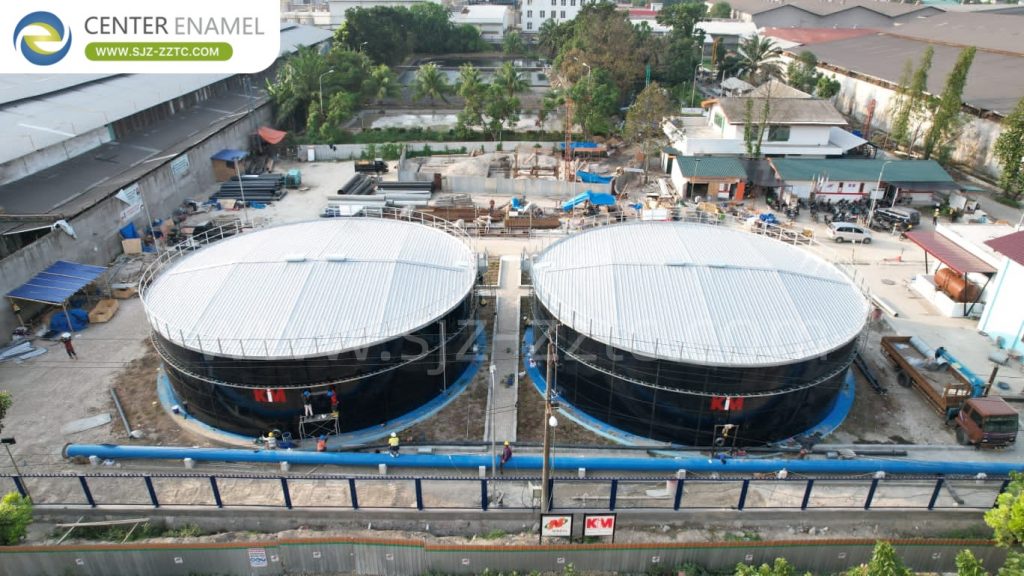
The global cheese industry produces millions of tons of cheese annually—but with it comes a significant environmental challenge. Every kilogram of cheese manufactured generates approximately 9 liters of liquid byproduct known as whey . This "cheese waste" has historically been treated as a disposal burden, often discharged into sewage systems or water bodies where it causes severe pollution . However, as the world shifts toward circular economy principles, cheese waste is increasingly recognized not as waste, but as a valuable resource that can be converted into renewable energy through advanced wastewater treatment technologies.
This article explores what cheese waste is, why it poses environmental challenges, and how anaerobic digestion transforms this organic byproduct into biogas—while introducing Center Enamel's proven solutions for dairy wastewater treatment projects worldwide.
What Is Cheese Waste? Definition and Composition
Cheese waste primarily refers to whey—the liquid remaining after milk is curdled and strained during cheese production . For every 10 liters of milk processed into 1–2 kg of cheese, approximately 8–9 liters of whey are generated . The US dairy industry alone produces 67 billion pounds of cheese whey annually .
What Is Cheese Whey Made Of?
Whey is a pale green-colored liquid composed of approximately 93–95% water, with the remaining 5–7% consisting of valuable organic compounds :
Lactose (milk sugar): 4.5–5% concentration
Whey proteins: Including β-lactoglobulin, α-lactalbumin, immunoglobulins
Minerals: Calcium, phosphorus, potassium
Fats and organic acids
Types of Cheese Whey
Based on the cheese-making process, whey is classified into two categories :
| Type | Production Method | pH Range |
| Sweet Whey | Produced from rennet-coagulated cheeses (semi-hard and hard cheeses) | 6.0–7.0 |
| Acid Whey | Produced from acid-coagulated cheeses (cottage, ricotta, Greek yoghurt) | 4.5–5.8 |
Acid whey contains lower protein and lactose but higher ash and mineral content compared to sweet whey .
Why Cheese Waste Is an Environmental Concern
Cheese whey is one of the most challenging industrial effluents due to its high organic strength. Its environmental impact is severe:
High Organic Load
Whey is characterized by extremely high biochemical oxygen demand (BOD) and chemical oxygen demand (COD) values :
BOD: 30,000–50,000 mg/L
COD: 60,000–80,000 mg/L
For comparison, typical domestic sewage has a BOD of approximately 300 mg/L. Whey is roughly 100–150 times more polluting than household wastewater.
Environmental Consequences
When discharged untreated, cheese whey causes :
Oxygen depletion: Microorganisms breaking down organic matter consume dissolved oxygen, suffocating aquatic life
Eutrophication: Excess nutrients cause algal blooms and ecosystem degradation
Soil and groundwater contamination: Improper land application leads to pollution
Greenhouse gas emissions: Anaerobic decomposition in landfills or open lagoons releases methane
A Growing Problem
In Mexico alone, approximately 3.5 million tons of milk are converted to cheese annually, with over 1.5 million liters of whey potentially discharged untreated into the environment . The situation reflects a global challenge—the dairy industry must address wastewater management while maintaining economic viability.
Anaerobic Digestion: Turning Cheese Waste into Biogas
The most sustainable and cost-effective method for treating cheese wastewater is anaerobic digestion (AD) . This biological process breaks down organic matter in an oxygen-free environment, producing methane-rich biogas while significantly reducing the pollutant load.
How Anaerobic Digestion Works for Cheese Wastewater
The biological process occurs in four stages :
Hydrolysis: Complex lactose and proteins are broken down into simple soluble monomers
Acidogenesis: Monomers convert to volatile fatty acids and alcohols
Acetogenesis: Intermediates are refined into acetic acid and hydrogen
Methanogenesis: Specialized microorganisms convert these precursors into methane
Challenges of Cheese Whey Anaerobic Digestion
Cheese whey presents specific challenges for anaerobic digestion :
Rapid acidification: The high lactose content is highly biodegradable, leading to rapid pH drops that inhibit methane-producing bacteria
Salt and mineral concentrations: Corrosive elements can damage standard containment systems
Temperature sensitivity: Requires precise temperature control for optimal microbial activity
Co-digestion Solutions
Research demonstrates that co-digesting cheese whey wastewater with other organic wastes improves performance. A study showed that a 25% cheese whey / 75% poultry slaughterhouse wastewater mixture achieved 84% biodegradability—significantly higher than mono-digestion of either substrate alone . Similarly, co-digestion of cheese whey with greywater achieved 43% COD conversion to bio-methane while mitigating acidification risks .
Economic Viability
Techno-economic analysis confirms the commercial potential of cheese waste-to-energy projects. A study of a 50 m³/day cheese whey treatment facility found annual profits of approximately USD 49,976 from biogas, biochar, carbon credits, and pollution reduction, with an 8.97-year payback period .
Center Enamel: Expert Solutions for Dairy Wastewater Treatment
Center Enamel (Shijiazhuang Zhengzhong Technology Co., Ltd.) has been a global leader in engineering, procurement, and construction (EPC) for wastewater treatment and biogas projects. With over 35 years of experience and installations across more than 100 countries, the company provides comprehensive turnkey solutions for dairy and cheese wastewater treatment .
Center Enamel's Approach to Cheese Wastewater Treatment
Center Enamel implements an integrated treatment solution designed specifically for the demanding characteristics of cheese whey wastewater :
1. Comprehensive Pre-Treatment
Screening and solids removal
Equalization and pH buffering
Fat, oil, and grease (FOG) removal using DAF (Dissolved Air Flotation) systems
2. High-Efficiency Anaerobic Digestion
IC Bioreactor (Internal Circulation) technology for high-rate treatment
Proprietary Glass-Fused-to-Steel (GFS) tanks as reactor vessels
Designed to handle high organic loads while maximizing biogas recovery
3. Post-Treatment and Resource Recovery
Biogas utilization for power and heat generation (CHP)
Nutrient-rich digestate for agricultural application
Water reuse through advanced tertiary treatment
GFS Tanks: The Premier Containment Solution
Center Enamel's proprietary Glass-Fused-to-Steel (GFS) tanks are the gold standard for dairy biogas infrastructure . Manufactured using a high-temperature firing process (820°C–930°C) that fuses glass to steel, these tanks offer:
Superior corrosion resistance: Inert glass surface withstands organic acids and hydrogen sulfide in cheese wastewater
Exceptional durability: Service life exceeding 30 years
Rapid, modular construction: Bolted assembly eliminates on-site welding, reducing quality risks
Gas-tight design: Essential for safe biogas capture and storage
Advanced Biogas Management Systems
For cheese wastewater treatment projects, Center Enamel provides specialized biogas management solutions :
Double Membrane Biogas Holders: Integrated flexible roofs that collect and store biogas from anaerobic digesters; maintain stable gas pressure and ensure continuous supply to utilization equipment
Aluminum Dome Roofs: Self-supporting, corrosion-resistant roofs for storage tanks; provide effective odor control and structural integrity without internal columns
Conclusion
Cheese waste is a powerful environmental pollutant, but it is also an untapped renewable energy resource. Through anaerobic digestion, cheese whey wastewater can be transformed into methane-rich biogas that powers industrial operations, reduces fossil fuel dependence, and eliminates the environmental burden of untreated discharges.
Center Enamel brings decades of expertise, world-class equipment, and turnkey project delivery to cheese wastewater treatment projects worldwide. From GFS tanks and double membrane biogas holders to complete EPC services, the company provides the infrastructure needed to turn waste into value—supporting the dairy industry's journey toward sustainability and energy independence.
Frequently Asked Questions (FAQs)
1. What makes cheese waste so environmentally harmful?
Cheese whey has an extremely high organic load, with BOD values 100–150 times higher than typical domestic sewage . When discharged untreated, it depletes oxygen in water bodies, causes eutrophication, contaminates groundwater, and releases methane—a potent greenhouse gas.
2. How can cheese whey wastewater be converted into renewable energy?
Cheese whey undergoes anaerobic digestion, where microorganisms break down organic matter in an oxygen-free environment . This biological process produces biogas (50–75% methane, 25–45% CO₂), which can be used for electricity generation, heating, or upgraded to biomethane. Modern high-rate technologies like IC Bioreactors maximize biogas yields.
3. What is the payback period for a cheese wastewater-to-energy project?
Techno-economic studies show that integrated cheese whey treatment/biogas projects can be highly profitable. A 50 m³/day facility demonstrated annual profits of approximately USD 49,976 with an 8.97-year payback period . Financial returns come from biogas energy, carbon credits, fertilizer production, and reduced pollution treatment costs.