
What Is Considered Agricultural Waste?
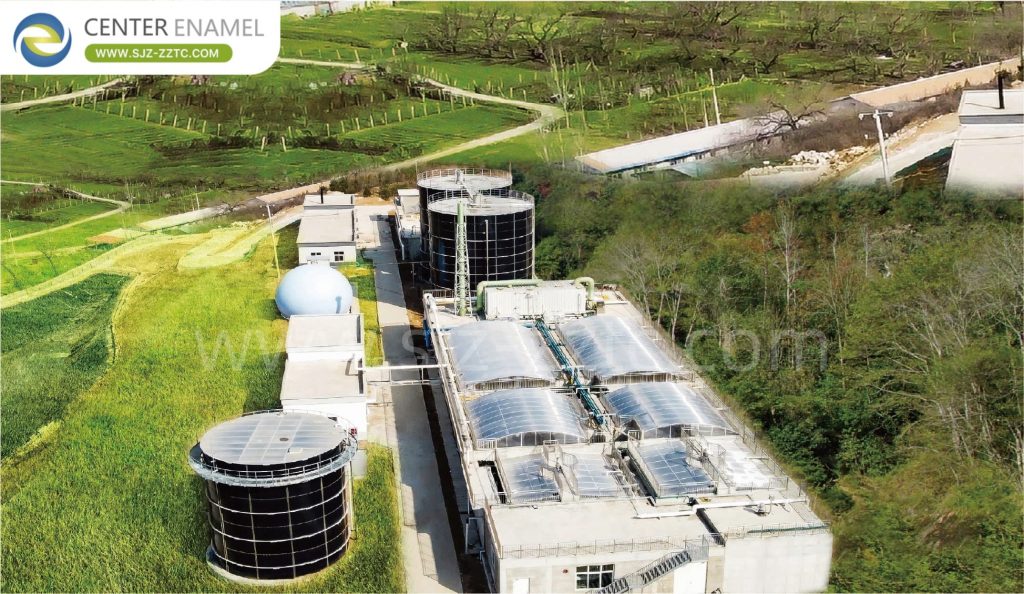
When discussing circular agriculture and renewable biogas energy, the core question always stands out: What is considered agricultural waste? Per FAO and US EPA official definitions, agricultural waste covers all unused organic and inorganic by-products generated during crop cultivation, livestock breeding, agro-processing and farm maintenance across the full agricultural industrial chain. Roughly one-quarter of global agricultural produce turns into waste annually, most of which is randomly piled or openly incinerated, triggering severe air pollution, soil eutrophication and groundwater contamination worldwide.
Instead of being discarded as pollution sources, over 80% organic agricultural waste can be recycled into clean biogas and high-value organic fertilizer through mature anaerobic digestion and standardized Agricultural Waste Biogas Project, with GFS Tanks as core storage and fermentation equipment and Center Enamel delivering full-turnkey EPC services globally. This article systematically classifies agricultural waste, analyzes its disposal challenges, introduces mature anaerobic technologies, tank advantages and professional project contractor strengths.
Standard Classification: What Counts as Agricultural Waste
Based on international agricultural and environmental regulatory standards, agricultural waste is split into four primary organic categories (the main feedstock for biogas production) plus a small fraction of non-organic farm garbage:
Crop Cultivation Residues
These are leftover plant biomass after grain, cash crop and fruit harvest, the largest-volume agricultural waste globally. Typical examples include rice straw, wheat husk, corn cob, sugarcane bagasse, oil palm empty fruit bunch, cassava stalk, orchard pruned branches and discarded inferior tropical fruits (mango, banana, durian). Rich in cellulose and easily degradable carbohydrates, such residues become premium raw materials for anaerobic biogas fermentation. Major producing regions span Southeast Asia’s palm belts, South Asia’s rice plains and Latin America’s sugarcane planting zones.
Livestock & Poultry Manure Waste
Generated from intensive cattle, pig, chicken and buffalo breeding farms, including concentrated dung, breeding slurry and poultry litter. With high nitrogen and organic content, random stacking of manure seeps into soil and groundwater under rainfall, causing nutrient overload and water pollution. Manure is the most stable feedstock for continuous biogas production in medium and large-scale farm biogas plants.
Agro-Processing By-products
Industrial leftovers from rice mills, sugar refineries, fruit juice factories and oil pressing plants: rice bran, fruit pomace, molasses, palm pulp and seed shells. Most processing factories abandon such by-products nearby without treatment, forming concentrated pollution sources around agricultural industrial parks while possessing excellent anaerobic fermentation potential.
Field & Garden Green Waste
Fallen leaves, farm weeds and trimmed twigs from regular orchard and farmland maintenance, usually mixed with livestock manure to adjust feedstock carbon-nitrogen ratio and improve overall biogas output efficiency.
Non-organic Auxiliary Farm Waste
Plastic mulch films, pesticide bottles and fertilizer packaging bags; these rarely participate in biogas fermentation and require separate recycling or harmless incineration, excluded from mainstream biogas feedstock scope.
Global Challenges Caused by Improper Agricultural Waste Disposal
Unregulated treatment of massive agricultural waste brings multi-layered ecological and economic losses across all agricultural nations:
First, open-air crop residue burning triggers seasonal haze and sharp PM2.5 rise, violating local environmental protection laws and threatening residents’ respiratory health, a prevailing issue in India, Thailand and Pakistan during post-harvest seasons.
Second, random manure stacking leads to nitrogen and phosphorus infiltration into aquifers, contaminating rural drinking water and triggering farmland soil acidification.
Third, huge renewable biomass resources are wasted while countries rely heavily on expensive imported coal and natural gas for rural power and heating, inflating agricultural operating costs.
Fourth, scattered smallholder farms make centralized waste collection difficult due to backward rural logistics and inconsistent collection standards, while modular biogas plants equipped with flexible GFS Tanks effectively solve decentralized waste recycling pain points.
Less than 10% of global agricultural organic waste is currently recycled for biogas or fertilizer, resulting in billions of dollars of annual circular economic losses worldwide.
Core Principle: Convert Agricultural Waste to Biogas via Anaerobic Digestion
Organic agricultural waste transforms into methane-rich biogas under fully oxygen-free sealed environments inside reactors and airtight GFS Tanks, going through four fixed biochemical stages at 30~38℃ medium temperature optimal for anaerobic microbes:
- Hydrolysis: Hydrolytic bacteria break down macromolecular cellulose, protein and fat into soluble small organic molecules.
- Acidification: Acid-forming microbes split intermediate products into short-chain volatile fatty acids.
- Acetogenic Stage: Complex fatty acids convert into acetic acid, the key substrate for methane synthesis.
- Methanogenic Stage: Strictly anaerobic methanogens consume acetic acid, hydrogen and CO₂ to generate raw biogas (55%~70% methane), which is safely stored inside airtight GFS Tanks.
After purification (desulfurization, dehydration), biogas can be used for on-site power generation, farm boiler heating or refined into Bio-CNG for vehicle fuel; leftover digestate is processed into organic fertilizer to replace chemical fertilizers, realizing full closed-loop resource recycling of agricultural waste.
4 Four Mainstream Anaerobic Technologies for Agricultural Waste Biogas Projects
Center Enamel globally promotes four mature customized anaerobic reactor solutions, matching different waste solid content, project scale and regional tropical/temperate climate, all perfectly paired with supporting GFS Tanks as reactor or storage containers:
CSTR (Continuous Stirred-Tank Reactor)
Equipped with full internal mechanical stirring devices to prevent feedstock stratification and crusting under high humidity. Excellent anti-shock loading adapts to high-solid mixed feed (manure + crop pomace), securing stable continuous biogas output for large centralized dairy and pig farms; reactor main bodies can be assembled with bolt-type GFS Tanks.
UASB (Upflow Anaerobic Sludge Blanket)
Depends on self-formed high-activity granular sludge to degrade pre-treated low-solid waste such as diluted pig slurry and rice husk. Features small footprint and low power consumption, ideal for medium-sized biogas plants beside agro-processing factories with matched regulating and biogas storage GFS Tanks.
USR (Upflow Solid Reactor)
Low-cost simplified structure without complicated pre-crushing pretreatment, outstanding anti-clogging performance fits high-fiber dry straw and orchard branches. Perfect for small village-level decentralized biogas projects in remote rural mountainous areas and greatly cuts small farmers’ initial construction investment.
IC (Internal Circulation Anaerobic Reactor)
High-efficiency internal-circulation reactor with organic removal efficiency 3–5 times higher than conventional equipment, smaller land occupation and higher biogas yield. Suited for oversized centralized biogas hubs near large agro-industrial parks equipped with bulk large-volume GFS Tanks for massive biogas stockpiling.
Core Competitive Advantages of GFS Tanks in Agricultural Waste Biogas Projects
As indispensable core equipment covering anaerobic fermentation tank, waste equalization tank, biogas storage tank and digestate storage tank across full biogas project flow, GFS Tanks stand out versus traditional concrete and carbon steel tanks with six prominent strengths adapted to all global climate conditions (tropical rainy, arid dry, temperate cold):
- Outstanding Anti-corrosion Performance: High-temperature sintered enamel coating fuses with steel surface to resist erosion from acidic fermented slurry, sulfur-containing biogas and humid/coastal corrosive air, avoiding rust leakage plaguing ordinary steel tanks in rainy seasons.
- Premium Airtightness: Special bolt-sealing design effectively stops biogas leakage, maximizes methane collection rate and eliminates on-site explosion risks to guarantee safe stable Biogas Technology operation.
- Modular Prefabricated Bolt Assembly: All enamel panels are factory-produced and bolt-connected on-site without field welding, shortening construction cycle and avoiding poor welding quality caused by sudden heavy rains or high ambient moisture.
- Over 30-Year Service Life: Smooth inner tank surface prevents organic sludge scaling and residue adhesion, drastically reducing long-term daily maintenance expenditure for farm operators.
- Stable Thermal Adaptability: Consistent physical property amid drastic seasonal temperature fluctuation, stabilizing reactor internal fermentation temperature for uninterrupted biogas production.
- Wide Multi-scenario Compatibility: Single set of GFS Tanks can flexibly switch usage for waste conditioning, anaerobic digestion and gas storage, compatible with all four CSTR/UASB/USR/IC anaerobic processes.
Center Enamel’s Rich Global EPC Experience in Agricultural Waste Biogas Projects
As a world-leading full-turnkey EPC contractor specialized in biomass recycling and GFS Tanks R&D & manufacturing, Center Enamel owns over 200 independent enamel technology patents and all products comply with ISO, AWWA international quality standards, with completed biogas projects across more than 100 countries spanning Asia, Europe, Africa and North America over 30+ years:
- Full one-stop EPC service: Covers site survey, customized anaerobic process design, GFS Tanks production, cross-border transportation, on-site installation, system commissioning, operator training and lifelong after-sales maintenance. Engineers adjust CSTR/UASB/USR/IC parameters and tank layout per local agricultural waste features and regional climate to realize personalized project solutions.
- Regional localized after-sales teams: Southeast Asia and South Asia on-site technical branches provide timely troubleshooting, equipment maintenance and process upgrades for running farm biogas plants, helping investors shorten project payback period via optimized anaerobic configuration and higher biogas yield.
Clarifying what is considered agricultural waste lays the foundation for standardized farm biomass recycling and sustainable biogas industrial development globally. Most organic crop residues, livestock manure and agro-processing leftovers are valuable renewable feedstock instead of pollution sources; four mature anaerobic technologies plus high-performance GFS Tanks enable efficient waste-to-biogas conversion and closed-loop circular agriculture.
With decades of cross-border EPC experience and mature customized solutions, Center Enamel keeps supporting global farmers and agricultural enterprises to build cost-effective Agricultural Waste Biogas Project, cutting fossil fuel dependence, curbing farmland pollution and boosting long-term rural ecological and economic sustainable development worldwide.