
What is Domestic Sewage?
Domestic sewage, frequently referred to as municipal wastewater or sanitary sewage, encompasses the liquid waste generated by residential communities, commercial establishments, institutions, and public facilities. Unlike industrial effluent, which contains specialized chemical waste from manufacturing or processing plants, domestic sewage originates primarily from daily human activities associated with living and hygiene.
The principal sources of domestic sewage include household bathrooms (from toilets, bidets, and showers), kitchens (originating from sink washing, dishwashers, and food preparation), and utility rooms (comprising laundry discharge and general floor cleaning). While these streams appear relatively mundane, the aggregate volume generated daily by urban and rural populations represents a massive environmental load. Understanding what domestic sewage is requires analyzing its complex physical, chemical, and biological makeup, which necessitates robust, systematic treatment before safe discharge or environmental reuse.
Physical, Chemical, and Biological Characteristics
The composition of raw domestic sewage is remarkably consistent across global populations, consisting of approximately 99.9% pure water and roughly 0.1% dissolved and suspended solid impurities. Despite the seemingly small percentage of pollutants, this fraction contains millions of organic and inorganic compounds that pose severe environmental and public health hazards if left untreated.
Physically, domestic sewage is characterized by a turbid appearance, noticeable odor, and varying temperatures influenced by local climate and water usage habits. Chemically, it exhibits high concentrations of carbonaceous organic matter, quantified primarily via Biochemical Oxygen Demand (BOD) and Chemical Oxygen Demand (COD), alongside essential nutrients like total nitrogen and total phosphorus. Biologically, raw sewage teems with billions of microorganisms per milliliter, including enteric bacteria, viruses, protozoa, and helminth eggs. These pathogens originate from human waste and can transmit waterborne diseases such as cholera, typhoid, and hepatitis if sanitary barriers fail.
Primary Treatment and Solids Separation
The wastewater treatment process begins with primary treatment, a physical stage designed to remove settleable and floatable solids from raw domestic sewage. Incoming sewage first passes through mechanical bar screens and comminuters that intercept large debris, plastics, rags, and sticks to protect downstream pumping equipment from clogging or mechanical failure.
Following screening, the wastewater flows into grit chambers where heavy inorganic particulates such as sand, gravel, and silt settle out due to velocity reduction. Once grit is removed, the wastewater enters primary sedimentation tanks or clarifiers. In these large basins, the flow velocity slows significantly, allowing approximately 50 to 70 percent of suspended solids to settle to the bottom as primary sludge while greases, oils, and light scums float to the surface for mechanical skimming. Primary treatment significantly reduces the suspended solid loading, preparing the liquid effluent for subsequent biological purification stages.
Secondary Biological Treatment Processes
Following primary clarification, domestic sewage undergoes secondary treatment, which utilizes microbial metabolism to dissolve and colloidal organic pollutants that physical methods cannot capture. Secondary treatment is the cornerstone of modern water resource recovery facilities, relying heavily on suspended-growth or attached-growth biological processes.
In suspended-growth systems, such as the conventional Activated Sludge Process (ASP) or Sequencing Batch Reactors (SBR), air or pure oxygen is continuously injected into aeration basins where microorganisms (activated sludge) consume organic matter. Alternatively, attached-growth systems like Trickling Filters or Moving Bed Biofilm Reactors (MBBR) provide specialized media surfaces upon which microbial slime layers colonize. In both configurations, heterotrophic bacteria convert complex organic carbon into carbon dioxide, water, and new biomass, while specialized nitrifying bacteria oxidize toxic ammonia into harmless nitrate compounds. Secondary clarifiers subsequently separate the biological biomass from the purified water.
Tertiary Treatment and Advanced Water Purification
When environmental discharge standards are exceptionally stringent or when treated domestic sewage is reclaimed for agricultural irrigation, landscape watering, or industrial reuse, tertiary (advanced) treatment becomes mandatory. Tertiary treatment targets residual suspended solids, recalcitrant organics, and dissolved nutrients that survive secondary treatment.
Nutrient removal processes utilize specialized anoxic and anaerobic zones to achieve biological nitrogen removal via denitrification and biological phosphorus removal (EBPR) through phosphorus-accumulating organisms. To eliminate remaining microscopic turbidity and pathogenic microorganisms, facilities employ advanced filtration technologies-such as dual-media sand filters or membrane bioreactors (MBR)-followed by disinfection disinfection steps like ultraviolet (UV) irradiation, chlorination, or ozonation. These multi-barrier approaches ensure that effluent water quality meets or exceeds strict ecological standards, protecting receiving rivers, lakes, and coastal ecosystems.
Advantages of GFS Tanks in Wastewater Treatment
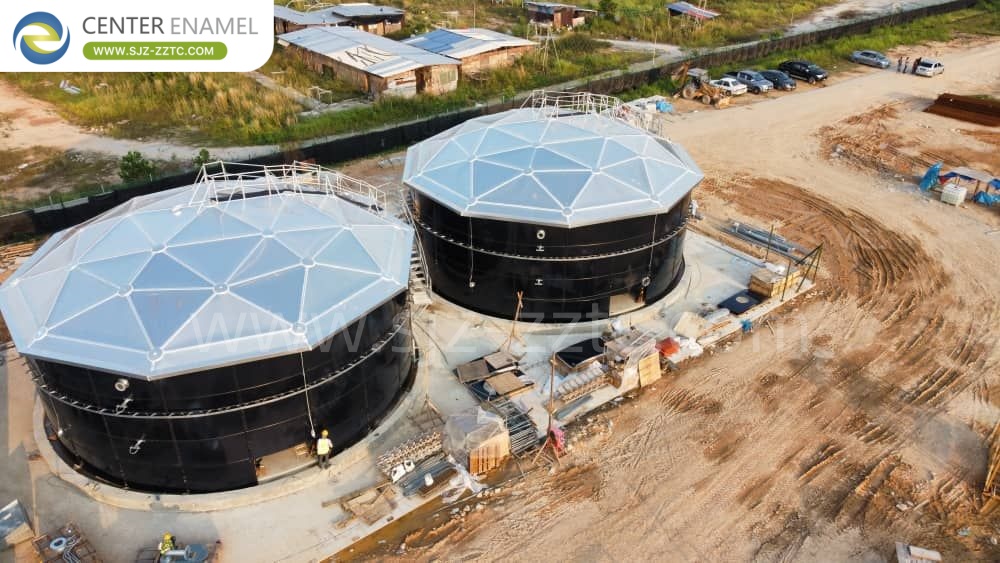
The structural integrity and corrosion resistance of containment vessels are paramount in municipal and domestic sewage treatment facilities, where aggressive chemical environments, moisture, and biological activity constantly threaten infrastructure. Glass-Fused-to-Steel (GFS) tanks-also known as Glass-Lined-Steel tanks-have emerged as the premier engineering choice for equalization basins, anaerobic digesters, aeration tanks, and secondary clarifiers.
GFS tanks are manufactured by fusing specialized inorganic glass enamel frit onto high-strength structural steel plates at temperatures exceeding 800°C. This high-temperature thermal fusion creates a permanent, inert molecular bond between the glass coating and the steel substrate, combining the unmatched tensile strength and flexibility of steel with the exceptional corrosion resistance of glass. Key advantages of GFS tanks in wastewater applications include:
Superior Corrosion Resistance: The inert glass surface withstands aggressive acidic and alkaline environments, hydrogen sulfide gases, and harsh chemical treatments without degrading or delaminating.
Rapid Construction and Modular Assembly: Prefabricated bolted panel construction allows rapid erection using lightweight bolting equipment, cutting project timelines significantly compared to poured-in-place concrete.
Extended Operational Lifespan: GFS tanks offer a service life exceeding 30 years with minimal ongoing maintenance requirements, eliminating the need for periodic exterior repainting or corrosion remediation.
Scalability and Flexibility: Modular bolted designs enable straightforward capacity expansion, dismantling, or relocation to accommodate changing municipal treatment demands.
Aesthetic and Environmental Appeal: Available in diverse exterior colors, GFS tanks maintain a clean, professional appearance while preventing pollutant leaching into surrounding soil and groundwater.
Center Enamel's Professional Wastewater Solutions
Implementing reliable domestic sewage treatment infrastructure requires world-class engineering, proven manufacturing expertise, and comprehensive project execution capabilities. Center Enamel delivers advanced, professional wastewater treatment and containment solutions tailored for municipal, industrial, and decentralized sanitation projects globally. Utilizing state-of-the-art automated manufacturing facilities and rigorous ISO-certified quality control systems, Center Enamel provides premium Glass-Fused-to-Steel (GFS) tanks, fusion-bonded epoxy tanks, stainless steel structures, and complete package treatment equipment.
Center Enamel combines proprietary material research, dedicated engineering design teams, and extensive international project experience to support clients from initial concept and structural sizing through cross-border logistics and on-site commissioning. Whether engineering large-scale municipal sewage treatment plants, decentralized village sanitation networks, or specialized industrial wastewater systems, Center Enamel ensures long-term operational stability, optimized lifecycle costs, and absolute compliance with international environmental standards.
Frequently Asked Questions (FAQ)
What is domestic sewage?
Domestic sewage is the wastewater generated by residential, commercial, and institutional activities-primarily comprising greywater from sinks, washing machines, and showers, alongside blackwater from toilets containing human waste and organic pollutants.
Why is primary treatment important before biological processing?
Primary treatment physically removes large debris, grit, and 50 to 70 percent of suspended solids through screening and sedimentation, preventing equipment damage and reducing the organic load entering biological secondary treatment stages.
What makes GFS tanks superior to traditional concrete tanks in sewage treatment?
GFS tanks combine steel strength with glass corrosion resistance, offering faster modular installation, a 30+ year lifespan, superior resistance to hydrogen sulfide and chemical corrosion, and elimination of periodic painting maintenance required by concrete or welded steel alternatives.