
What Is Done With Digestate?
Digestate—the residue after anaerobic digestion—is mostly managed as a fertilizer and soil amendment. It carries the majority of the feedstock’s nitrogen, phosphorus, and potassium in a stabilized, readily available form. Common routes are direct land application, solid–liquid separation (to make a stackable fiber and a pumpable liquor), composting, and nutrient recovery; the choice follows local agronomy rules and transport distance.
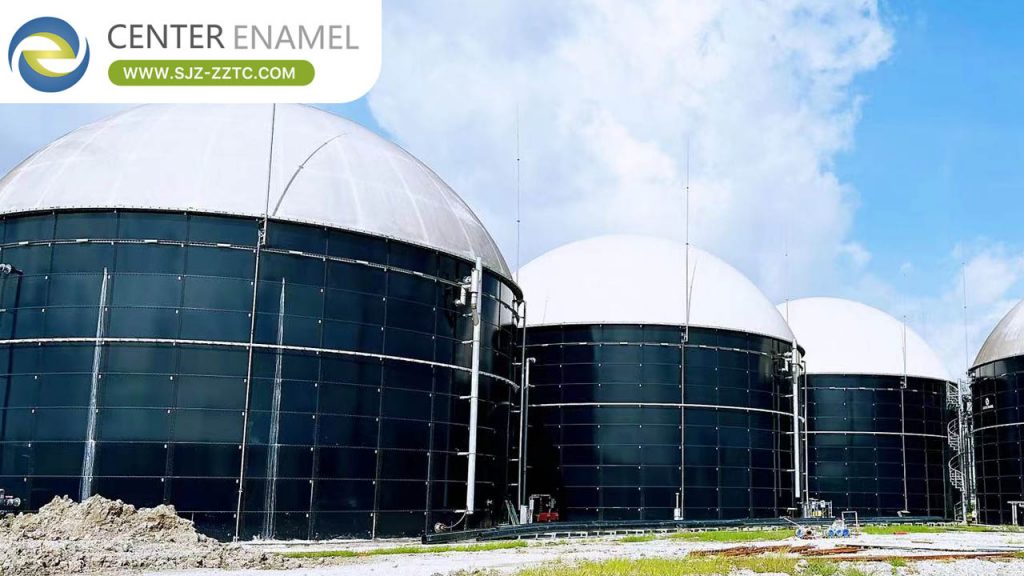
What Digestate Is
Digestate is the undigested and microbial biomass left after methane is stripped out. Unlike raw manure, it is odor-reduced and partially stabilized, with ammonia-N that plants can use. It still contains most original nutrients, so it is a resource, not just waste.
Route 1 – Land Application
The dominant route: spread on cropland to replace synthetic fertilizer. Nutrients (N-P-K) and organic matter improve soil; agronomic rate limits protect water. Winter spreading is often restricted, so storage tanks are needed to bridge the gap.
Route 2 – Solid–Liquid Separation
A screw press or separator splits digestate into a fibrous solids cake (good for bedding or composting) and a nutrient-rich liquor (easier to spread or further treat). Separation cuts transport cost and lets each fraction be used where it fits best.
| Route | Output | Use |
| Land application | whole digestate | fertilizer, soil organic matter |
| Separation | solids + liquor | bedding / spreadable N-P-K |
| Composting | stabilized solids | soil amendment, sale |
| Nutrient recovery | struvite, NH₃ | fertilizer products |
Route 3 – Composting and Nutrient Recovery
Solids can be composted into a saleable product; the liquor can feed struvite or ammonia-stripping recovery to make concentrated fertilizer. These add value but need extra equipment and permitting.
Applications and Limits
Digestate use is governed by nutrient-loading and pathogen rules; heavy metals and ammonia must be watched. Over-application causes runoff and odor. Storage (often GFS tanks) bridges non-spreading seasons, and separation reduces volume hauled.
Technical Considerations
Plan storage capacity for the closed spreading window, manage ammonia (it is the volatile, valuable N), and match application rate to crop uptake. A corrosion-resistant, sealed tank prevents odor and nutrient loss during storage.
How to Manage Digestate Well
Default to land application at agronomic rate, add separation if transport is long or bedding is useful, compost or recover nutrients only where permitted and economic, and size storage to the off-season.
Project Case Study
Inner Mongolia Wushenqi Cattle Farm. A CSTR biogas project processing cattle manure with an insulation system for cold-climate operation. Cattle manure digestion produces large digestate volumes that must be stored and land-applied through harsh winters—a real example of digestate management driving tank and storage design in a cold region.
| Project | Inner Mongolia Wushenqi Cattle Farm |
| Location | Ordos City, Inner Mongolia, China |
| Industry | Livestock / Renewable energy |
| Application | Cattle manure biogas + digestate |
| Product | CSTR digester + digestate storage |
| Capacity | CSTR, cold-climate insulated |
| Quantity | manure digestion system |
| Material | Glass-Fused-to-Steel (GFS) |
| Standards | ISO 28765, AWWA D103 |
| Status | Delivered reference project |
About Center Enamel
Center Enamel brings international project experience in exactly this digestate chain: across cattle, pig, and palm projects in Asia, Africa, and the Middle East, the company supplies sealed GFS digestate storage tanks that bridge closed spreading seasons without odor or nutrient loss. The bolted, enamel-fired tanks (ISO 9001, ISO 28765, AWWA D103, CE/EN 1090) are proven in humid and cold climates alike, and the company’s reference base shows digestate storage specified alongside the digester from the start of the project.
Advantages and Limitations
Digestate is a genuine fertilizer and soil resource that offsets synthetic input cost. Limits: it is bulky and regulated—transport distance, nutrient limits, and storage for the off-season decide whether it is a benefit or a burden.
Comparison: Digestate Routes
| Criterion | Land apply | Separate | Compost/recover |
| Value captured | N-P-K | N-P-K + bedding | concentrated product |
| CapEx | low | medium | high |
| Best when | near fields | long haul | permitted + economic |
Digestate is managed mainly as a fertilizer and soil amendment—land-applied at agronomic rate, or separated, composted, and nutrient-recovered. It carries most feed N-P-K; sealed GFS storage bridges the off-season and keeps it a resource, not a problem.
Frequently Asked Questions (FAQ)
Q1: What is done with digestate?
A: Mostly land-applied as fertilizer; also separated into solids/liquor, composted, or nutrient-recovered (struvite, ammonia).
Q2: Is digestate a fertilizer?
A: Yes—it carries most of the feed’s N-P-K in a stabilized, plant-available form, better than raw manure on odor.
Q3: Can it be separated?
A: Yes—a screw press splits it into stackable fiber (bedding/compost) and a nutrient-rich liquor.
Q4: What are the limits?
A: Nutrient-loading and pathogen rules, ammonia loss, winter spreading bans, and transport distance.
Q5: How is it stored?
A: In sealed, corrosion-resistant tanks (GFS) sized to the closed spreading window.
Q6: Is separation worth it?
A: Yes when fields are far or bedding is useful; it cuts haul volume and splits value streams.
Tell us your feed, digestate volume, and spreading rules. We will size sealed GFS digestate storage and separation-ready tanks, and confirm standards and delivery for your site.