
What Is ETP in Sugar Industry? A Complete Guide to Effluent Treatment Plants
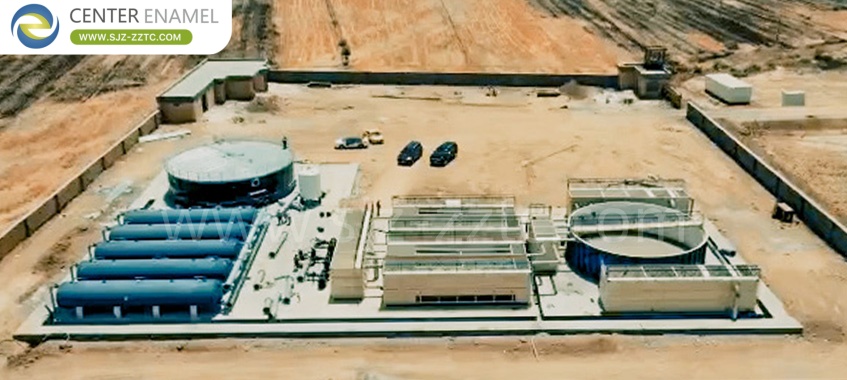
The sugar industry plays a vital role in global food production, but it also generates significant environmental challenges. Sugar mills produce large volumes of highly contaminated wastewater that, if discharged untreated, poses serious risks to aquatic and terrestrial ecosystems . This raises an essential question: What is ETP in sugar industry?
An Effluent Treatment Plant (ETP) in the sugar industry is a facility designed to treat wastewater generated during sugar production. Its primary function is to manage industrial liquid waste in accordance with pollution control board standards, enabling safe disposal into the environment or reuse for agricultural and industrial purposes . This article explores the characteristics of sugar industry effluent, the treatment processes involved, and how Center Enamel's Glass-Fused-to-Steel (GFS) Tanks provide durable, corrosion-resistant solutions for ETP infrastructure.
What Is ETP in Sugar Industry? Definition and Purpose
An Effluent Treatment Plant (ETP) in the sugar industry is a mechanism used to treat the wastewater and effluent generated by sugar mills . Sugar processing consumes large volumes of water—approximately 1,000 liters of effluent are generated for every tonne of sugarcane crushed . Without proper treatment, this wastewater pollutes both aquatic and terrestrial environments.
The ETP serves several critical functions:
Pollution control: Removing organic and inorganic contaminants to meet regulatory discharge standards
Water conservation: Treating wastewater for reuse in irrigation or industrial processes
Resource recovery: Capturing biogas from anaerobic treatment for energy generation
Environmental compliance: Meeting standards set by pollution control boards such as India's Central Pollution Control Board (CPCB)
Characteristics of Sugar Industry Effluent
Understanding the characteristics of sugar industry wastewater is essential for designing effective treatment systems. Sugar mill effluent exhibits several distinctive properties :
| Parameter | Raw Effluent Range |
| pH | 4.0 – 6.5 |
| COD (Chemical Oxygen Demand) | 2,000 – 3,000 mg/L |
| BOD (Biological Oxygen Demand) | 1,000 – 1,200 mg/L |
| TSS (Total Suspended Solids) | 500 – 600 mg/L |
| TDS (Total Dissolved Solids) | 5,000 – 6,000 mg/L |
| Oil and Grease | 10 – 50 mg/L |
Additional characteristics include brown coloration, high temperature, odor problems, and a high percentage of dissolved organic and inorganic waste .
Sources of Effluent in Sugar Mills
Sugar is produced through milling, clarification, evaporation, crystallization, and centrifugation. Wastewater is generated from multiple sources :
Mill House: Cleaning and washing operations, juice leakages, and spillages of mill bearing water
Boiling House: Chemical boiling, tube cleaning, excess condensate water, pump leakages, and cleaning operations
Blow-down: Spray pond water discharge
Condenser Cooling Water: Used in the crystallization process
Soda and Acid Wastes: From cleaning-in-place (CIP) cycles
Sugar Industry ETP Treatment Processes
A comprehensive ETP for sugar mills employs a combination of physical, chemical, and biological treatment processes to remove contaminants .
Primary Treatment
Step 1 – Screening: Untreated effluent passes through fixed bar screens to remove larger suspended solids and floatable materials .
Step 2 – Oil and Grease Removal: The effluent enters an oil and grease treatment chamber where gravity separation allows oil and grease to float to the surface for removal using mechanical skimmers .
Step 3 – Equalization: Raw effluent is collected in an equalization tank where continuous mixing homogenizes wastewater from various sources, ensuring consistent characteristics for downstream treatment .
Step 4 – pH Neutralization: Sugar industry effluent typically has low pH (4.0–6.5). Lime, caustic soda, or soda ash is dosed to adjust pH to neutral levels (6.5–8.5) before further treatment .
Secondary (Biological) Treatment
Step 5 – Primary Clarification: Neutralized effluent enters a primary clarifier where suspended solids settle out. Clarifier sludge is sent to sludge drying beds .
Step 6 – Anaerobic/Aerobic Treatment: The core biological treatment stage involves :
Anaerobic treatment: Organic matter decomposes in the absence of oxygen, producing methane and CO₂. Common technologies include UASB (Upflow Anaerobic Sludge Blanket) reactors, which are the global gold standard for sugar industry wastewater treatment .
Aerobic treatment: Organic matter decomposes in the presence of oxygen using activated sludge processes, bio-towers, or extended aeration tanks.
Step 7 – Secondary Clarification: Treated wastewater enters a secondary clarifier where biological sludge settles. Part of the sludge is returned to the aeration tank to maintain bacterial populations, while the remainder is sent to sludge management .
Tertiary Treatment
Step 8 – Chlorination: Treated wastewater is disinfected with chlorine to maintain residual chlorine levels between 0.5 and 1.0 ppm .
Step 9 – Multi-Grade Filtration: Treated water passes through a multi-grade filter to remove remaining suspended solids .
Step 10 – Activated Carbon Filtration: An activated carbon filter removes color, odor, and residual organic compounds. For advanced treatment, membrane processes like reverse osmosis can further treat wastewater for reuse .
Treated Effluent Quality Standards
Regulatory bodies like India's CPCB prescribe discharge standards for treated sugar industry effluent :
| Parameter | Inland Surface Water | Land for Irrigation |
| pH | 6.5 – 8.5 | 5.5 – 9.0 |
| BOD | < 30 mg/L | < 100 mg/L |
| COD | < 250 mg/L | – |
| TSS | < 100 mg/L | < 200 mg/L |
| Oil & Grease | < 10 mg/L | < 10 mg/L |
Treated effluent can be safely used for irrigation, providing nutrients (nitrate, phosphate, sulfate) beneficial for sugarcane growth while conserving freshwater resources .
Center Enamel's GFS Tanks for Sugar Industry ETP
The success of any sugar industry ETP depends on the durability and corrosion resistance of its containment infrastructure. Center Enamel's Glass-Fused-to-Steel (GFS) Tanks provide an ideal solution for the demanding conditions of sugar wastewater treatment.
Exceptional Corrosion Resistance
Sugar industry effluent is characterized by low pH, high temperatures, organic acids, and corrosive compounds . GFS tanks feature a titanium-rich glass coating fused to steel at over 820°C, creating an inert, non-porous barrier with resistance across the pH 1 to 14 range . This provides outstanding protection against:
Volatile organic acids formed during sugar fermentation
Hydrogen sulfide (H₂S) produced during anaerobic digestion
Caustic cleaning agents and acidic wastewater
Long Service Life and Low Maintenance
GFS tanks have a proven service life of over 30 years and require minimal maintenance . The glass-smooth surface prevents the buildup of organic scale and biofilm, ensuring consistent performance. Unlike concrete tanks that suffer from micro-cracking and seepage, GFS tanks maintain structural integrity and gas-tight seals for decades.
Modular Bolted Design for Rapid Installation
Center Enamel's GFS tanks feature a modular bolted design, allowing fast installation even in remote locations . Components are prefabricated in a factory and shipped in standard containers for rapid assembly with minimal heavy machinery. This bolted approach offers critical advantages:
No on-site coating required: The GFS coating is factory-applied, immune to site-level humidity that can compromise concrete waterproofing
No curing time: Tanks are "ready-to-fill" the moment the last bolt is torqued, unlike concrete basins that require up to 28 days to cure
Support for Advanced Anaerobic Technologies
Center Enamel provides GFS tanks optimized for anaerobic treatment processes critical to sugar industry ETP :
UASB Process (Upflow Anaerobic Sludge Blanket): The global standard for sugar wastewater treatment. GFS tanks provide smooth internal surfaces to prevent sludge adhesion, ensuring the "sludge blanket" remains active and stable.
IC Process (Internal Circulation): A next-generation high-rate anaerobic technology with two UASB reactors stacked vertically, ideal for high organic loads.
CSTR Process (Completely Stirred Tank Reactor): Designed for wastewater with high suspended solids or high viscosity, such as sugar beet pulp or thick cane molasses residue.
USR Process (Upflow Solids Reactor): A simplified high-efficiency system for high-solid organic waste.
Center Enamel's Experience in Industry Wastewater Treatment
With over 35 years of industry experience and 200+ patented enamel formulas, Center Enamel has established itself as a global leader in wastewater treatment infrastructure . The company serves as the primary drafter of the China GFS Tank Industrial Standard, defining quality benchmarks followed by the global industry.
Case1: Uruguay Industrial Wastewater Treatment Project
Tank dimensions: φ22.15 m × 6 m (H) (2 units)
Total volume: 4,622 m³
Completion year: 2024
Case2: Russia Industrial Wastewater Treatment Project
Tank dimensions:
φ2.4 m × 10.5 m (H) (1 unit)
φ5.35 m × 21 m (H) (1 unit)
Total volume: 519 m³
Completion year: 2024
One-Stop Turnkey Solutions for Sugar Industry ETP
Center Enamel is not merely a tank supplier; it is a complete one-stop solution provider for sugar industry ETP projects . For a sugar mill, this means dealing with a single contractor for everything:
Process engineering design: Customized anaerobic/aerobic treatment system design
Equipment manufacturing: GFS tanks, FBE tanks, membrane gas holders, agitation systems
Civil works guidance: Foundation design and construction oversight
Mechanical installation: Fast, no-weld assembly
Commissioning and training: Operator training and system optimization
This fully integrated, turnkey approach ensures that all components work harmoniously, delivering the highest treatment efficiency at the lowest total cost of ownership. For sugar mill operators, this means compliance security, energy savings (biogas recovery can offset up to 30% of a mill's thermal energy requirements), and low maintenance over decades of operation .
Conclusion
Understanding what is ETP in sugar industry is essential for sugar mill operators, environmental engineers, and regulatory bodies alike. Sugar industry effluent is characterized by high organic loads (BOD: 1,000–1,200 mg/L, COD: 2,000–3,000 mg/L), low pH, high temperatures, and significant suspended solids. Effective treatment requires a multi-stage approach: primary (screening, oil removal, equalization, neutralization), secondary (anaerobic and aerobic biological treatment), and tertiary (chlorination, filtration, carbon adsorption).
Center Enamel's Glass-Fused-to-Steel tanks provide the durable, corrosion-resistant, and logistically efficient containment solution that sugar mills need for reliable ETP operation. With over 35 years of experience, a proven track record in the sugar and agricultural sector, and comprehensive turnkey EPC services, Center Enamel stands ready to help sugar producers turn their wastewater challenge into a sustainable, compliant, and even profitable operation.
Frequently Asked Questions (FAQs)
Q1: Why is an ETP essential for sugar mills?
Sugar mills generate approximately 1,000 liters of effluent for every tonne of sugarcane crushed. This wastewater has high BOD, COD, low pH, and contains organic and inorganic pollutants. An ETP is essential to treat this wastewater to meet regulatory standards, prevent pollution of water bodies, and allow water reuse for irrigation or industrial purposes .
Q2: What anaerobic treatment technologies are commonly used in sugar industry ETPs?
Common anaerobic technologies include UASB (Upflow Anaerobic Sludge Blanket), IC (Internal Circulation), CSTR (Completely Stirred Tank Reactor), and USR (Upflow Solids Reactor). These technologies break down organic matter in the absence of oxygen, producing biogas (methane) that can be captured for energy generation .
Q3: How do Center Enamel's GFS tanks benefit sugar industry ETPs?
GFS tanks provide exceptional corrosion resistance against organic acids and low pH effluent, a service life exceeding 30 years with minimal maintenance, and a modular bolted design that allows fast installation without on-site welding or lengthy concrete curing. They are engineered to withstand the volatile conditions of sugar wastewater treatment