
What is Fermentation in Wastewater Treatment? A Complete Guide to Biological Conversion
In the evolving landscape of environmental engineering, wastewater treatment has moved beyond simple disposal to become a cornerstone of the circular economy. Among the most fascinating and valuable biological processes used in modern treatment plants is fermentation. But what exactly does fermentation mean in the context of wastewater? This comprehensive guide explores the science, applications, and benefits of fermentation in wastewater treatment, and why it is becoming an essential tool for resource recovery.
Understanding Fermentation: A Biological Definition
Fermentation is a biological process in which microorganisms break down complex organic matter into simpler compounds without the net oxidation of the substrate. Unlike aerobic processes that require oxygen, fermentation occurs in an oxygen-free (anaerobic) environment. During fermentation, specialized bacteria-known as fermentative bacteria-convert carbohydrates, proteins, and lipids into a mixture of simple organic compounds.
The primary products of fermentation include:
Volatile fatty acids (VFAs) such as acetic, propionic, and butyric acid
Alcohols like ethanol
Organic acids and other easily biodegradable substrates
This definition distinguishes fermentation from anaerobic digestion. While both occur without oxygen, fermentation is intentionally limited to the early biochemical stages, whereas anaerobic digestion continues through to methane production.
How Fermentation Differs from Anaerobic Digestion
One of the most common points of confusion is the distinction between fermentation and anaerobic digestion. They share the same starting point-the breakdown of organic matter in an oxygen-free environment-but diverge significantly in their end goals and products.
| Feature | Fermentation | Anaerobic Digestion |
| Biological Stages | Hydrolysis + Acidogenesis | Hydrolysis + Acidogenesis + Acetogenesis + Methanogenesis |
| End Products | Volatile fatty acids, alcohols, lactic acid | Methane (biogas) and carbon dioxide |
| Primary Objective | Produce valuable intermediate compounds | Maximize energy recovery as biogas |
| Application | Carbon source production, bioplastics, nutrient removal | Power generation, grid injection, sludge reduction |
Fermentation stops the degradation process early to capture valuable intermediate compounds, while anaerobic digestion completes the full pathway to biogas.
The Biochemical Stages of Fermentation
Fermentation in wastewater typically involves two key biological processes:
1. Hydrolysis
Complex particulate organic matter-such as proteins, lipids, and polysaccharides-cannot be directly utilized by microorganisms. In this initial stage, extracellular enzymes break down these large polymers into smaller, soluble compounds. This hydrolysis step is often the rate-limiting factor in the overall process.
2. Acidogenesis (Fermentation)
The soluble compounds produced during hydrolysis are then fermented by acidogenic bacteria into a mixture of short-chain organic acids, alcohols, and other simple molecules. These products, collectively known as volatile fatty acids (VFAs), are the primary valuable output of wastewater fermentation.
The term "acidogenic fermentation" is often used to describe this controlled process, emphasizing its focus on acid production rather than complete mineralization.
Why Ferment Wastewater? Key Applications and Benefits
The shift toward fermentation in wastewater treatment is driven by its ability to transform waste streams into valuable products.
1. Production of Volatile Fatty Acids (VFAs)
VFAs are versatile platform chemicals with numerous applications. In wastewater treatment, they serve as an excellent carbon source for biological nutrient removal-particularly for denitrification and enhanced biological phosphorus removal (EBPR). Fermented wastewater produces VFAs that can outperform commercial acetate as a carbon source for denitrification kinetics.
2. Feedstock for Bioplastics Production
VFAs derived from wastewater fermentation can be used to produce polyhydroxyalkanoates (PHAs)-biodegradable bioplastics of significant commercial interest. Research has demonstrated PHA content reaching up to 62% of biomass weight when using VFAs from fermented waste streams.
3. Enhancing Biodegradability
Fermentation transforms complex, slowly biodegradable substrates into simple, readily biodegradable compounds. This pretreatment increases the overall biodegradability of wastewater, improving the efficiency of subsequent aerobic or anaerobic treatment stages.
4. Co-fermentation: Synergistic Benefits
Co-fermentation-the simultaneous fermentation of two or more waste streams-has emerged as a promising strategy for wastewater treatment plants. This approach can significantly increase fermentation yields compared to sludge mono-fermentation. Common co-fermentation combinations include waste activated sludge with food waste or agri-industrial waste.
Key Operational Parameters for Fermentation
Optimizing fermentation performance requires careful control of several variables. Research has identified mixing ratio, pH, and temperature as the most studied operational factors.
Temperature
Fermentation can occur across a range of temperatures, but mesophilic conditions (typically 20–35°C) are most commonly employed. Full-scale fermenters have demonstrated stable operation across this range.
pH Control
Circumneutral pH conditions generally favor the highest fermentation yields. pH influences the metabolic pathways of fermentative bacteria and the types of VFAs produced.
Hydraulic Retention Time (HRT)
HRT typically ranges from 3 to 8 days in full-scale operations and directly impacts VFA yield and composition. Longer HRTs allow for more complete fermentation but may also promote methanogenic activity, which consumes the desired VFAs.
Organic Loading Rate
Higher organic loads can increase volumetric productivity but may destabilize the microbial community. Full-scale fermenters have been operated successfully at organic loads of 5–15 kg VS/(m³·d).
Challenges and Considerations
Despite its advantages, fermentation in wastewater treatment faces several challenges:
1. Methanogenic Competition
Fermentative bacteria must compete with methanogens-microorganisms that consume VFAs to produce methane. Controlling operational conditions to favor fermentative bacteria while limiting methanogens is a key challenge. Factors like short HRT and acidic pH can help suppress methanogenic activity.
2. Feedstock Variability
Wastewater composition varies significantly by source, affecting fermentation yields. For example, potato processing wastewater has high fermentable substrate content, while cheese and winery wastewaters show lower fermentation potential.
3. Scale-up Complexity
Most fermentation research has been conducted in batch assays, which do not capture the microbial acclimation that occurs under continuous conditions. Optimizing continuous fermenters requires different operational strategies.
Fermentation vs. Pre-fermentation in Treatment Trains
A variation of the fermentation process, known as pre-fermentation, is increasingly used as a conditioning step before downstream treatment processes. For example, pre-fermentation has proven effective in conditioning food wastewater for use in microbial electrolysis cells (MECs) for hydrogen production.
In one study, pre-fermentation with a 2-day hydraulic retention time transformed complex food wastewater, increasing short-chain organic acids from 27% to 72% of total COD. This pre-conditioning resulted in a 34.4% increase in hydrogen yield in subsequent MEC processing.
The Role of Robust Storage Infrastructure
Successful fermentation and its downstream applications depend heavily on reliable containment and storage infrastructure. Fermenters must maintain strict environmental controls-stable pH, temperature, and mixing-to optimize microbial activity and product yield. Additionally, the corrosive nature of organic acids and biogas generated during fermentation requires storage solutions that can withstand harsh conditions.
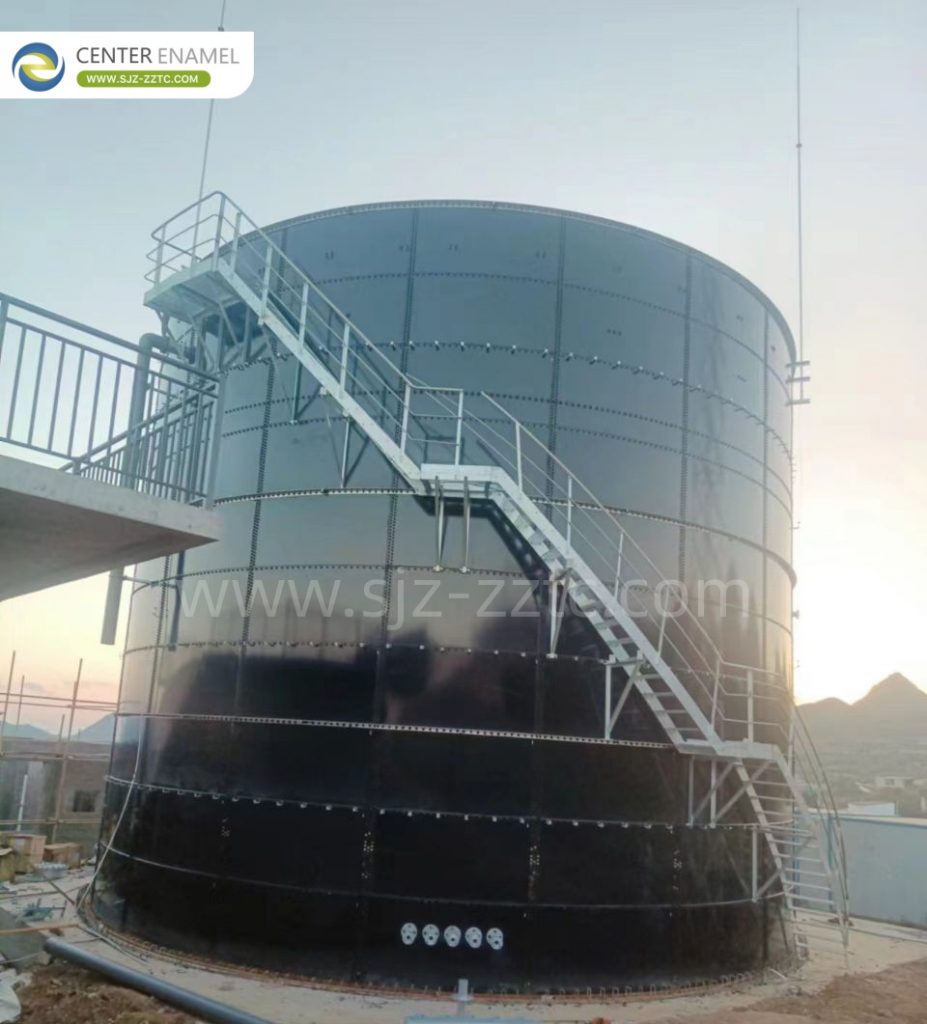
As a global leader in storage solutions for biological wastewater treatment, Center Enamel provides high-performance infrastructure designed to support fermentation processes and integrated treatment trains. Our Glass-Fused-to-Steel (GFS) tanks, FBE Tanks, and advanced gas management systems deliver the durability and reliability that wastewater treatment projects demand.
Conclusion
Fermentation in wastewater treatment is a powerful biological tool that transforms waste streams into valuable resources. By intentionally stopping the anaerobic degradation process at the acidogenic stage, treatment plants can produce volatile fatty acids for nutrient removal, bioplastics production, and other applications. While distinct from anaerobic digestion, fermentation complements it within integrated treatment trains, contributing to the broader goal of converting wastewater treatment plants into true resource recovery facilities.
As the wastewater industry continues to evolve toward circular economy principles, fermentation will play an increasingly central role in extracting value from organic waste.
Center Enamel: Your Partner for Wastewater Treatment Infrastructure
Center Enamel is a global leader in providing durable, corrosion-resistant storage solutions for wastewater treatment and fermentation projects. With over 30 years of experience, we specialize in Glass-Fused-to-Steel (GFS) tanks, FBE Tanks, Aluminum Dome Roofs, and advanced anaerobic reactor systems for municipal and industrial wastewater applications.
Our Glass-Fused-to-Steel technology fuses glass enamel to steel at temperatures exceeding 820°C, creating a surface that combines structural strength with chemical inertness-ideal for the aggressive conditions of fermentation and anaerobic digestion.
Certified to international standards including ISO 9001, NSF/ANSI 61, AWWA D103, and ISO 28765, Center Enamel’s solutions are trusted in over 90 countries by clients such as Veolia and Heineken. Notable wastewater projects include treatment facilities for brewing, papermaking, starch processing, and dairy industries across China and Southeast Asia.
Frequently Asked Questions (FAQ)
1. Is fermentation the same as anaerobic digestion in wastewater treatment?
No. Fermentation is limited to the early stages (hydrolysis and acidogenesis) and produces volatile fatty acids and alcohols. Anaerobic digestion continues through acetogenesis and methanogenesis to produce methane biogas.
2. Why would a wastewater plant use fermentation instead of aerobic treatment?
Fermentation transforms complex organic matter into simple, readily biodegradable compounds that can serve as carbon sources for nutrient removal, bioplastics production, or improved downstream treatment efficiency-creating valuable products from waste.
3. What feedstocks are suitable for fermentation in wastewater treatment?
Common feedstocks include sewage sludge, food wastewater, agro-industrial wastewater, dairy processing effluent, and combinations thereof. Co-fermentation of multiple waste streams can improve yields.