
What Is Granular Sludge in a UASB?
Granular sludge is the dense, settleable microbial aggregate that makes a UASB work. Instead of loose floc, the biomass self-forms into hard, spherical granules typically 1–3 mm in diameter with a high concentration of methanogens at the core. Because the granules settle fast, the reactor can be loaded at 5–15 kg COD/m³·day and still retain its biomass, whereas ordinary floc would wash out at a fraction of that rate.
Why Granules Beat Floc
Settleability is the whole game. A well-developed granular bed settles at 40–80 m/h, far above the 0.5–1.0 m/h upflow velocity, so biomass stays put while water passes through. That lets the UASB hold a high biomass concentration (often 20–40 g VSS/L) in a compact reactor and keep hydraulic retention short. Flocculent sludge settles at only 1–5 m/h, so it would be flushed out under the same flow, forcing a much larger and slower system.
Comparative Data Table: Granular vs Flocculent Sludge
| Property | Granular sludge | Flocculent sludge |
| Diameter | 1–3 mm | 0.05–0.2 mm |
| Settling velocity | 40–80 m/h | 1–5 m/h |
| Biomass concentration | 20–40 g VSS/L | 5–15 g VSS/L |
| Max OLR sustained | 5–15 kg COD/m³·day | 2–5 kg COD/m³·day |
| Reactor footprint | small | large |
How Granular Sludge Forms
Granulation is a self-organising process, not something added. Under the right upflow velocity and organic load, fast-settling aggregates get retained while light material washes out, so the bed progressively selects for dense particles. Methanogenic and syntrophic bacteria colonise the interior, with hydrogen and acid utilisers near the surface. Starters such as existing granular seed or fine carriers help, but the reactor operation—stable load, correct velocity, absence of toxins—does the real work. It typically takes weeks to months to mature a strong bed.
Frequently Asked Questions (FAQ)
Q1: What is granular sludge in a UASB?
A: Dense, spherical microbial aggregates 1–3 mm across that form the reactor’s biomass. Their fast settling lets the UASB hold a high biomass concentration and high organic loading without washing the sludge out.
Q2: How big are the granules?
A: Typically 1–3 mm in diameter, though granular beds can include finer and coarser fractions. Mature granules settle at 40–80 m/h, far above the reactor’s upflow velocity.
Q3: Why is granular sludge better than floc?
A: It settles 10–50 times faster, holds 2–4 times more biomass per litre, and sustains 3–5 times the organic loading in a much smaller footprint—the property that makes UASB compact and efficient.
Q4: How does granular sludge form?
A: By self-selection under steady upflow and load: well-settling particles are retained, light ones wash out, and methanogenic consortia build up inside. Good seed and stable, toxin-free operation mature a bed in weeks to months.
Project Case Reference
Pharmaceutical Wastewater Treatment in Jiangdong — Xiaoshan District, Hangzhou, China · 2019
1,000 m³/D · 6 Reactor Sets · ≥ 70% COD Removal
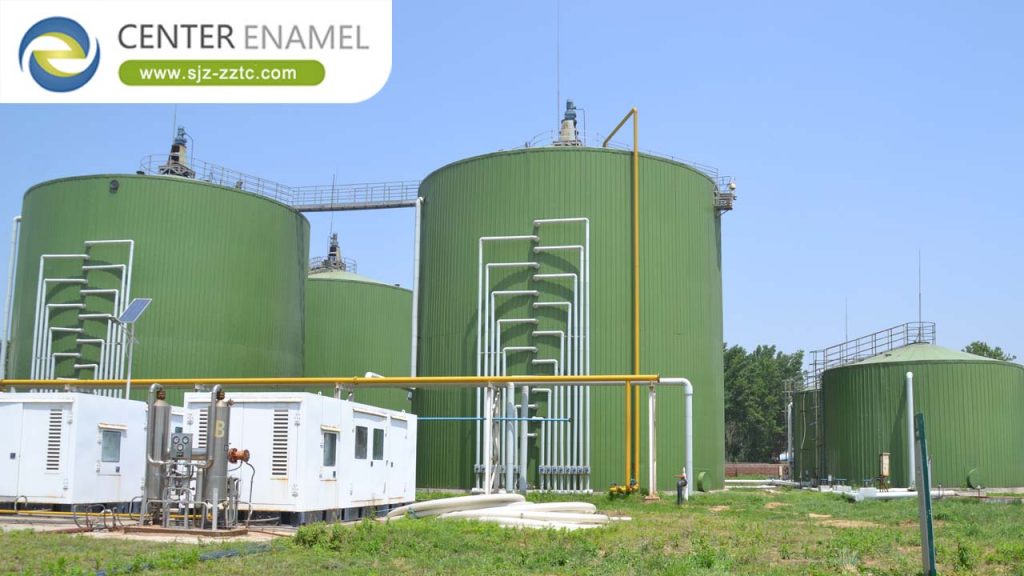
A pharmaceutical wastewater treatment facility in Jiangdong, Hangzhou. The project features 6 sets of granular sludge anaerobic reactors, each measuring 12.66 × 24 m. The system treats mixed water of acarbose extraction wastewater, domestic sewage, and other industrial sources, achieving COD removal efficiency of not less than 70% under high salinity conditions (up to 6,000 mg/L).
Technical Specifications
Single Tank Capacity: 1,000 m³/day
Reactor Type: Granular Sludge Anaerobic Reactor
Reactor Size: 12.66 × 24 m, 6 Sets
Wastewater Source: Acarbose extraction + domestic + mixed
COD Removal Efficiency: ≥ 70%
Installation Year: 2019
Water Quality Data
| Item | Influent (Design) | Effluent |
| COD | 11,200 | 3,024 |
| SS | 185 | 148 |
| NH₃-N | 110 | 99 |
| TN | 270 | 227 |
| Salt | < 6,000 mg/L | — |