
What Is Homogenization Treatment? A Critical Process in Modern Wastewater Treatment
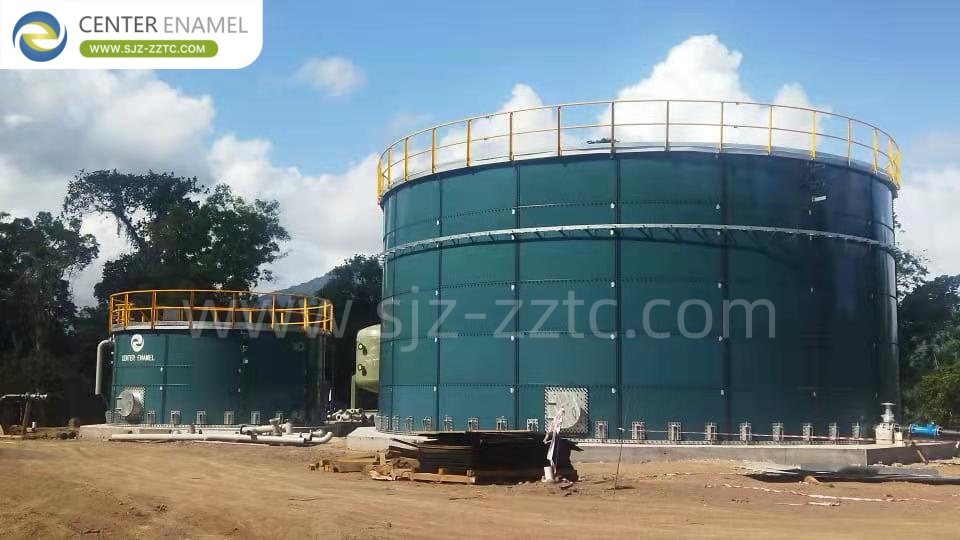
In the complex world of wastewater treatment, consistency is the foundation of success. Wastewater entering a treatment plant is rarely uniform—its flow rate, temperature, and pollutant concentrations fluctuate dramatically throughout the day, driven by production cycles, weather events, and diurnal usage patterns. This variability poses a significant threat to downstream biological treatment processes, which rely on stable conditions to thrive. This is where homogenization treatment becomes an indispensable first step in modern wastewater management.
What Is Homogenization Treatment?
Homogenization treatment, in the context of wastewater, is the process of mixing and equalizing influent wastewater to create a uniform and consistent feed for downstream treatment units. The goal is to balance out variations in flow, pH, temperature, and contaminant concentrations (such as Biochemical Oxygen Demand - BOD and Chemical Oxygen Demand - COD) that result from different production cycles or diurnal flow patterns .
The primary objective is to "dampen" these shocks, ensuring that subsequent biological or chemical treatment processes receive a steady, predictable stream of wastewater, thereby optimizing their performance and reliability. This is typically achieved in an equalization tank—a dedicated vessel equipped with mixing devices to ensure solids remain suspended and the wastewater is thoroughly blended .
Why Is Homogenization Treatment Essential?
A wastewater treatment plant (WWTP) is a delicate ecosystem, often relying on sensitive biological processes. The primary benefits of homogenization are as follows.
1. Protection of Downstream Biological Processes
Biological treatment, such as the activated sludge process or anaerobic digestion, relies on microorganisms that are highly sensitive to changes in their environment. A sudden influx of toxic chemicals or a drastic drop in pH can kill these microbes, leading to process failure. Homogenization acts as a buffer, diluting and neutralizing these shocks to protect the biological health of the plant .
2. Optimization of Chemical Dosing
For chemical treatment stages like coagulation and flocculation, precise chemical dosing is required. If the wastewater's pH or pollutant load is constantly changing, the chemical demand fluctuates, leading to either under-dosing (failure to meet standards) or over-dosing (wasted chemicals and higher costs). Homogenization stabilizes the wastewater, allowing for precise, cost-effective chemical treatment .
3. Improved Efficiency and Cost Savings
By creating a uniform flow, an equalization tank can store wastewater during peak production hours and release it at a steady, manageable rate. This prevents the downstream treatment plant from being overloaded with a high hydraulic or organic shock, which can lead to equipment failure or poor effluent quality .
The Equalization Tank: Design and Operation
The implementation of homogenization is typically achieved in an equalization tank. This tank is equipped with mixing devices to ensure solids remain suspended and the wastewater is thoroughly blended .
Suspension Degree (Sdeg) for Effective Mixing
In wastewater mixing applications, the recommended Suspension Degree is between 2 and 3. This range ensures particles are lifted off the tank bottom and kept suspended in the liquid to prevent sedimentation and achieve effective homogenization, without requiring excessively high energy input . Good mixing aims to lift the particles off the tank bottom and to keep them suspended in the liquid, i.e., to avoid their sedimentation .
Mixing Technologies for Homogenization
Several mixing approaches are employed in equalization tanks:
Submersible Mixers: Installed vertically according to minimum and maximum water depth and oriented according to inlet and outlet locations to achieve effective blending .
Jet Mixers: A circular distribution of jet mixers can achieve both localized and holistic mixing, ensuring the sufficiency and homogeneity of mixing while avoiding the inherent drawbacks of top-mounted or side-mounted mechanical stirring .
Aeration and Odor Control
In small treatment plants, aerators and mixers can be integrated into the same system (Venturi system) to achieve homogeneity and aerate wastewater, preventing septic conditions and associated odors .
From Homogenization to Anaerobic Digestion
After achieving a consistent, homogenized feed, the wastewater is ready for high-efficiency treatment. For high-strength organic waste, this often means anaerobic digestion. Center Enamel, a leading EPC contractor in the water and wastewater sector, masters several proprietary process packages for this purpose .
1. UASB Process (Upflow Anaerobic Sludge Blanket)
The UASB Process is a cornerstone of modern wastewater treatment. Wastewater flows upward through a dense blanket of anaerobic granular sludge. The organic pollutants are decomposed, and the resulting biogas is separated by an internal three-phase separator . The UASB process requires minimal energy and is highly effective at reducing organic load .
2. IC Process (Internal Circulation)
For high-density urban centers with limited land availability, the IC Process represents the cutting edge of high-rate anaerobic technology. Utilizing a dual-stage digestion process, the IC reactor uses the biogas produced in the first stage to drive an internal circulation of the wastewater, creating intense mixing and rapid degradation . This allows for much higher volumetric loading rates, making it perfect for treating concentrated wastewater in land-constrained areas .
Studies comparing anaerobic technologies show that IC reactors demonstrate a COD removal rate of 84.36% at a volume load of 5.5 kg/(m³·d), outperforming UASB reactors which achieve 71.43% removal at 3.0 kg/(m³·d) . Furthermore, UASB and IC reactors can achieve energy equilibrium when influent COD concentrations exceed 11,195 mg/L and 9,845 mg/L, respectively .
3. CSTR Process (Continuous Stirred Tank Reactor)
The CSTR Process is optimized for high-concentration organic slurries, including livestock manure and kitchen waste . Utilizing mechanical stirring systems, the CSTR ensures that primary and secondary sludge are completely mixed with anaerobic bacteria, preventing "dead zones" and solids accumulation .
4. USR Process (Upflow Solids Reactor)
The USR Process is specifically engineered for high-solid organic waste. It is optimized to retain solids in the reactor longer than the liquid, ensuring that complex organics are fully broken down .
Center Enamel: Your Expert Partner in Wastewater Treatment Solutions
Center Enamel brings over 36 years of expertise to every project, offering a comprehensive, one-stop solution for wastewater and biogas projects . Their premium Glass-Fused-to-Steel (GFS) tanks provide the ideal environment for processes requiring stringent air-tightness and corrosion resistance, such as the CSTR process for biogas production . With a massive 150,000m² R&D and production base and an annual output of 250,000 sheets, they deliver reliable, high-quality, and durable infrastructure .
Their services encompass everything from initial feasibility studies and process design to manufacturing and installation. For clients in the wastewater and biogas sectors, Center Enamel provides:
Customized Solutions: Tailored systems designed to meet the specific needs of your waste stream .
Proven Technology: Utilizing industry-leading GFS Tanks, UASB, IC, CSTR, and USR processes .
Global Standards: All designs meet rigorous international certifications (AWWA D103, ISO 9001, NSF61, etc.) .
Conclusion
Homogenization treatment is not just a preliminary step; it is the foundation for efficient, reliable, and cost-effective wastewater management. By balancing the variable nature of incoming waste, it protects sensitive biological systems, optimizes chemical usage, and ensures a stable platform for processes like anaerobic digestion . Technologies like UASB, IC, CSTR, and USR then build upon this foundation to achieve maximum organic removal and energy recovery .
Partnering with an experienced EPC contractor like Center Enamel is crucial for implementing these systems effectively. By investing in robust infrastructure and expert design, you are not only ensuring regulatory compliance but also unlocking the potential of wastewater as a valuable resource for energy and agriculture .
Frequently Asked Questions
1. What is the difference between equalization and homogenization in wastewater treatment?
While often used interchangeably, the equalization tank is the infrastructure where the homogenization process takes place. Equalization refers to smoothing out flow rate, while homogenization ensures the physical and chemical mixing of the wastewater to create a uniform composition. The tank typically uses mixers to achieve a homogenous blend .
2. Which anaerobic technology is best for high-strength industrial wastewater?
For high-strength industrial wastewater, the IC (Internal Circulation) reactor is often the preferred choice due to its ability to handle high volumetric loading rates. Studies show IC reactors achieve higher COD removal (84.36%) compared to UASB reactors (71.43%) at higher loading rates, making them ideal for breweries, distilleries, and paper mills .
3. Why is homogenization important before anaerobic digestion?
Homogenization protects the sensitive microorganisms used in anaerobic digestion from shock loads of toxic chemicals or extreme pH changes. It also provides a steady, predictable feed, allowing the biological processes to operate at peak efficiency and maximizing biogas production. Without proper homogenization, process stability and biogas yields can be severely compromised .