
What Is Household Waste? A Complete Guide to Understanding and Managing Domestic Waste
Household waste is something every person produces daily, yet few truly understand its composition, environmental impact, and potential value. From kitchen scraps to packaging materials, the waste generated within our homes represents both a significant environmental challenge and a remarkable opportunity for resource recovery. This comprehensive guide explores what household waste is, its key components, and how innovative technologies are transforming this waste stream into renewable energy.
Defining Household Waste
Household waste, also known as domestic waste or municipal solid waste from residential sources, refers to the garbage and rubbish generated from individual homes, flats, and apartments . It encompasses the everyday items that households discard during routine activities, including kitchen waste, packaging materials, and various consumer goods.
In many countries, household waste is considered a subset of municipal solid waste (MSW) and is typically collected through curbside services, public place bins, or self-hauled by residents to disposal facilities . What distinguishes household waste from other waste streams is its direct connection to daily domestic activities and its composition—which is dominated by organic materials and packaging.
The Composition of Household Waste
Understanding what household waste contains is essential for effective management. Research indicates that approximately one-third of all household waste consists of packaging materials, slightly less than one-third is composed of products, and the remainder is organic material . Notably, packaging combined with organic material constitutes approximately 70% of household waste .
The most common components of household waste include:
Kitchen and food waste – fruit and vegetable peelings, food scraps, coffee grounds, tea residues, and meat/fish waste
Paper and packaging – boxes, magazines, tissue paper, packaging materials, and printed documents
Plastics and rubber – bottles, plastic bags, containers, and packaging
Glass – bottles and containers
Metals – cans, aluminum foils, and packaging materials
Green waste – yard trimmings, grass clippings, and garden waste
In developing countries, the organic fraction of household waste often exceeds 60%, making it an ideal feedstock for biological treatment technologies . The high moisture content and biodegradability of organic household waste present both challenges for traditional disposal and opportunities for innovative recycling.
Household Waste vs. Hazardous Household Waste
While most household waste is non-hazardous, it is important to distinguish between general waste and hazardous household waste. Hazardous household waste includes items such as batteries, pesticides, home cleaners, garage oils, and other chemical products that can have adverse environmental and human health impacts .
Improper disposal of hazardous household waste—such as pouring waste oils or cleaners on the ground or mixing containers with other waste—creates serious risks. It affects the health of local communities and sewage workers while potentially contaminating groundwater supplies . Most household waste, however, consists of non-hazardous materials that can be recycled or processed for energy recovery.
The Environmental Challenge of Household Waste Disposal
Traditional household waste management practices have created significant environmental problems globally. Open dumping and uncontrolled landfilling have resulted in massive landfill sites that pose serious threats to the environment through air pollution, groundwater contamination, and greenhouse gas emissions .
When organic household waste decomposes in landfills, it produces methane—a greenhouse gas over 25 times more potent than carbon dioxide. Studies indicate that municipal solid waste contains approximately 44% organic waste, making it the largest single component of the waste stream and a primary source of landfill methane emissions . This is why diverting organic waste from landfills through treatment technologies is critical for climate change mitigation.
The Opportunity: Transforming Household Waste into Biogas
One of the most promising solutions for managing organic household waste is anaerobic digestion—a natural biological process that converts organic matter into biogas and nutrient-rich fertilizer . This technology addresses the waste challenge while generating renewable energy.
Research confirms that household organic waste can effectively produce biogas through anaerobic digestion . Studies demonstrate that co-digesting kitchen waste with other organic materials can generate significant biogas yields, with research showing production reaching up to 0.844 m³ per batch, covering approximately 84% of total household energy demand . This approach not only reduces energy costs but also addresses energy shortages and protects the environment .
The environmental benefits of biogas from household waste are substantial. Biogas production generates significantly lower CO₂ emissions compared to fossil fuels, with studies reporting emission reductions of 0.0225–0.0315 kg CO₂-eq per kg of waste processed . Additionally, a 6m³ household biodigester can reduce between 2 and 8 tons of CO₂ equivalent per year .
Global Adoption of Household Waste Biogas Systems
Rural communities around the world have embraced biodigesters as a practical solution for converting household waste into clean energy. Since 1992, over one million household biodigesters have been installed across 27 countries in Asia, Africa, and Latin America, benefiting approximately four million people .
These systems provide multiple benefits beyond energy generation:
Cost savings – Households save significantly on cooking fuel expenses. In Bhutan, biodigesters resulted in average annual cost reductions of $375; in Uganda, households saved up to $240 yearly; and in Vietnam, savings reached approximately $108 annually .
Time savings – Surveys indicate time savings of 35 minutes per day on cooking activities associated with biogas adoption, along with a reduction of 7.7 hours per week on drudgery tasks .
Fertilizer production – The digestate from biogas production is a nutrient-rich organic fertilizer that improves soil health. In Kenya, up to 89% of biodigester owners use bio-slurry, reducing reliance on synthetic fertilizers .
Center Enamel: Professional One-Stop Solutions for Biogas Projects
For large-scale household waste-to-biogas projects, professional storage and processing infrastructure is essential. Center Enamel has emerged as a leading provider of biogas storage solutions, bringing over 30 years of expertise in designing, manufacturing, and installing storage tanks for biogas projects worldwide.
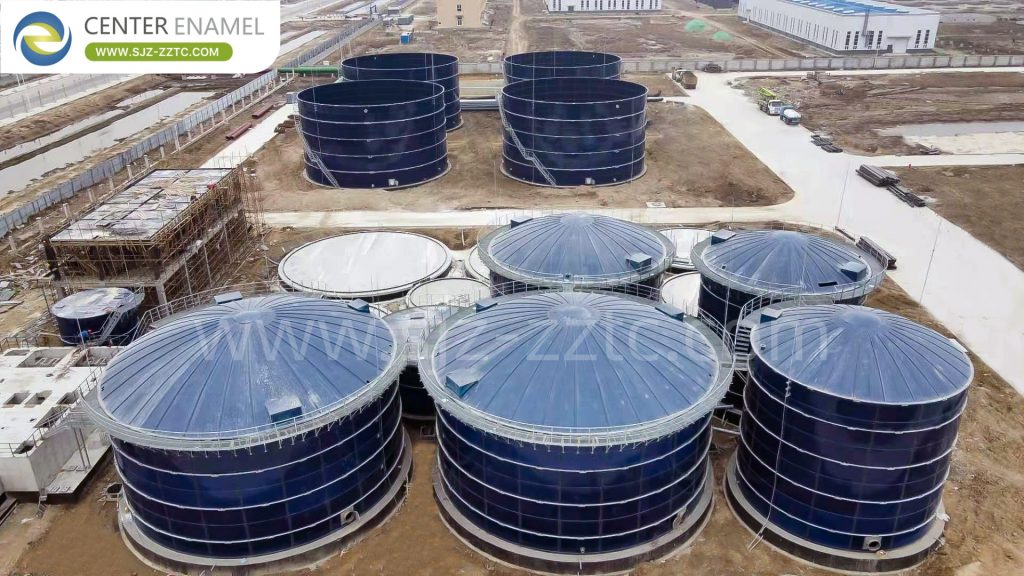
GFS Tanks (Glass-Fused-to-Steel Tanks) represent the premier containment solution for biogas projects. These tanks undergo firing at 820°C-930°C, creating an inert bond between glass and steel that combines the strength of steel with exceptional corrosion resistance . The double coating layer structure provides comprehensive protection against the aggressive conditions present in anaerobic digestion, including resistance to organic acids and hydrogen sulfide gases.
Double Membrane Roofs serve as the preferred solution for biogas storage, offering significant cost advantages and space efficiency. By eliminating the need for ground-mounted gas holders, these roofs reduce the overall footprint and foundation costs .
Center Enamel provides complete one-stop solutions for biogas projects, including:
Comprehensive EPC services – Engineering, Procurement, and Construction for turn-key biogas systems
Tailored design – Customized solutions based on specific waste characteristics and project requirements
International certifications – ISO 9001, CE, NSF/ANSI 61, WRAS, and ISO 28765 quality standards
Global experience – Successfully delivered projects in over 100 countries
With partnerships with global companies including Veolia, Paques, Heineken, AbInBev, Sinopec, and Coca-Cola, Center Enamel demonstrates its capability to deliver high-quality, reliable biogas infrastructure for projects ranging from agricultural to municipal applications .
Conclusion
Household waste is far more than simply "garbage"—it is a complex mixture of materials that presents both environmental challenges and significant opportunities. With organic waste comprising the largest single fraction of household waste, anaerobic digestion offers a proven solution that transforms this waste stream into renewable energy and valuable fertilizer.
As global communities seek sustainable waste management solutions, technologies like Center Enamel's GFS Tanks and Double Membrane Roof systems provide the professional infrastructure needed to scale biogas projects. With over 36 years of expertise, international certifications, and successful projects across 100+ countries, Center Enamel stands ready to help transform household waste from an environmental burden into a renewable energy resource.
Frequently Asked Questions
Q: What types of household waste are most suitable for biogas production?
Kitchen scraps, food waste, fruit and vegetable peelings, and other biodegradable organic materials are the most suitable for anaerobic digestion. Research confirms that mixed organic waste with 70-85% moisture content produces optimal biogas yields . Items like meat and fish scraps, coffee grounds, and tea residues can also be processed effectively .
Q: How much biogas can household waste generate?
The biogas yield depends on the waste composition and digestion conditions. Studies show that co-digesting kitchen waste with other organic materials can produce up to 0.844 m³ of biogas, covering approximately 84% of a household's total energy demand . In scaled municipal projects, a dry anaerobic digestion system can generate up to 16.7 GWh of power annually.
Q: What happens to the digestate after biogas production?
The digestate is a nutrient-rich material containing nitrogen, phosphorus, and potassium, which can be used as high-quality organic fertilizer. Studies show that up to 89% of biodigester owners use bio-slurry as fertilizer, improving soil health while reducing reliance on synthetic fertilizers .