
What Is in a Wastewater Treatment Plant? A Complete Guide to Components, Processes, and Equipment
Wastewater treatment plants are complex engineered facilities designed to remove contaminants from water before it is discharged into the environment or reused for beneficial purposes. Whether serving a municipality or an industrial facility such as a brewery, food processing plant, or chemical manufacturer, these plants rely on a carefully sequenced series of physical, chemical, and biological processes to transform polluted water into a clean, compliant effluent.
Understanding what is in a wastewater treatment plant is essential for engineers, plant operators, facility managers, and anyone responsible for environmental compliance. The specific configuration varies by application and discharge requirements, but most plants share a common set of core components: preliminary treatment equipment, primary clarification, biological treatment systems, secondary clarification, disinfection, and solids handling. This guide breaks down each element, explains how the pieces fit together, and highlights the equipment that makes modern treatment possible.
The Overall Wastewater Treatment Process
Before examining individual components, it helps to understand the treatment train as a whole. Most wastewater treatment plants follow a multi-stage sequence that progressively removes different types of contaminants.
Preliminary treatment removes large debris and grit that could damage or clog downstream equipment. Primary treatment uses gravity settling to remove settleable solids and floating material. Secondary treatment employs biological processes to break down dissolved and suspended organic matter. Tertiary or advanced treatment polishes the effluent to meet stringent discharge or reuse standards. Finally, solids handling processes concentrate, stabilize, and dewater the sludge generated throughout the treatment train.
Each stage relies on specific equipment and structures, and the overall plant design must balance treatment performance, energy consumption, footprint, and capital cost. The table below summarizes the major treatment stages and their primary functions.
| Treatment Stage | Primary Function | Typical Components |
| Preliminary | Remove large solids, grit, and debris | Bar screens, grit chambers, comminutors |
| Primary | Remove settleable and floating solids | Primary clarifiers, DAF units |
| Secondary | Remove dissolved and suspended organics | Aeration tanks, MBBR, MBR, trickling filters |
| Tertiary/Advanced | Remove nutrients, pathogens, residual solids | Filtration, UV, ozone, membrane systems |
| Solids Handling | Concentrate, stabilize, dewater sludge | Thickeners, digesters, belt presses, centrifuges |
Preliminary Treatment Components
Preliminary treatment protects downstream equipment and prevents operational problems. It typically includes screening, grit removal, and sometimes flow equalization.
Bar Screens and Fine Screens
Bar screens are the first line of defense in most treatment plants. Coarse bar screens with openings of 25 to 75 millimeters capture large objects such as rags, sticks, plastics, and other debris that could damage pumps and clog pipes. Mechanically cleaned bar screens use rakes or chains to remove accumulated material automatically, while manually cleaned screens are used in smaller facilities. Fine screens with openings of 1 to 6 millimeters are installed downstream to capture smaller solids that pass through coarse screens.
Grit Chambers
Grit chambers remove sand, gravel, eggshells, and other heavy inorganic particles that settle quickly. These materials can cause abrasive wear on pumps and equipment and accumulate in treatment tanks, reducing effective volume. Aerated grit chambers use air injection to create a rolling motion that separates grit from lighter organic material, while vortex grit chambers use a stirred vortex flow pattern to achieve similar separation.
Flow Equalization
Many industrial treatment plants include equalization tanks to balance flow and pollutant loads. This is especially important for batch-driven facilities such as breweries, where flow and organic strength vary dramatically throughout the day. Equalization tanks with 12 to 16 hours of retention time moderate temperature, blend acidic and alkaline discharges, and provide a consistent feed to downstream biological processes.
Primary Treatment Systems
Primary treatment removes settleable solids and floating materials through physical processes, reducing the load on downstream biological treatment.
Primary Clarifiers
Primary clarifiers, also called primary sedimentation tanks, allow wastewater to flow slowly enough that heavier solids settle to the bottom while lighter materials float to the surface. Settled sludge is collected by scrapers or suction mechanisms and pumped to solids handling. Floating scum and grease are skimmed from the surface. Primary clarification typically removes 50 to 70 percent of suspended solids and 25 to 40 percent of BOD.
Dissolved Air Flotation
Dissolved air flotation (DAF) is an alternative primary treatment particularly effective for removing fats, oils, and grease, as well as fine suspended solids that settle slowly. DAF systems dissolve air into water under pressure and then release it in the treatment tank, creating microscopic bubbles that attach to particles and float them to the surface for removal. DAF is widely used in industrial applications such as breweries, dairies, and meat processing, where it can achieve 85 percent or higher TSS removal when combined with chemical coagulation.
Secondary Treatment: Biological Processes
Secondary treatment is the heart of most wastewater treatment plants, using microorganisms to consume dissolved and suspended organic matter.
Aeration Tanks and Activated Sludge
The activated sludge process is the most common secondary treatment technology. Wastewater enters an aeration tank where air or oxygen is injected to support a dense population of microorganisms. These microbes consume organic matter, converting it into biomass and carbon dioxide. The mixture then flows to a secondary clarifier, where the biomass settles and is either returned to the aeration tank as return activated sludge or wasted as excess sludge.
Moving Bed Biofilm Reactors
Moving bed biofilm reactors (MBBR) use small plastic carriers that move freely in the aeration tank, providing surface area for biofilm growth. The biofilm protects microorganisms and allows higher biomass concentrations than suspended-growth systems. MBBR systems are compact, stable under load variation, and capable of 90 to 95 percent COD removal in brewery and industrial applications.
Membrane Bioreactors
Membrane bioreactors (MBR) combine activated sludge treatment with membrane filtration, typically using ultrafiltration or microfiltration membranes. The membrane barrier retains suspended solids, biomass, and pathogens, producing high-quality effluent suitable for reuse. MBR systems have a smaller footprint than conventional activated sludge but higher energy consumption due to membrane pumping and aeration.
The table below compares the performance of major secondary treatment technologies.
| Technology | Biomass Type | Typical COD Removal | Footprint | Effluent Quality |
| Activated Sludge | Suspended growth | 85–95% | Large | Good |
| MBBR | Attached biofilm | 90–95% | Moderate | Good |
| MBR | Suspended + membrane | 95–98% | Small | Excellent |
| Trickling Filter | Attached biofilm | 70–90% | Moderate | Moderate |
Tertiary and Advanced Treatment
Tertiary treatment polishes secondary effluent to meet strict discharge limits or produce water suitable for reuse. It may include filtration, nutrient removal, and disinfection.
Filtration Systems
Sand filters, multimedia filters, and membrane filters remove residual suspended solids and turbidity. Ultrafiltration membranes with pore sizes around 0.04 microns can remove viruses, bacteria, and fine particles, producing water suitable for industrial reuse. In a South African brewery demonstration project, a containerized ultrafiltration system treated up to 250 cubic meters of wastewater daily for direct reuse in brewery operations.
Nutrient Removal
Biological nutrient removal (BNR) processes use alternating aerobic, anoxic, and anaerobic zones to promote nitrogen and phosphorus uptake by microorganisms. Chemical precipitation with alum, ferric chloride, or lime can also remove phosphorus. Nutrient removal is increasingly required in discharge permits to prevent eutrophication in receiving waters.
Disinfection
Disinfection kills or inactivates pathogens before discharge or reuse. Chlorination is the most common method, though it can produce disinfection by-products. Ultraviolet (UV) disinfection uses light energy to damage microbial DNA without chemical addition. Ozone treatment is a powerful oxidant that also removes color, odor, and trace organics.
Solids Handling and Sludge Treatment
Solids removed throughout the treatment process must be concentrated, stabilized, and disposed of or reused. Solids handling typically accounts for a significant portion of plant operating costs.
Thickening and Dewatering
Sludge thickening reduces volume before further treatment. Gravity thickeners, dissolved air flotation thickeners, and rotary drum thickeners are common options. Dewatering removes additional water using belt filter presses, screw presses, decanter centrifuges, or drying beds. Dewatered sludge typically contains 15 to 35 percent solids, depending on the method and sludge characteristics.
Anaerobic Digestion
Anaerobic digesters stabilize sludge by breaking down organic matter in the absence of oxygen, reducing volatile solids and producing biogas. The biogas—typically 60 to 65 percent methane—can be captured for heat and power generation. Anaerobic digestion is widely used in municipal plants and industrial facilities with high-strength organic waste, including breweries and food processors.
Final Disposal and Beneficial Reuse
Stabilized and dewatered sludge may be landfilled, incinerated, land-applied as fertilizer, or used in composting. Beneficial reuse options are increasingly favored because they recover nutrients and organic matter while reducing disposal costs.
Supporting Equipment and Infrastructure
Beyond the core treatment processes, wastewater treatment plants rely on a range of supporting systems that keep operations running reliably.
Pumps and Piping
Pumps move wastewater, sludge, and chemicals throughout the plant. Centrifugal pumps are common for general transfer, while positive displacement pumps handle viscous sludge and precise chemical dosing. Piping systems must be sized and configured to minimize head loss and prevent settling.
Blowers and Aeration Equipment
Aeration is often the largest energy consumer in a treatment plant. Blowers supply air to aeration tanks, MBBR systems, and aerobic digesters. Fine bubble diffusers, coarse bubble diffusers, and surface aerators are common aeration devices, each with distinct oxygen transfer efficiency and maintenance characteristics.
Instrumentation and Controls
Modern treatment plants use sensors and control systems to monitor flow, pH, dissolved oxygen, temperature, and turbidity. Automated controls adjust aeration, pumping, and chemical dosing in response to changing conditions, improving treatment performance and reducing energy consumption.
Odor Control
Odor control systems treat foul air from preliminary treatment, clarifiers, and sludge handling. Activated carbon adsorption, biofilters, and chemical scrubbers are common odor control technologies.
Frequently Asked Questions
What are the main components of a wastewater treatment plant?
The main components include preliminary treatment equipment (bar screens, grit chambers), primary clarifiers or DAF units, secondary biological treatment systems (activated sludge, MBBR, MBR), secondary clarifiers, tertiary treatment (filtration, nutrient removal, disinfection), and solids handling equipment (thickeners, digesters, dewatering devices). Supporting infrastructure includes pumps, blowers, piping, instrumentation, and odor control systems.
What is the difference between primary, secondary, and tertiary treatment?
Primary treatment uses physical processes such as settling and flotation to remove suspended solids and floating material. Secondary treatment uses biological processes to break down dissolved and suspended organic matter. Tertiary treatment polishes the effluent using filtration, nutrient removal, and disinfection to meet stringent discharge or reuse standards.
How do industrial wastewater treatment plants differ from municipal plants?
Industrial plants are designed to handle the specific characteristics of their waste streams, which may be much higher in organic strength, pH extremes, or specific contaminants than municipal sewage. Industrial plants often include equalization tanks, specialized pretreatment such as DAF or chemical coagulation, and anaerobic digestion for high-strength organic waste. Municipal plants typically serve residential and commercial sources with more consistent flow and composition.
Looking for Professional Wastewater Treatment Solutions?
Designing, building, and operating an effective wastewater treatment plant requires deep engineering expertise and reliable, high-quality equipment. Whether you are treating municipal sewage, brewery effluent, food processing wastewater, or industrial discharge, the right partner makes all the difference.
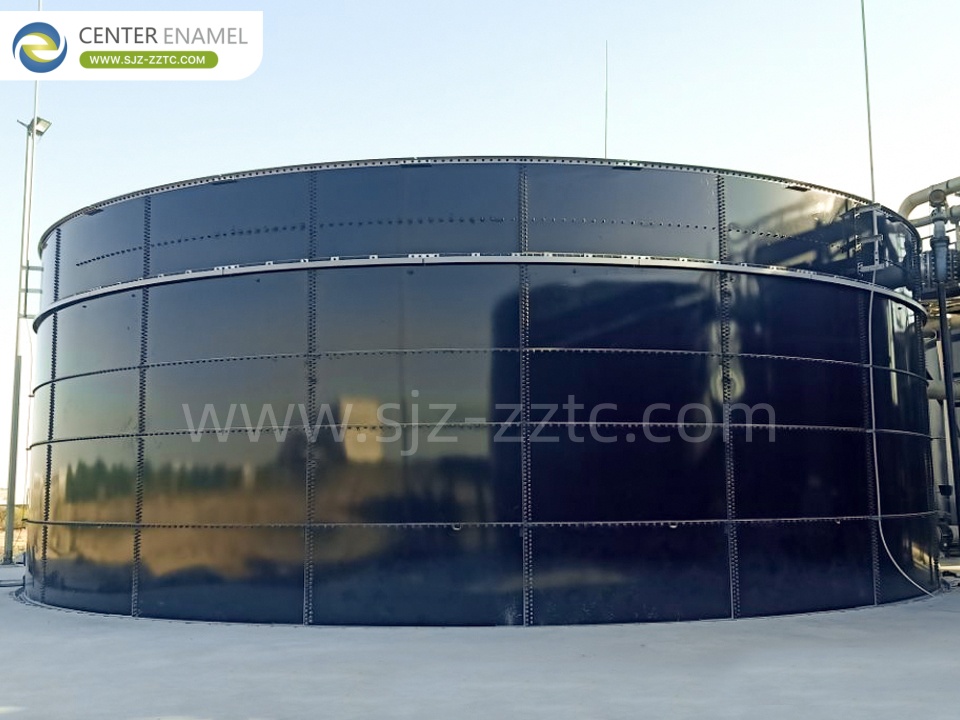
Center Enamel provides professional wastewater treatment solutions and equipment, including bolted steel tanks, anaerobic digesters, aeration systems, and complete treatment plant components. With decades of experience in storage and treatment tank manufacturing, Center Enamel delivers durable, cost-effective, and customizable solutions for projects worldwide.
Contact Center Enamel today to discuss your wastewater treatment requirements and discover how our expertise and equipment can help you achieve reliable, compliant, and sustainable treatment performance.