
What Is in Brewery Wastewater? A Complete Guide to Composition, Treatment, and Sustainable Solutions
Beer ranks third among the most consumed beverages worldwide, following tea and coffee . While the brewing industry makes a significant economic contribution, it also generates substantial environmental challenges. For every liter of beer produced, approximately 3–10 liters of effluent are generated . This "brewery wastewater" is not simple waste—it is a complex mixture of organic compounds, suspended solids, and nutrients that requires careful management.
Understanding what is in brewery wastewater is the first step toward effective treatment. This article explores the composition of brewing effluent, its environmental impact, and how advanced technologies like anaerobic digestion convert this waste into renewable energy. It also introduces Center Enamel's proven solutions for brewery wastewater treatment projects worldwide.
What Is Brewery Wastewater? Definition and Sources
Brewery wastewater is the liquid waste generated during the beer production process. Much of this waste originates from washing operations, resulting in effluents with high levels of organic matter and suspended solids .
Key Sources of Brewery Wastewater
Mashing and lautering: Residual sugars and grain solids
Wort boiling: Organic compounds from hops and malt
Fermentation: Yeast residues and organic acids
Bottling and cleaning: Detergents, rinse water, and sanitizers
Cooling processes: Thermal discharge and condensate
Each production process generates wastewater with different concentrations and compositions, creating challenges such as high pollutant concentrations, large COD fluctuations, and significant impact loads on treatment systems .
Composition of Brewery Wastewater
Brewery wastewater is characterized by high organic content and variable composition depending on the production stage. Scientific studies have documented the typical physicochemical parameters of raw brewery wastewater:
Key Parameters
| Parameter | Mean Value | Range |
| BOD₅ | 1,144 mg/L | 667–1,505 mg/L |
| COD | 2,402 mg/L | 950–4,149 mg/L |
| TSS | 2,959 mg/L | 2,885+ mg/L |
| TDS | 2,786 mg/L | 1,908–3,811 mg/L |
| NH₄⁺-N | 22.78 mg/L | 15–34 mg/L |
| PO₄³⁻-P | 23.33 mg/L | 14–30 mg/L |
| pH | 6.36 | 5.4–7.0 |
| Temperature | 31.33°C | 26–38°C |
Source: Table 2, Physicochemical characteristics of raw brewery wastewater
Variations Across Studies
Other research reports slightly different ranges depending on brewery operations and sampling points:
COD: 750–3,733 mg/L
BOD: 745 mg/L
Total Solids: 2,131 mg/L
pH: 3.90–8.2 (highly variable)
Why Brewery Wastewater Is a Challenge
The high organic load of brewery wastewater makes it one of the more challenging industrial effluents to treat. Key challenges include:
High COD and BOD: Organic matter depletes oxygen in receiving waters
Variable pH: Can be acidic (pH 3.9) to alkaline (pH 8.2)
Temperature fluctuations: Warm effluent (26–38°C) from brewing processes
High suspended solids: 784–2,959 mg/L TSS
Nutrient content: Nitrogen and phosphorus can cause eutrophication
If discharged untreated into water bodies, brewery effluent causes direct and indirect impacts on human health and environmental components .
Anaerobic Digestion: Turning Brewery Wastewater into Biogas
Anaerobic digestion (AD) is a sustainable and cost-effective solution for treating brewery wastewater . The biological process breaks down organic matter in an oxygen-free environment, producing methane-rich biogas while significantly reducing pollutant load.
Performance of Anaerobic Digestion for Brewery Wastewater
Research has demonstrated the effectiveness of anaerobic treatment for brewing effluent:
COD removal: Up to 79.65%
Total solids (TS) removal: 45.21%
Volatile solids (VS) removal: 27.73%
Methane content in biogas: 43.67%
A study using anaerobic filters for brewery wastewater treatment achieved average removal efficiencies of 61.4% for BOD, 60.9% for COD, and 70.7% for total nitrogen. Methane content reached 68.8% of the total gas produced .
Advantages of Anaerobic Digestion for Breweries
Energy recovery: Biogas can be used for heat and electricity, reducing reliance on fossil fuels
Lower carbon footprint: Captures methane that would otherwise escape to atmosphere
Nutrient recovery: Digestate can be used as organic fertilizer (with appropriate post-treatment)
Waste valorization: Converts a disposal burden into a revenue stream
Co-digestion for Enhanced Performance
Co-digesting brewery wastewater with other organic wastes can improve performance. Research shows that adding malt dust—a byproduct of the brewing industry—enhances hydrogen production by 59.6% . This circular economy approach uses self-generated waste materials as co-substrates and catalysts.
Center Enamel: Proven Solutions for Brewery Wastewater Treatment
Center Enamel (Shijiazhuang Zhengzhong Technology Co., Ltd.) has been a global leader in engineered storage tanks and wastewater treatment solutions. With over 35 years of experience and installations across more than 100 countries, the company provides turnkey solutions for the brewing industry .
Glass-Fused-to-Steel (GFS) Tanks: The Premier Choice
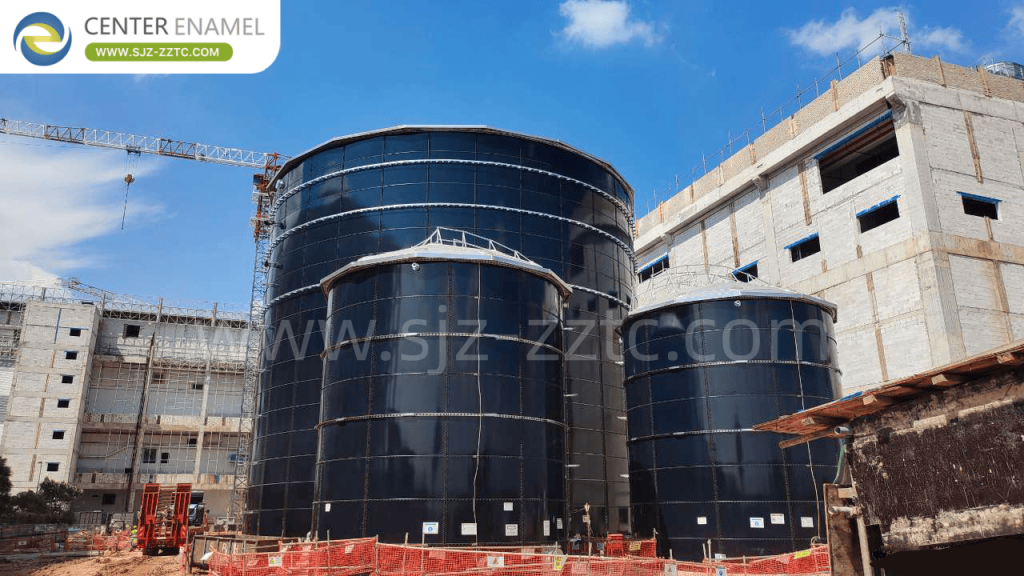
Center Enamel's proprietary Glass-Fused-to-Steel (GFS) tanks are engineered specifically for demanding brewery wastewater applications . Manufactured using a high-temperature firing process (820°C–930°C) that fuses glass to steel, these tanks offer:
Exceptional corrosion resistance: Withstands acidic and alkaline brewery effluents
pH tolerance: Effective across pH 1–14 range
Water tightness: Prevents leaks and safeguards the environment
Durability: Service life exceeding 30 years
Rapid installation: Bolted modular design eliminates on-site welding
Applications in Brewery Wastewater Treatment
GFS tanks support multiple treatment processes:
Anaerobic digestion: Efficient biogas generation from organic-rich wastewater
Aerobic treatment: Effective removal of organic contaminants
Effluent storage: Safe containment before discharge or reuse
Equalization tanks: Managing COD fluctuations and impact loads
Real-World Experience
Swaziland Distillery Wastewater Treatment Project
Process: CSTR
Tank dimensions: φ56.56 m × 8.4 m (H) (2 units)
Total volume: 42,188 m³
Conclusion
Brewery wastewater is a complex industrial effluent characterized by high organic loads, variable pH, and significant suspended solids. While these characteristics make it challenging to treat, they also make it an excellent candidate for anaerobic digestion—a process that converts waste into renewable biogas while achieving high COD removal efficiency.
Center Enamel brings decades of expertise, world-class GFS tank technology, and turnkey project delivery to brewery wastewater treatment projects worldwide. From anaerobic digesters to storage tanks, the company provides the infrastructure needed to help breweries achieve environmental compliance, reduce operating costs, and contribute to a circular economy.
Frequently Asked Questions (FAQs)
1. What are the main pollutants in brewery wastewater?
Brewery wastewater primarily contains high organic matter measured as COD (950–4,149 mg/L) and BOD (667–1,505 mg/L), suspended solids (2,885+ mg/L), nitrogen (25–38 mg/L TKN), and phosphorus (14–30 mg/L phosphate). If discharged untreated, these pollutants deplete oxygen in water bodies and cause eutrophication .
2. How can brewery wastewater be treated sustainably?
Anaerobic digestion is the most sustainable treatment method for brewery wastewater. It achieves up to 80% COD removal while producing methane-rich biogas that can be used for heat and electricity generation. The digestate can also be used as organic fertilizer (subject to post-treatment), supporting a circular economy approach .
3. What makes GFS tanks suitable for brewery wastewater treatment?
Glass-Fused-to-Steel tanks offer superior corrosion resistance across pH 1–14, making them ideal for acidic or alkaline brewery effluents. Their modular bolted design enables rapid installation without welding, and the inert glass surface prevents leaks and contamination. With a 30+ year service life and low maintenance requirements, GFS tanks provide long-term value for brewery wastewater projects .