
What Is Industrial Effluent Discharge?
Industrial effluent discharge refers to the release of liquid waste generated by manufacturing, processing, and industrial operations into public sewer systems or natural water bodies . Unlike domestic sewage, industrial effluent contains a complex mixture of pollutants—including heavy metals, organic chemicals, oils, grease, suspended solids, and various hazardous substances—that can cause severe damage to aquatic ecosystems and contaminate drinking water sources if left untreated .
The discharge of industrial effluent is heavily regulated worldwide due to its potential environmental and public health impacts. Regulatory frameworks establish strict limits on pollutant concentrations and require industries to implement appropriate treatment technologies before discharge . As environmental regulations tighten and water scarcity intensifies, understanding the requirements and solutions for industrial effluent discharge has become essential for operational continuity and environmental stewardship.
This comprehensive guide explores the fundamentals of industrial effluent discharge, regulatory requirements, environmental impacts, and the treatment solutions that enable compliance and sustainability.
What Is Industrial Effluent Discharge?
Industrial effluent discharge is the release of wastewater from industrial processes, manufacturing operations, or commercial activities into the environment or municipal sewer systems . This discharge typically follows necessary treatment to meet regulatory standards before entering rivers, reservoirs, streams, lakes, or public sewers .
Industrial effluent differs significantly from domestic sewage in its composition and potential toxicity. Depending on the industry—whether textile, pharmaceutical, food processing, petrochemical, or pulp and paper—wastewater may contain:
Fats, oils, and greases (FOGs)
Heavy metals (lead, mercury, chromium, cadmium)
Synthetic chemicals and solvents
Detergents and surfactants
Suspended solids and organic matter
Extreme pH levels
The volume and flow rate of industrial effluent discharge are subject to stringent regulatory permits designed to protect receiving water quality and ecosystem health from excessive pollution loads .
Regulatory Frameworks Governing Industrial Effluent Discharge
Industrial effluent discharge is governed by comprehensive regulatory frameworks that set limits on pollutant concentrations, require treatment before discharge, and mandate monitoring and reporting. These regulations have evolved significantly over the past century, moving from reactive local controls to proactive national and international frameworks .
Key Regulatory Mechanisms
Technology-Based Effluent Limits (TBELs) are derived from the demonstrated performance capabilities of available pollution control technologies, representing a minimum acceptable performance floor for industrial sectors .
Water Quality-Based Effluent Limits (WQBELs) are calculated backward from the desired state of the receiving water body, ensuring that the cumulative impact of all discharges maintains specific standards for designated uses—such as drinking water supply or aquatic life support .
Best Available Technology (BAT) requirements mandate that industries adopt state-of-the-art treatment technologies, often involving tertiary filtration or advanced oxidation processes for recalcitrant compounds .
The European Regulatory Landscape
In Europe, the revised Industrial Emissions Directive (IED) adopted in 2024 represents a significant tightening of regulatory requirements. Operators must now apply the strictest Best Available Techniques-Associated Emissions Levels (BAT-AELs) and implement environmental management systems with chemicals inventories .
The IED also requires operators to abide by BAT-associated performance levels (BAT-AEPL) for water use, including specific limits. In the long term, the directive requires developing deep industrial transformation plans for energy-intensive industries, describing their plans and investments for decarbonizing and enhancing their sites by 2050 .
Compliance and Enforcement
Compliance monitoring is the backbone of effective regulation. Facilities are typically required to perform self-monitoring, with samples analyzed by third-party certified laboratories. Regulatory agencies conduct audits and site inspections to verify compliance. Penalties for violations are structured to deter non-compliance, often incorporating disgorgement of economic benefit gained from non-compliance .
Environmental and Health Impacts of Uncontrolled Effluent Discharge
Uncontrolled industrial effluent discharge poses significant risks to environmental and human health. The failure to regulate effluent streams translates directly into social inequity and ecological collapse, with water bodies—historically treated as infinite sinks—becoming vectors for disease, resource depletion, and biodiversity loss .
Ecological Impacts
Eutrophication: Nutrient loading (nitrogen and phosphorus) from effluent discharges causes algal blooms that deplete dissolved oxygen, creating dead zones where aquatic life cannot survive .
Heavy Metal Contamination: Toxic metals like lead, mercury, and cadmium bioaccumulate in the food chain, causing long-term ecosystem damage .
Persistent Organic Pollutants: Synthetic chemicals resist degradation, remain in the environment for decades, and disrupt endocrine systems in wildlife .
Habitat Degradation: Suspended solids and thermal pollution degrade aquatic habitats, reducing biodiversity and ecosystem resilience .
Public Health Concerns
Industrial effluent contamination of drinking water sources poses direct health risks to downstream communities. Heavy metals, carcinogenic chemicals, and endocrine-disrupting compounds can cause chronic health problems, including neurological damage, reproductive disorders, and cancer .
The Treatment Journey: From Effluent to Compliant Discharge
Effective industrial effluent treatment follows a systematic, multi-stage approach designed to progressively remove contaminants and achieve regulatory compliance. The treatment train typically includes:
Primary Treatment (Physical Separation)
Primary treatment focuses on removing suspended solids, oils, and greases through physical processes:
Screening and grit removal to capture large debris
Sedimentation and clarification using gravity separation
Dissolved air flotation (DAF) for fine solids and oil removal
Equalization to smooth flow and concentration fluctuations
Secondary Treatment (Biological Processing)
Secondary treatment employs biological processes to remove dissolved organic matter and reduce biochemical oxygen demand (BOD):
Anaerobic digestion: Effective for high-strength organic wastewater, this process breaks down organic contaminants in oxygen-free environments while generating biogas for energy recovery
Aerobic treatment: Oxygen-consuming microorganisms oxidize remaining organic matter in activated sludge systems, sequencing batch reactors, or membrane bioreactors
Tertiary Treatment (Advanced Polishing)
Tertiary treatment provides final purification to meet stringent discharge requirements or enable water recycling:
Membrane filtration (microfiltration, ultrafiltration, reverse osmosis) removes fine particles and dissolved salts
Activated carbon adsorption removes trace organic contaminants and color
Advanced oxidation processes (ozone, UV, hydrogen peroxide) break down recalcitrant compounds
Infrastructure Solutions: The Role of GFS Tanks in Effluent Management
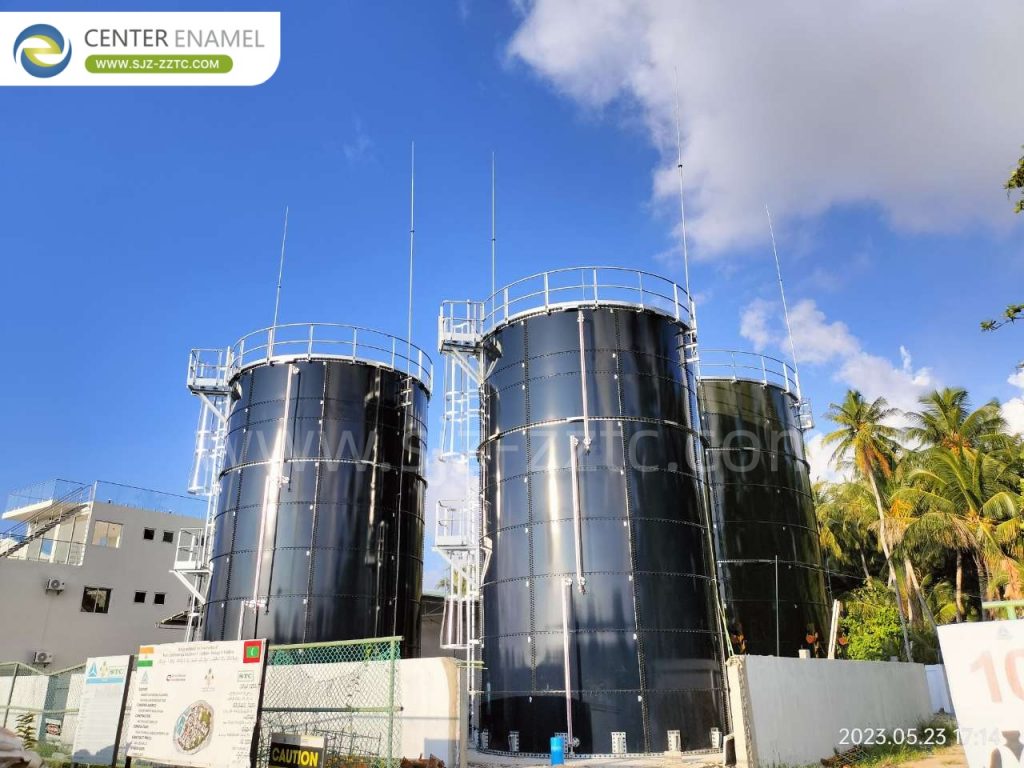
The effectiveness of any industrial effluent treatment system depends fundamentally on the infrastructure that contains and supports treatment operations. Glass-Fused-to-Steel (GFS) tanks have emerged as the global benchmark for wastewater treatment containment, offering unique advantages for industrial effluent management.
Superior Corrosion Resistance
GFS technology fuses high-tech glass enamel to specialized steel at temperatures exceeding 820°C, creating a material that combines the structural strength of steel with the chemical inertness of glass . This fusion creates an impermeable barrier that is virtually immune to corrosion from aggressive industrial effluent, including organic acids, hydrogen sulfide, and chemicals with extreme pH levels ranging from 1 to 14 .
Rapid Modular Installation
GFS tanks arrive as prefabricated components that can be assembled on-site using bolted construction, dramatically reducing construction timelines compared to cast-in-place concrete—often by as much as fifty percent . This modular approach enables fast deployment in industrial zones and remote locations while minimizing disruption to ongoing operations.
Long Lifespan with Minimal Maintenance
The non-porous glass surface prevents biofilm formation and scale buildup, maintaining treatment efficiency while reducing cleaning and maintenance requirements . Unlike steel tanks that require regular painting and recoating, GFS tanks maintain their protective coating for decades with minimal intervention, delivering substantially lower total cost of ownership .
Versatility Across Applications
GFS tanks are used in a wide range of industrial effluent treatment applications, including equalization basins, clarifiers, anaerobic digesters, aeration tanks, and sludge storage . Their gas-tight construction is particularly valuable for anaerobic digestion and biogas capture applications where gas containment is essential .
Environmental Sustainability
GFS tanks support circular economy principles through their longevity and recyclability. Their extended service life reduces the environmental footprint of treatment infrastructure, while the materials used are fully recyclable at the end of their useful life .
Center Enamel: Turnkey Solutions for Industrial Effluent Discharge Compliance
As a global leader in engineered storage and containment solutions, Center Enamel (Shijiazhuang Zhengzhong Technology Co., Ltd) delivers comprehensive, turnkey solutions for industrial effluent treatment projects worldwide. With over thirty years of innovation, more than twenty enamel formula patents, and a project portfolio spanning more than one hundred countries, Center Enamel combines material science expertise with full engineering, procurement, and construction (EPC) capabilities .
Core Infrastructure Solutions
Glass-Fused-to-Steel (GFS) Tanks: Our flagship product provides the corrosion-resistant infrastructure essential for reliable industrial effluent treatment. Meeting internationally recognized standards including AWWA D103-09, ISO 28765, and NSF/ANSI 61, GFS tanks serve as the core reactor vessels for anaerobic digestion, equalization, clarification, and sludge storage .
Epoxy Coated Tanks: For auxiliary and storage applications, our high-performance epoxy tanks utilize electrostatic powder coating technology to provide excellent resistance against a wide range of industrial chemicals and organic residues .
Double Membrane Roof Systems: Designed for gas capture and odor control on anaerobic digesters, these systems ensure biogas is captured for energy recovery while preventing methane emissions .
Aluminum Dome Roofs: These self-supporting geodesic structures provide maintenance-free protection for treatment basins, preventing rainwater ingress and containing volatile organic compounds .
Global Project Excellence
Center Enamel's track record includes successful industrial effluent treatment projects across diverse sectors:
Food Processing Wastewater Treatment Project (Indonesia)
Tank dimensions:
φ12.99m × 4.8m (H) – 3 units
φ6.88m × 3.6m (H) – 2 units
Total volume: 2,176 m³
Completion year: 2025
Food Wastewater Treatment Project (DR Congo)
Tank dimensions:
Φ6.11m × 3.6m (H) – 1 unit
Φ17.58m × 6m (H) – 1 unit
Φ22.17m × 6m (H) – 1 unit
Φ13.76m × 3.6m (H) – 2 units
Total volume: 4,947 m³
Completion year: 2025
Integrated EPC Services
From initial consultation and engineering design to manufacturing, construction, and commissioning, Center Enamel provides end-to-end project delivery. Our modular, bolted design allows for fast on-site assembly and future expansion capability, ensuring treatment infrastructure can adapt to growing or changing industrial needs .
Frequently Asked Questions
1. What types of pollutants are typically found in industrial effluent?
Industrial effluent can contain a complex mixture of pollutants, including heavy metals (lead, mercury, cadmium, chromium), organic chemicals and solvents, synthetic dyes, detergents, oils and greases, food waste, suspended solids, and extreme pH levels. The specific composition depends on the industry and manufacturing processes involved .
2. What are the key regulatory standards for industrial effluent discharge?
Regulatory standards include technology-based effluent limits (TBELs) derived from available treatment technologies, water quality-based effluent limits (WQBELs) set to protect receiving water bodies, and Best Available Technology (BAT) requirements that mandate adoption of state-of-the-art treatment. In Europe, the Industrial Emissions Directive (IED) has been revised to require stricter performance levels and environmental management systems .
3. Why are GFS tanks preferred for industrial effluent treatment?
Glass-Fused-to-Steel (GFS) tanks offer superior corrosion resistance across the full pH range, making them ideal for aggressive industrial effluent. Their modular construction enables rapid installation (often 50% faster than concrete), and the non-porous glass surface requires minimal maintenance. GFS tanks have a lifespan of 30+ years and can be expanded or relocated as needs change .