
What Is Oily Wastewater? Sources, Environmental Impact, and Treatment Explained
Oily wastewater refers to any water stream that contains oil, emulsified oil, or other hydrocarbons as contaminants. It is a significant environmental challenge generated across numerous industries, from petrochemical refining and metal processing to food production and automotive services. Unlike typical domestic sewage, oily wastewater presents unique treatment difficulties due to the diverse forms of oil present-ranging from free-floating layers to stable microscopic emulsions that resist conventional separation.
The presence of oil in water is not merely an aesthetic issue. It has serious consequences for aquatic ecosystems, human health, and industrial operations. Oily wastewater often contains additional pollutants such as heavy metals, high chemical oxygen demand (COD), and toxic organic compounds, making it a "multi-phase pollution" problem. This article provides a comprehensive overview of what oily wastewater is, its sources and characteristics, why it poses such a challenge, and the treatment methods used to manage it effectively.
Definition of Oily Wastewater
At its most fundamental level, oily wastewater is defined as wastewater generated during industrial processes that contains oil, emulsified oil, or other hydrocarbons. In the context of petroleum refining, for instance, it originates from a variety of operations, including cooling water, condensed stripping steam, tank draw-off, and contact process water.
More broadly, oily wastewater is any effluent contaminated with fats, oils, and grease (FOG) from either edible or non-edible sources. This can include:
Free oil: Oil that floats on the water surface and can be readily removed by gravity separation.
Emulsified oil: Microscopic oil droplets that are stabilized in suspension by emulsifiers, giving the wastewater a cloudy or milky appearance. These droplets are typically less than 20 microns in size and are difficult to separate.
Dissolved oil: Oil that exists as a true molecular solution in the water, requiring advanced treatment like biological degradation or activated carbon adsorption.
The complexity of oily wastewater lies in the fact that these forms often coexist, each requiring different treatment approaches.
Major Sources of Oily Wastewater
Oily wastewater is generated from a surprisingly wide range of domestic, commercial, and industrial activities. The sources can be categorized into several major groups:
| Category | Specific Sources | Nature of Oil |
| Petrochemical Industry | Oil refineries, petroleum product storage, gas stations | Emulsified oil, hydrocarbons, heavy metals |
| Food Processing | Meat processing, bakeries, palm oil mills, restaurants | Edible oils, fats, high BOD/COD |
| Metalworking & Automotive | Workshops, service stations, metal finishing | Lubricants, hydraulic fluids, coolants |
| Other Industries | Tannery, paint manufacturing, textile | Varied oils, solvents, dyes |
The petrochemical industry is a primary source, generating oily wastewater that contains emulsified oil alongside other hazardous constituents like volatile phenols and sulfides. The food processing sector, particularly meat and edible oil production, contributes significant amounts of wastewater containing fats and oils, often with high organic loading. Even seemingly minor sources, such as car workshops and restaurant kitchens, contribute to the cumulative oily wastewater problem.
Why Oily Wastewater Is a Major Environmental Concern
The discharge of untreated or poorly treated oily wastewater has severe environmental consequences. The impact is twofold: physical and chemical.
Physical Impact:
When oil is released into water bodies, it forms a thin film on the surface. This film prevents oxygen from dissolving into the water, leading to oxygen depletion that can suffocate aquatic life. Additionally, oil can coat the gills of fish, impairing their respiration, and contaminate the feathers of waterfowl, reducing their insulation and buoyancy.
Chemical and Biological Impact:
Oily wastewater often carries a "cocktail" of toxic compounds. Many of these, such as polycyclic aromatic hydrocarbons (PAHs), are mutagenic and carcinogenic. They can bioaccumulate in the food chain, posing long-term health risks to wildlife and humans. The low biodegradability of many oil components means they persist in the environment for extended periods.
Regulatory Drivers:
Because of these risks, strict environmental regulations govern the discharge of oily wastewater. These regulations mandate that facilities achieve near-total removal of oil and grease before discharge. This has driven the development of increasingly sophisticated treatment technologies.
Treatment Methods for Oily Wastewater
Treating oily wastewater is a multi-stage process. Because the wastewater contains oil in different forms (free, emulsified, and dissolved), a single technology is rarely sufficient. An effective treatment train typically combines physical, chemical, and biological methods.
Physical Treatment:
These methods are often the first line of defense and target free oil and suspended solids.
Gravity Separation (API Separators): This uses the difference in density between oil and water to allow oil to float to the surface for skimming. It is effective for removing free oil but not emulsions.
Dissolved Air Flotation (DAF): This process dissolves air into the wastewater under pressure and then releases it at atmospheric pressure, creating tiny bubbles that attach to oil droplets and float them to the surface. DAF is more effective than simple gravity separation, especially for removing smaller, emulsified droplets.
Coalescence: This technique encourages small oil droplets to combine (coalesce) into larger ones, which can then be more easily removed by gravity.
Chemical Treatment:
These processes use chemicals to break down stable emulsions and remove dissolved pollutants.
Coagulation and Flocculation: Chemicals like alum or ferric chloride are added to neutralize the charges that keep tiny oil droplets suspended. This causes them to aggregate into larger, settleable clumps called flocs.
Demulsification: Stable emulsions require chemical demulsifiers to break the interfacial film that holds the oil and water together. Once broken, the oil can be separated.
Membrane Filtration:
Membrane technology has emerged as a powerful tool for treating oily wastewater, particularly for removing small, emulsified droplets that other methods cannot capture.
Microfiltration (MF) and Ultrafiltration (UF): These processes use semi-permeable membranes with microscopic pores to physically separate oil and other contaminants from water. They are highly effective, often achieving removal rates exceeding 99%, but can be expensive and prone to membrane fouling.
Ceramic and Polymeric Membranes: Both types are used, with ongoing research focused on making them more hydrophilic (water-attracting) to improve performance and reduce fouling.
Advanced Oxidation and Biological Treatment:
For the most recalcitrant pollutants, advanced oxidation processes (AOPs) and biological methods are employed.
Advanced Oxidation Processes (AOPs): Methods like Fenton oxidation, ozonation, and photo-ozonation generate highly reactive hydroxyl radicals that can break down complex organic molecules that resist other forms of treatment.
Biological Treatment: While effective for many organics, biological methods can be inhibited by the toxicity and high salinity of some oily wastewaters. Research is ongoing to develop resilient microbial cultures for this purpose.
Why Is Oily Wastewater So Difficult to Treat?
The core difficulty in treating oily wastewater lies in the stability of oil-water emulsions. When oil and water are mixed, especially in the presence of emulsifiers (soaps, surfactants, or fine solids), they can form an emulsion that will not separate on its own.
The Emulsion Challenge:
Emulsified oil droplets are typically less than 20 microns in diameter. Their small size and the stabilizing effect of emulsifiers make them resistant to gravity separation and even many chemical treatments. Breaking an emulsion requires disrupting the interfacial film at the oil-water boundary-a process that can be energy-intensive and expensive.
Complex Pollutant Matrix:
Compounding the issue is the fact that oily wastewater is rarely just oil and water. It often contains a complex mixture of heavy metals, salts, and synthetic organic chemicals. This multi-phase pollution means that a single treatment technology will not be sufficient. This is why modern treatment plants often adopt a "hybrid" approach, combining multiple technologies in sequence to achieve the required level of purification.
The Role of GFS Tanks in Oily Wastewater Treatment
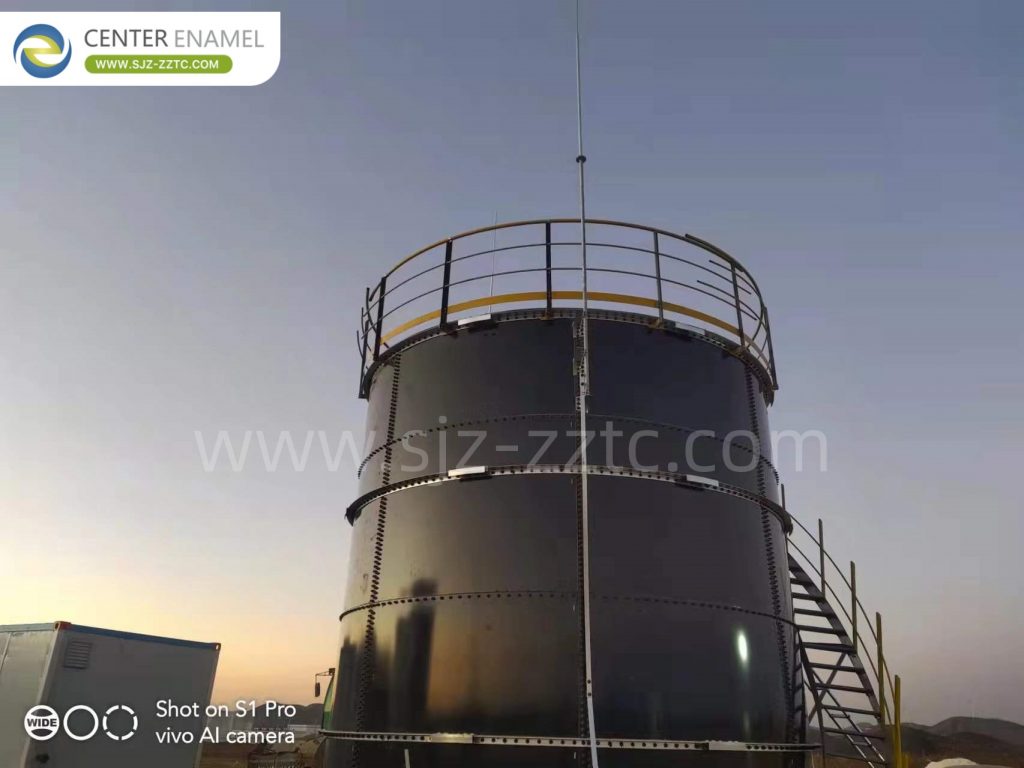
Given the aggressive nature of oily wastewater, the storage infrastructure used in its treatment must be exceptionally durable. Glass-Fused-to-Steel (GFS) tanks are increasingly recognized as an ideal solution for this demanding application.
Corrosion Resistance:
Oily wastewater is often acidic, hot, and contains corrosive substances. This combination of factors can quickly degrade traditional materials like carbon steel or concrete. GFS tanks are coated with a layer of inert glass that is fused to the steel at high temperatures. This coating provides an impermeable barrier that is resistant to corrosion from a wide range of substances, including oils, acids, and salts. Many GFS tanks offer protection across a pH range of 1 to 14, making them suitable for even the most aggressive effluents.
Durability and Long Life:
The glass coating used in GFS tanks is not a paint or lining that can chip or peel; it is a chemically bonded surface. This results in a tank that is highly resistant to impact, abrasion, and the stresses of thermal cycling. With a service life of over 30 years, GFS tanks offer a low-maintenance, long-term storage solution.
Leak Prevention and Modular Design:
The bolted design of many GFS tanks, combined with high-quality sealing materials, ensures a 100% leak-proof containment system. This is critical for preventing soil and groundwater contamination. Additionally, the modular construction allows for rapid installation and future expansion to meet changing treatment capacity needs.
Conclusion
Oily wastewater is a complex and challenging type of industrial effluent characterized by the presence of oil in free, emulsified, and dissolved forms. Generated from a multitude of sources-most notably the petrochemical and food processing industries-it poses significant environmental risks, including ecosystem disruption and the contamination of water resources. The stable nature of oil-water emulsions and the presence of other toxic co-pollutants make its treatment a multi-faceted problem that requires integrated solutions.
Effective treatment typically combines physical methods (like DAF and gravity separation), chemical processes (coagulation and demulsification), advanced membrane filtration, and, where necessary, advanced oxidation and biological steps. As treatment becomes more sophisticated, the supporting infrastructure must also evolve. Glass-Fused-to-Steel (GFS) tanks provide the durability, corrosion resistance, and long service life required to safely store and process these aggressive waste streams, ensuring that treatment facilities can operate efficiently and in compliance with strict environmental standards.
Frequently Asked Questions (FAQs)
1. What is the difference between free oil and emulsified oil in wastewater?
Free oil floats on the water surface and is easily removed by skimming or gravity separation. Emulsified oil consists of tiny oil droplets (typically <20 microns) that are stabilized in suspension by emulsifiers, making separation much more difficult.
2. Why is oily wastewater harmful to the environment?
Oily wastewater forms a film on water surfaces that prevents oxygen from dissolving into the water, harming aquatic life. It also contains toxic compounds that are mutagenic and carcinogenic, persisting in the environment and contaminating the food chain.
3. What makes GFS tanks suitable for oily wastewater storage?
GFS tanks feature a glass coating fused to steel, creating an inert, non-porous barrier highly resistant to corrosion from oils, acids, and salts across a wide pH range (pH 1–14). This ensures long service life (over 30 years), low maintenance, and leak-proof containment for aggressive waste streams.