
What Is Palm Oil Mill Effluent (POME)? Characteristics, Hazards and Sustainable Treatment Solutions
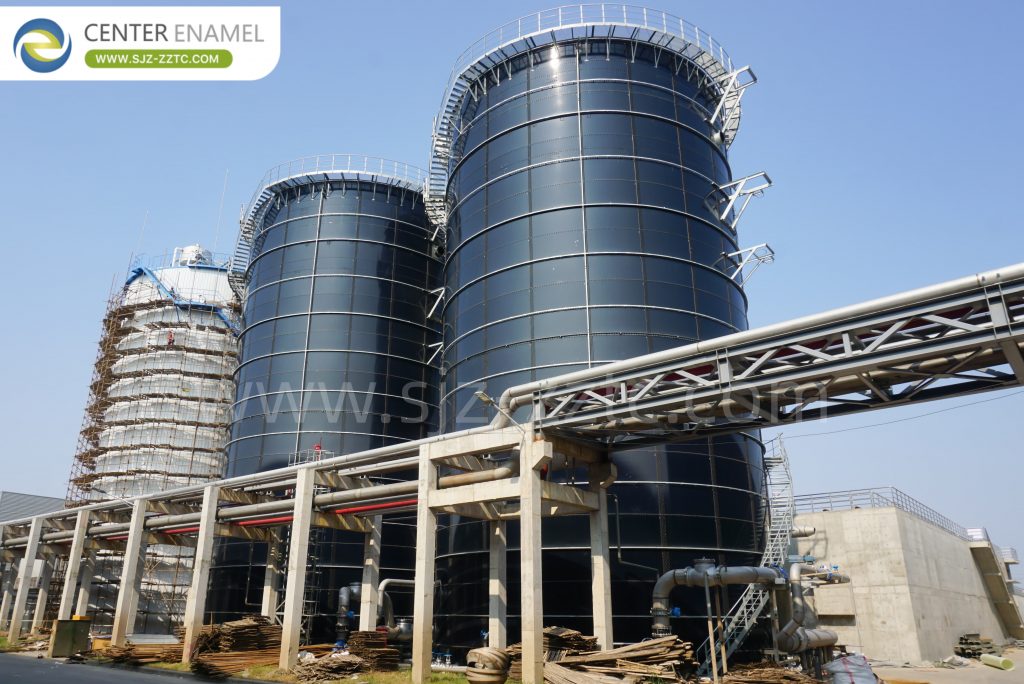
Palm Oil Mill Effluent (POME) is the main liquid waste generated during palm oil production, widely regarded as one of the most high-strength organic wastewaters in the food processing industry. As global palm oil demand keeps rising, POME treatment has become a key environmental and economic issue for producers in Southeast Asia.
Understanding what POME is, its inherent characteristics, and how to treat it safely and efficiently is essential for sustainable palm oil milling. In this article, we explain POME fundamentals, introduce advanced anaerobic technologies for POME treatment, and highlight how Center Enamel Glass-Fused-to-Steel (GFS) tanks provide superior performance for Palm Oil Wastewater Treatment Project applications worldwide.
What Is Palm Oil Mill Effluent (POME)?
POME is a viscous, brownish colloidal liquid produced in three core stages of palm oil milling: fresh fruit bunch sterilization, oil extraction and clarification, and hydrocyclone washing. It consists of about 95–96% water, 2–4% suspended solids like fiber and pulp residues, and 0.6–0.7% residual oil and grease. Unlike many industrial wastewaters, POME is mostly organic and non-toxic, but its extremely high organic load makes it highly polluting if discharged untreated.
POME is not simply “wastewater”-it is a high-energy biomass resource. With proper treatment through anaerobic digestion, POME can be converted into methane-rich biogas for on-site power generation or thermal use, turning a liability into a profitable revenue stream. This waste-to-energy model is now the global standard for modern, sustainable palm oil mills.
Key Characteristics of Palm Oil Mill Effluent (POME)
Raw POME has extreme physical and chemical properties that make conventional treatment ineffective. These characteristics define the technical requirements for any reliable Palm Oil Wastewater Treatment Project:
- Ultra-high organic concentration: COD typically ranges from 40,000 to 80,000 mg/L, and BOD from 10,000 to 45,000 mg/L-levels hundreds of times higher than municipal sewage.
- High temperature: Fresh POME often reaches 80–90°C from sterilization processes, requiring cooling before biological treatment.
- Strongly acidic: Raw POME has a pH of 3.4–5.2, creating a highly corrosive environment for treatment tanks and equipment.
- High oil and grease: Residual crude oil and fatty acids form impermeable layers that inhibit oxygen transfer and harm anaerobic microbes.
- High suspended solids: Fibers, pulp and sand cause rapid sedimentation, pipe clogging, equipment abrasion and reactor crusting.
These properties mean POME cannot be discharged directly into rivers, soil or wetlands. Untreated POME depletes dissolved oxygen, blocks sunlight, destroys aquatic ecosystems, contaminates groundwater, and violates strict environmental regulations across Southeast Asia. For palm oil enterprises, investing in a professional Palm Oil Wastewater Treatment Project is no longer optional-it is a legal requirement and a foundation for long-term operation.
Why Anaerobic Technologies Are the Best Solution for POME Treatment
Anaerobic digestion is universally recognized as the most efficient and economical method for treating high-strength organic wastewater like POME. Unlike aerobic systems, which consume energy, anaerobic processes produce energy in the form of biogas, making them ideal for palm oil mills aiming for energy self-sufficiency.
Center Enamel, a trusted Palm Oil Wastewater Treatment Project EPC Contractor, integrates four advanced anaerobic technologies tailored for POME, with USR Process as a highly reliable solution for most palm oil applications:
1. USR Process (Upflow Solid-state Reactor)
The USR Process is specially optimized for POME’s high suspended solids and oil content. It uses hydraulic upflow to maintain a dense sludge bed without mechanical stirring, ensuring stable treatment and consistent biogas production.
- Advantages: Strong shock load resistance, low energy consumption, simple operation, excellent tolerance to oil and fibers.
- Ideal for: Small-to-medium palm oil mills and plants prioritizing stable, low-maintenance performance.
2. CSTR Process (Completely Stirred Tank Reactor)
CSTR uses high-torque mechanical agitation to fully mix sludge, wastewater and solids, preventing crusting and sedimentation caused by oil and pulp residues.
- Advantages: Excellent handling of high-solid streams, stable operation, steady biogas output.
- Ideal for: Large-scale mills and zero-waste facilities co-processing empty fruit bunches and palm kernel residues.
3. UASB Process (Upflow Anaerobic Sludge Blanket)
A mature, globally proven technology where wastewater flows upward through a dense granular sludge bed for efficient organic degradation.
- Advantages: High COD removal efficiency, stable performance, wide adoption in Southeast Asia.
- Ideal for: Mills with lower suspended solids focusing on liquid-phase treatment.
4. IC Process (Internal Circulation)
IC is a high-rate anaerobic system that uses biogas-driven internal circulation to enhance mixing and mass transfer. Its volume loading rate is 3–5 times higher than conventional reactors.
- Advantages: Ultra-high efficiency, compact vertical footprint, strong organic shock resistance.
- Ideal for: Large industrial palm oil hubs requiring maximum treatment capacity.
By combining these anaerobic systems with customized pretreatment including oil separation, cooling, pH adjustment and fiber removal, Center Enamel ensures stable, efficient performance for every Palm Oil Wastewater Treatment Project.
Center Enamel GFS Tanks – The Optimal Reactor for POME Treatment
The core of any reliable anaerobic POME system is a high-performance, corrosion-resistant reactor tank. Center Enamel’s Glass-Fused-to-Steel (GFS) tanks are the global industry leader for Palm Oil Wastewater Treatment Project applications, offering unmatched advantages over concrete and ordinary steel tanks:
Superior Corrosion Resistance
GFS tanks are manufactured by fusing premium glass enamel to specialized steel plates at over 820°C, creating a permanent molecular bond with exceptional chemical resistance across pH 1–14. They are completely unaffected by POME’s organic acids, oils, grease and corrosive metabolites-problems that quickly degrade painted steel or concrete structures.
Seismic and Weather Stability
Southeast Asia’s palm oil regions often face high humidity, intense UV radiation, heavy monsoons and seismic activity. Center Enamel GFS tanks feature flexible bolted joints that provide superior seismic performance compared to rigid concrete. The enamel coating resists UV degradation and salt spray, ensuring long-term integrity in coastal and tropical environments.
Modular, Fast Installation
All GFS tank components are prefabricated in the factory and assembled on-site using high-strength bolts, with zero on-site welding. Using hydraulic jacking technology, tanks can be installed quickly even in remote areas with limited infrastructure, without heavy cranes or high-altitude scaffolding. This cuts construction time by up to 50% compared to concrete, critical for mills aiming to meet harvest and compliance schedules.
Long Service Life and Low Maintenance
Center Enamel GFS tanks have a service life of more than 30 years with minimal maintenance. The inert glass surface prevents fouling, reduces sludge buildup, and simplifies cleaning-lowering lifecycle costs significantly compared to alternative materials.
Full Compatibility with Biogas Systems
GFS tanks integrate seamlessly with Center Enamel’s double membrane gas holders, biogas desulfurization units and power generation systems, enabling complete biogas capture and utilization. This closed-tank design eliminates methane emissions and supports carbon neutrality goals for palm oil producers.
Why Center Enamel Is Your Trusted Palm Oil Wastewater Treatment Project EPC Contractor
As a professional Palm Oil Wastewater Treatment Project EPC Contractor, Center Enamel delivers full turnkey solutions customized for POME:
- Advanced anaerobic expertise: Deep experience with high-oil, high-fiber effluents ensures stable reactor performance and high biogas yield.
- Proprietary enamel technology: Over 200 patented formulas provide superior corrosion resistance unmatched by generic coatings.
- Asia’s largest GFS tank base: Automated production ensures consistent quality, short lead times and reliable delivery to remote sites.
- International certifications: Products comply with ISO 28765, AWWA D103-09, OSHA and NSF/ANSI 61; every plate passes 1500V high-voltage spark testing.
- Full-cycle EPC service: One-stop delivery from design, procurement and fabrication to installation, commissioning and after-sales support.
Conclusion
Palm Oil Mill Effluent (POME) is a high-strength organic wastewater with unique characteristics that demand specialized treatment solutions. While it poses severe environmental risks if untreated, POME is also a valuable energy resource that can drive sustainable palm oil production. Advanced anaerobic technologies including the USR Process, combined with Center Enamel GFS tanks, provide the most efficient, durable and economical solution for Palm Oil Wastewater Treatment Project worldwide.
By partnering with Center Enamel, palm oil mills achieve strict environmental compliance, protect fragile ecosystems, recover high-value biogas energy, and improve long-term profitability. As a leading Palm Oil Wastewater Treatment Project EPC Contractor, Center Enamel continues to innovate and deliver sustainable waste-to-energy solutions for the global palm oil industry.