
What Is Pretreatment of Wastewater? A Critical First Step in Modern Treatment Systems
Wastewater treatment is a complex process involving many biological, chemical, and mechanical operations . However, before any advanced treatment can occur, the wastewater must be conditioned and prepared. This crucial initial stage is known as pretreatment of wastewater. Without proper pretreatment, harmful pollutants can damage equipment, disrupt biological processes, and compromise the entire treatment system .
Defining Pretreatment of Wastewater
Pretreatment of wastewater is the removal of certain harmful pollutants from wastewater before it is discharged to the sewer system or enters the main treatment plant . It encompasses all procedures designed to condition water before it undergoes advanced purification and cleaning treatments . In industrial contexts, pretreatment refers to the requirement that non-domestic sources control their discharges and meet limits established by regulatory agencies on the amount of pollutants allowed to be discharged .
The primary goal is to protect treatment plants from pollutants that may cause interference with operations or pass through untreated to receiving waters . Pretreatment also prevents the introduction of pollutants that could cause worker health or safety concerns .
The Key Objectives of Pretreatment Programs
Pretreatment programs are designed with several critical objectives in mind :
Protect Treatment Infrastructure: Prevent toxic and harmful materials from damaging the sewage collection and treatment system. For instance, corrosive materials like acid may erode pipes, while flammable materials could cause explosions .
Prevent Pass-Through: Prevent pollutants from bypassing the treatment process and entering the environment at dangerous concentrations .
Ensure Worker and Public Safety: Prevent the introduction of pollutants that could pose health risks to workers or the public .
Improve Resource Recovery: Enhance opportunities to recycle or reclaim wastewater and its byproduct sludge .
Understanding the Pretreatment Process: Key Stages
Wastewater pretreatment typically involves several physical processes designed to remove large solids, grit, and other materials that could interfere with downstream treatment .
1. Screening
Screening is the very first step in the pretreatment process. A screen is a device with openings, typically of uniform size, used to retain or remove suspended or floating solids from the flow stream . Screening removes large objects like rags, plastics, and debris that could clog pumps, valves, and pipelines . Screens are divided into two types: manually cleaned and mechanically cleaned, with varying opening sizes from coarse (>25 mm) to fine (<10 mm) .
2. Grit Removal
Grit removal is the process of removing heavy inorganic solids such as sand, gravel, eggshells, and cinders . Grit removal is essential to protect mechanical equipment like pumps and aerators from abrasion and excessive wear . Grit chambers use gravity, velocity control, aeration, or centrifugal force to separate these heavier particles from the wastewater stream .
3. Equalization and Homogenization
Equalization is the storage and controlled release of wastewater to treatment processes at a rate determined by the capacity of the processes . An equalization basin is a holding basin in which variations in flow and composition of a liquid are averaged . Equalization provides several benefits:
Flow Management: Accommodates quantity of effluents which comes in short time and releases it over 20-24 hours .
Quality Consistency: Equalizes the quality of wastewater to make it fit for further treatment .
Self-Neutralization: Allows some natural chemical neutralization, reducing the need for added chemicals .
Temperature Dampening: Reduces the high temperature of effluent to some extent .
In an equalization tank, the process of homogenization ensures thorough mixing of the wastewater to create a uniform composition .
From Pretreatment to Primary Treatment
After pretreatment, the wastewater moves to primary treatment, which includes chemical and physical processes such as chemical dosing, flocculation, and solids separation . Primary treatment removes settleable organic and inorganic solids by sedimentation . The efficiency of primary treatment depends heavily on the effectiveness of the preceding pretreatment stages. A well-designed pretreatment system ensures:
Screens remove solids harmful to pumps and aerators .
Grit removal protects mechanical equipment from abrasive wear .
Equalization ensures uniform quality of effluent for subsequent stages .
The Importance of Pretreatment for Anaerobic Digestion
For high-strength organic waste streams, effective pretreatment is particularly critical before anaerobic digestion. Anaerobic processes like UASB (Upflow Anaerobic Sludge Blanket) and CSTR (Continuous Stirred Tank Reactor) rely on sensitive microorganisms that can be easily disrupted by toxic shocks or excessive solids. Proper pretreatment protects these biological systems and ensures stable biogas production .
The Role of High-Quality Storage Tanks in Pretreatment and Primary Treatment
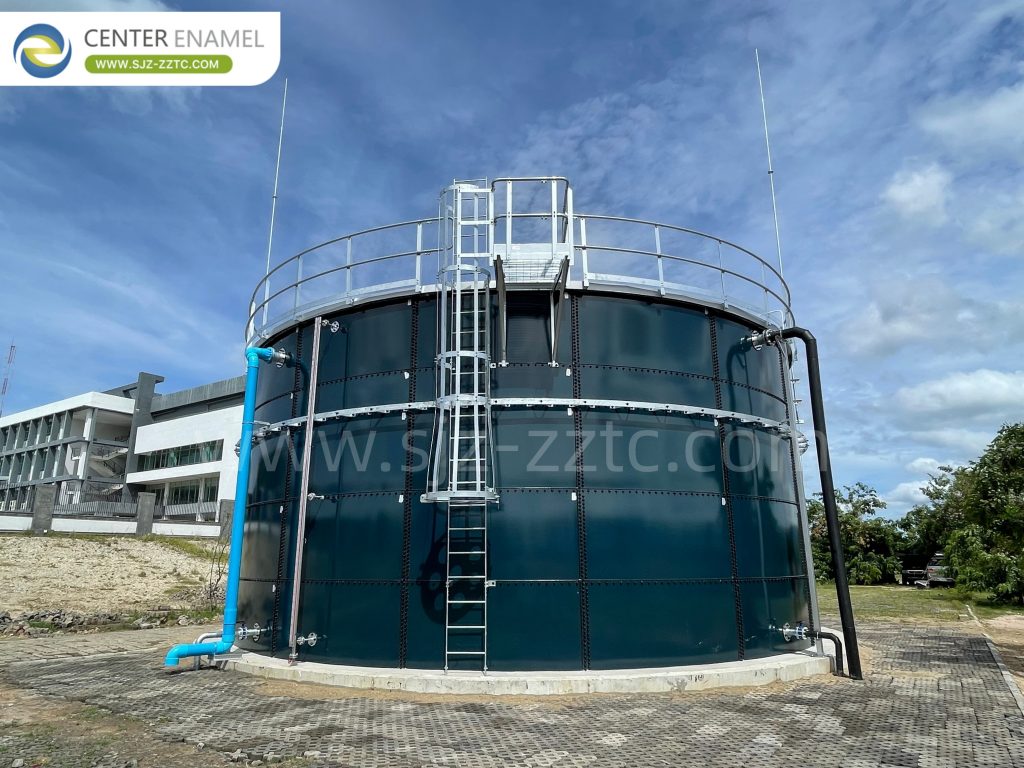
Effective wastewater pretreatment and primary treatment rely on robust, corrosion-resistant infrastructure. This is where Center Enamel, a global leader in Glass-Fused-to-Steel (GFS) tanks, provides essential solutions. With over 36 years of experience, Center Enamel manufactures premium GFS tanks that are ideal for various applications in the wastewater treatment process .
GFS tanks are manufactured by fusing glass to steel at approximately 860°C, creating a chemically resistant and impermeable surface . This technology makes them perfect for containing the aggressive substances found in wastewater, including acidic or alkaline effluents .
Advantages of GFS Tanks in Wastewater Treatment
Excellent Corrosion Resistance: The glass coating protects the steel from corrosion caused by aggressive wastewater substances, reducing maintenance needs .
Long Service Life: GFS tanks are designed for over 30 years of service life, providing a long-term solution with lower operational costs .
Easy and Fast Installation: The modular, bolted design allows for quick on-site assembly, significantly reducing construction time compared to field-welded tanks .
Adaptability: GFS tanks are used in various wastewater treatment processes, including equalization, aeration, anaerobic digestion (UASB, CSTR, USR, IC), and sludge storage .
Versatile Roof Options: Center Enamel offers GFS and aluminum alloy roofs to complement different tank structures, providing robust protection and enhancing operational efficiency .
Environmental Compliance: All designs meet rigorous international standards, including AWWA D103, ISO 9001, NSF61, and EN ISO 28765 .
Center Enamel: Your Expert Partner in Wastewater Treatment
Center Enamel provides comprehensive EPC (Engineering, Procurement, and Construction) services, managing everything from design and manufacturing to installation. The company has successfully delivered wastewater treatment projects in over 100 countries, including Mozambique and Saudi Arabia . In one project in Mozambique, Center Enamel supplied multiple tanks for various treatment stages, including equalization, aeration, and anaerobic digestion, demonstrating its capability to provide complete solutions for complex wastewater treatment needs .
Conclusion
Pretreatment of wastewater is an indispensable first step in modern wastewater management. By removing harmful pollutants, protecting sensitive equipment, and conditioning wastewater for subsequent biological processes, pretreatment ensures the efficiency, reliability, and sustainability of the entire treatment system. Partnering with an experienced EPC contractor like Center Enamel and utilizing premium infrastructure like GFS tanks is crucial for implementing effective pretreatment and treatment solutions.
Frequently Asked Questions
1.What is the difference between preliminary treatment and primary treatment?
Preliminary treatment (also called pretreatment) involves physical processes like screening, grit removal, and equalization to remove large solids and protect equipment. Primary treatment includes chemical and physical processes such as chemical dosing, flocculation, and sedimentation to remove settleable organic and inorganic solids .
2.Why is equalization important in wastewater pretreatment?
Equalization is important because it smooths out variations in flow, temperature, and pollutant concentration, providing a consistent and manageable feed to downstream treatment processes. This prevents shock loading, optimizes chemical dosing, and improves overall treatment efficiency .
3. Are GFS tanks suitable for all types of wastewater treatment applications?
Yes, GFS tanks are highly versatile and are used in a wide range of wastewater treatment applications, including equalization, aeration, anaerobic digestion (UASB, CSTR, USR, IC), and sludge storage. Their corrosion resistance, durability, and modular design make them an excellent choice for both municipal and industrial wastewater projects .