
What is Pulp Mill Effluent?
Pulp mill effluent refers to the complex industrial wastewater generated throughout pulp and paper manufacturing processes, including wood debarking, cooking, pulping, washing, screening, and bleaching. It is one of the most heavily polluted industrial wastewaters globally, featuring high COD, BOD, suspended solids, lignin, organic acids, residual chemicals, and toxic chlorinated compounds. As the pulp industry expands, large volumes of pulp mill effluent are produced daily, posing severe challenges to water ecosystems and environmental compliance.
Center Enamel, as a professional EPC contractor for industrial wastewater projects, provides integrated pulp mill effluent treatment solutions with mature anaerobic technologies and high-performance containment systems, helping pulp factories achieve discharge standards, energy recovery, and sustainable production.
How Pulp Mill Effluent Is Generated
Pulp mill effluent originates from every core production stage of pulp manufacturing and can be divided into three main categories.
First, cooking black liquor forms during high-temperature chemical cooking of wood or plant fiber raw materials. It contains high-concentration lignin, cellulose degradation substances, residual alkali, and sulfide pollutants, with extremely high organic load.
Second, middle-stage wastewater comes from pulp washing, screening, and bleaching processes. This part carries massive suspended solids, colored lignin compounds, and adsorbable organic halides (AOX) formed during chlorine bleaching.
Third, paper-making white water is produced during paper forming and workshop cleaning, containing fine fiber fillers, adhesives, and low-concentration organic pollutants.
All these streams combine to form comprehensive pulp mill effluent, characterized by dark color, strong odor, high toxicity, poor biodegradability, and large daily discharge volume. Without professional treatment, it cannot be directly discharged or reused.
Hazards of Direct Discharge of Pulp Mill Effluent
Direct discharge of untreated pulp mill effluent causes irreversible damage to aquatic environments, soil, and public health.
Water Eutrophication & Oxygen Depletion: High COD and BOD consume massive dissolved oxygen in rivers and lakes, leading to hypoxia and mass death of aquatic organisms.
Water Body Discoloration: Lignin and colored substances darken water, block sunlight, inhibit aquatic photosynthesis, and damage ecological balance.
Toxic Pollution: Bleaching wastewater contains dioxins, chlorophenols, and persistent organic pollutants, which accumulate in the food chain and harm fish, animals, and humans.
Soil and Groundwater Contamination: Infiltration of effluent pollutes farmland soil and groundwater, reducing crop yield and endangering drinking water safety.
Strict Regulatory Penalties: Most countries have issued strict pulp wastewater discharge standards. Illegal discharge leads to heavy fines, production suspensions, and brand reputation losses for pulp enterprises.
Complete Pulp Mill Effluent Treatment Process
Professional pulp mill effluent treatment follows a mature three-stage process: Pretreatment → Anaerobic Treatment → Aerobic Advanced Treatment.
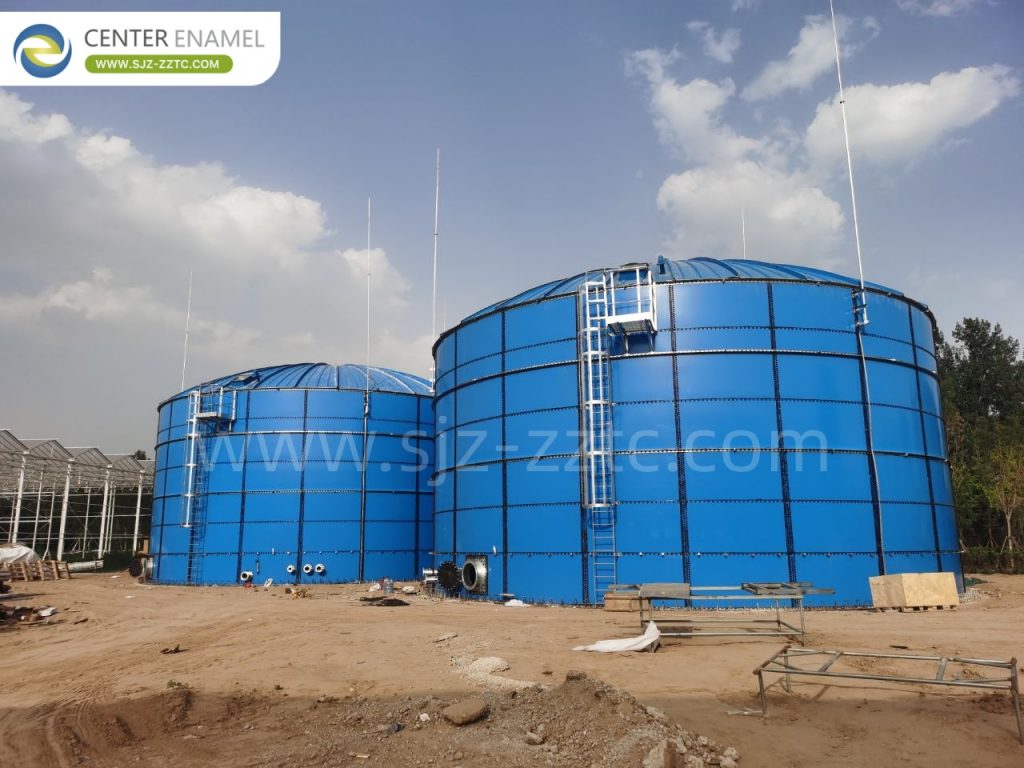
Pretreatment Stage: Includes grid filtration, grit removal, coagulation, sedimentation, and water regulation. It removes large suspended solids, fibers, and floating oil, balances water quality and flow, and reduces the pollutant load for subsequent biological units. Center Enamel’s GFS Tanks are widely used as regulation and sedimentation tanks, offering strong corrosion resistance to adapt to acidic and alkaline pulp wastewater.
Core Anaerobic Treatment Stage: This is the key step to degrade high-concentration organic matter. Under oxygen-free conditions, anaerobic microorganisms decompose lignin, carbohydrates, and organic pollutants into methane and carbon dioxide, reducing COD significantly while producing renewable biogas.
Aerobic Advanced Treatment Stage: Further removes residual organic matter, ammonia nitrogen, and color through activated sludge and biological filtration, ensuring final effluent meets local environmental discharge standards and can be recycled for factory production water.
Four Core Anaerobic Technologies for Pulp Mill Effluent
Center Enamel customizes four mature anaerobic technologies perfectly adapted to different pollutant concentrations, wastewater characteristics, and plant scales for pulp mill effluent treatment.
1. CSTR (Completely Stirred Tank Reactor)
CSTR is highly suitable for high-solids, high-viscosity pulp mill effluent such as black liquor. Mechanical stirring ensures full mixing of wastewater and anaerobic sludge, preventing stratification, crusting, and sedimentation. It maintains stable organic degradation efficiency and continuous biogas output, ideal for large integrated pulp mills.
2. USR (Upflow Solids Reactor)
USR features simple structure and no mechanical stirring. It uses upward water flow to retain suspended solids and sludge, with low energy consumption and easy maintenance. It is the cost-effective choice for medium and small pulp factories with moderate suspended solids in wastewater.
3. UASB (Upflow Anaerobic Sludge Blanket)
UASB is a globally proven cost-effective anaerobic process. Wastewater flows upward through a dense granular sludge blanket, enabling efficient degradation of dissolved organic pollutants. It has high treatment load, low operating costs, and stable performance, widely applied in middle-stage pulp wastewater treatment.
4. IC (Internal Circulation Reactor)
IC is an advanced high-rate anaerobic technology relying on biogas-driven internal circulation. Its treatment capacity is 3–5 times higher than traditional reactors, with a compact footprint and excellent COD removal efficiency. It is the preferred solution for large pulp mills with limited land and high energy recovery demands.
Overall Advantages of Center Enamel in Pulp Mill Effluent Treatment
As a leading EPC contractor for pulp mill effluent treatment, Center Enamel owns comprehensive competitive strengths.
Customized Engineering Design: We conduct on-site surveys to design targeted processes, tank volumes, and system layouts based on actual wastewater volume, pollutant concentration, and factory land conditions.
Extreme Corrosion Resistance: Pulp mill effluent carries acid, alkali, lignin, and corrosive chemicals. Our GFS Tanks are sintered at over 820°C with full pH 1–14 resistance, adapting to long-term harsh operating environments.
Full Lifecycle EPC Service: Covering design, equipment manufacturing, installation, commissioning, and after-sales service, we provide one-stop turnkey solutions to reduce project risks for pulp enterprises.
Energy Recycling Benefits: Our optimized anaerobic systems maximize biogas production. The generated biogas can be used for power generation and heating, cutting factory energy costs; digestate can be processed into organic fertilizer to realize circular economy.
International Certification & Rich Experience: With over 200 enamel patents, ISO/CE/NSF international certifications, and global industrial wastewater project experience, we are familiar with international pulp industry environmental standards and construction norms.
Pulp mill effluent is a complex, highly polluted industrial wastewater generated from multiple pulp production processes, and direct discharge causes severe ecological and health hazards. A standardized treatment process combining pretreatment, anaerobic digestion, and aerobic polishing is essential for compliance.
Center Enamel provides four mature anaerobic technologies including CSTR, USR, UASB, and IC, matched with high-performance GFS Tanks and full EPC services. We help global pulp factories efficiently treat effluent, recover biogas energy, lower operating costs, and achieve green and sustainable industrial development.