
What Is the A2O Process in Wastewater Treatment? The Leading Solution for Municipal Wastewater Treatment
The A2O process—short for Anaerobic-Anoxic-Oxic—is an advanced biological wastewater treatment method widely adopted in municipal sewage treatment plants around the world. It is designed to remove organic pollutants, nitrogen, and phosphorus simultaneously, making it one of the most efficient and cost-effective treatment options available today .
The A2O process operates through three distinct stages, each hosting specific microbial communities that perform different functions. In the anaerobic zone, phosphorus-accumulating organisms (PAOs) release phosphorus while consuming organic carbon. The anoxic zone enables denitrification, where bacteria convert nitrate into nitrogen gas. Finally, in the oxic (aerobic) zone, microorganisms oxidize ammonia to nitrate and take up excess phosphorus, which is then removed as sludge .
This three-stage configuration allows the A2O process to achieve simultaneous removal of carbonaceous organic matter, nitrogen, and phosphorus—a capability that distinguishes it from many other biological treatment methods.
Why the A2O Process Matters for Municipal Sewage Treatment
Municipal sewage contains a complex mixture of pollutants: organic matter, nutrients like nitrogen and phosphorus, pathogens, suspended solids, and various chemicals. When discharged untreated, these pollutants cause severe environmental damage—eutrophication of water bodies, algal blooms, and contamination of drinking water sources .
Nutrient pollution is particularly concerning. Nitrate in drinking water, for example, can cause methemoglobinemia in infants, while phosphorus drives eutrophication that degrades aquatic ecosystems . The A2O process directly addresses these challenges by removing both carbonaceous pollutants and nutrients in a single treatment train.
Research published in Scientific Reports confirmed that the A2O process proficiently removes surfactants and phosphorus via microbial metabolism, though its nitrate elimination performance may require optimization when carbon sources are limited . A comprehensive multi-objective evaluation in Journal of Environmental Chemical Engineering further demonstrated that A2O outperforms other common processes like oxidation ditches (OD) in environmental impact, carbon footprint, and economic cost .
How the A2O Process Works: A Step-by-Step Overview
Stage 1: Anaerobic Zone
Wastewater enters the anaerobic tank, where no oxygen or nitrate is present. Here, phosphorus-accumulating organisms (PAOs) take up volatile fatty acids and release stored phosphorus. This phosphorus release is essential for subsequent uptake in the aerobic stage .
Stage 2: Anoxic Zone
The anoxic tank receives mixed liquor from the oxic tank (internal recycling). In this oxygen-limited environment, denitrifying bacteria use nitrate as an electron acceptor to oxidize organic matter, converting nitrate to nitrogen gas that escapes into the atmosphere .
Stage 3: Oxic (Aerobic) Zone
In the aerobic tank, oxygen is supplied to support aerobic microorganisms. Ammonia is oxidized to nitrate (nitrification), and PAOs take up excess phosphorus. Phosphorus is then removed from the system as phosphorus-rich sludge .
Sludge and Effluent Management
After the aerobic stage, mixed liquor passes to a clarifier. Settled sludge is returned to the anaerobic tank to maintain biomass, while excess sludge is wasted and dewatered. Treated effluent can be discharged or further polished for reuse applications .
Key Benefits of the A2O Process for Municipal Treatment
High Nutrient Removal Efficiency: Simultaneous removal of organic matter, nitrogen, and phosphorus achieves effluent quality compliant with stringent discharge standards.
Economic Advantages: Life-cycle analysis shows A2O has a significantly lower operational cost (0.0945 USD/m³) compared to alternatives like oxidation ditches (0.1369 USD/m³)—a 31% reduction .
Lower Carbon Footprint: Direct and indirect carbon emissions from A2O are substantially lower than alternatives. Research indicates oxidation ditch emissions are 1.97 times and 1.51 times higher than A2O for direct and indirect emissions, respectively .
Flexibility and Stability: The A2O process adapts well to fluctuations in influent quality and quantity, making it suitable for diverse municipal sewage characteristics.
Low Sludge Production and Odor Emissions: A2O produces less sludge than many alternatives and operates with minimal odor issues .
Challenges and Optimization of the A2O Process
While highly effective, the A2O process faces limitations. Research shows nitrate elimination can be constrained when biodegradable carbon sources are limited or redox conditions are improper . The anoxic tank shows the most significant nitrate reduction, but performance depends on adequate carbon supply.
Recent innovations address these challenges. For carbon-limited wastewater (low COD/N ratios), sidestream phosphorus release strategies have demonstrated over 99% phosphorus removal and 79% nitrogen removal while enabling anammox bacteria enrichment in conventional A2/O systems . This approach resolves the traditional conflict between short sludge retention times required for enhanced biological phosphorus removal (EBPR) and long retention times needed for anammox.
Other optimization strategies include multi-stage baffled configurations that improve low-temperature performance, as demonstrated in research on plateau wastewater treatment . These innovations continue to expand the capabilities and application range of the A2O process.
Applications Beyond Municipal Wastewater
The A2O process is not limited to municipal sewage. Its principles apply to various wastewater streams:
Industrial Wastewater: Treatment of food processing, chemical, and textile effluents.
Anaerobic Digestion Post-Treatment: Polishing effluent from anaerobic digesters to meet discharge or reuse standards .
Water Reuse Applications: When combined with membrane or advanced treatment, A2O effluent can be used for irrigation, landscaping, and industrial cooling.
Center Enamel: Your One-Stop Solution for A2O-Based Wastewater Treatment
Center Enamel (Shijiazhuang Zhengzhong Technology Co., Ltd) is a comprehensive high-tech enterprise with over 35 years of experience in wastewater treatment engineering, process contracting, and equipment manufacturing. The company has a 150,000㎡ R&D and manufacturing center and a production capacity of 300,000 sheets per year .
Center Enamel provides complete turnkey EPC services covering design, manufacturing, transportation, installation, commissioning, training, and after-sales support. The company's solutions integrate the A2O process with proven anaerobic technologies and high-performance GFS Tanks (Glass-Fused-to-Steel Tanks) to deliver comprehensive municipal sewage treatment.
Global Project Experience
Center Enamel has successfully implemented municipal wastewater treatment projects across multiple countries and regions:
Vietnam: Integrated anaerobic digestion with A2O polishing for municipal sewage treatment, addressing limited sewer coverage and low treatment rates .
Indonesia: Customized solutions combining A2O with anaerobic technologies and GFS tanks, adaptable to tropical humid climates .
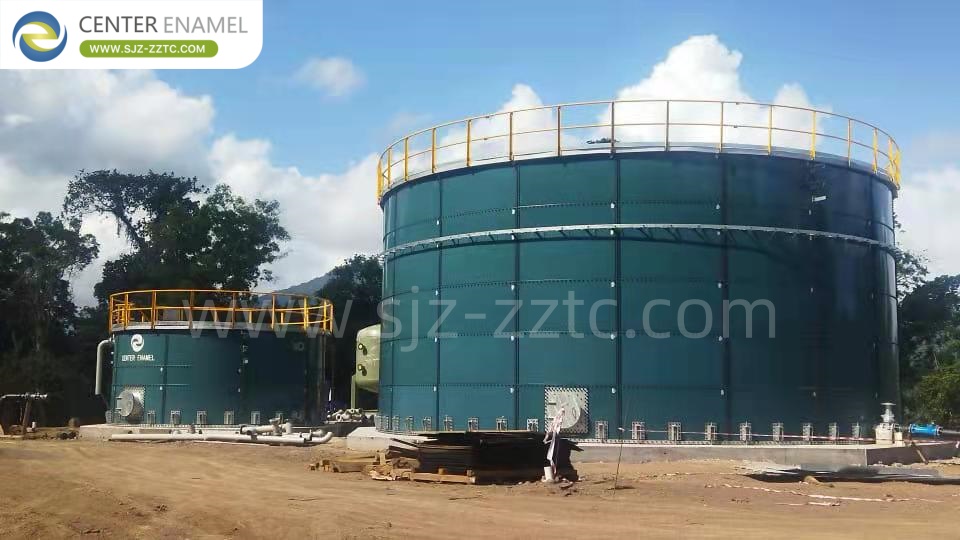
Ghana: Completed a domestic sewage treatment project treating 1,800 tons per day using GFS tanks as carriers, including A2/O tanks .
Saudi Arabia: Supplied five GFS tanks of 2,204m³ capacity each for municipal sewage treatment, completed in 2024 .
Why Choose Center Enamel?
Strong R&D and Manufacturing: Over 200 enamel technology patents, strict quality control, products complying with ISO, AWWA, and other international standards.
Full Turnkey EPC Services: One-stop solutions from design through after-sales support.
Customized Engineering: Systems tailored to wastewater characteristics, climate, and site conditions.
Rich Overseas Experience: Deep understanding of regional policies, regulations, and construction environments.
High Efficiency and Cost-Effectiveness: High treatment efficiency, low failure rate, and operating cost ensuring stable long-term returns.
Comprehensive After-Sales Support: Global service network providing technical guidance, maintenance, and upgrades.
Conclusion
The A2O process is a proven, cost-effective, and reliable biological treatment technology for municipal wastewater. Its ability to simultaneously remove organic matter, nitrogen, and phosphorus makes it the preferred choice for sewage treatment plants worldwide, particularly in the context of increasingly stringent discharge standards and carbon reduction goals.
With over three decades of expertise and a track record of successful projects across continents, Center Enamel stands ready as a trusted partner for municipal wastewater treatment infrastructure development. Whether you are upgrading an existing plant or building a new facility, Center Enamel's integrated solutions—combining A2O technology, anaerobic digestion, and GFS tanks—offer a path to efficient, sustainable, and cost-effective wastewater treatment.
FAQ
1. What makes the A2O process different from conventional activated sludge treatment?
The A2O process differs by incorporating three distinct zones—anaerobic, anoxic, and oxic—in sequence. This configuration enables simultaneous biological removal of organic matter, nitrogen, and phosphorus in a single system. Conventional activated sludge typically focuses on organic carbon removal and nitrification but lacks dedicated zones for biological phosphorus removal and denitrification .
2. Is the A2O process suitable for small-scale municipal sewage treatment?
Yes, the A2O process can be scaled for facilities of various sizes. For smaller treatment plants in suburban or remote areas, Center Enamel offers adaptable configurations like the USR (Upflow Solid Reactor) process with simpler structures and lower O&M costs, while still incorporating A2O polishing for nutrient removal .
3. Can the A2O process be combined with anaerobic digestion for energy recovery?
Absolutely. Center Enamel's integrated solutions combine anaerobic digestion (which produces biogas for energy generation) with A2O polishing for final nutrient removal. This creates a “treatment + energy + water reuse + resource” system that maximizes resource recovery while meeting strict discharge standards. The approach is particularly valuable for tropical climates like Southeast Asia and West Africa .