
What is the Best Material for Biogas? Full Guide to Feedstock & Technology
When planning a biogas plant, investors and developers always ask: What is the best material for biogas?
In fact, there is no single universal “one-size-fits-all” raw material. A wide range of organic biomass can be used for biogas production, and professional biogas engineering companies can design stable and efficient biogas projects for all mainstream feedstocks. The key lies in reasonable raw material matching, mature anaerobic digestion principles, professional supporting equipment, and customized anaerobic technologies.
This article introduces common biogas raw materials, explains the scientific principle of biogas generation, lists core equipment and mainstream anaerobic technologies for biogas projects, and finally highlights the advantages and rich global experience of Center Enamel in biogas EPC projects.
Common Raw Materials for Biogas Production
As a professional biogas project EPC contractor, Center Enamel undertakes biogas projects using all types of mainstream organic raw materials, covering agricultural, livestock, municipal and industrial biomass resources:
1. Livestock Manure
Livestock manure from cattle, pigs, chickens and other poultry is the most traditional and widely applied biogas raw material. It is widely used in farm biogas plants, rural distributed biogas projects and large-scale breeding waste treatment projects.
2. Food Waste & Kitchen Waste
Urban kitchen waste and food processing waste are rich in starch, organic matter and nutrients. They are high-quality raw materials for urban organic waste biogas projects and catering waste resource utilization projects.
3. Crop Straw
Various agricultural dry straw including rice straw, corn straw and wheat straw are abundant renewable biomass resources. They are widely used in rural agricultural biogas plants and large-scale straw comprehensive utilization projects.
4. Energy Grass & Napier Grass
Napier grass, elephant grass and other dedicated energy grasses grow fast with high annual yield. They can be harvested multiple times a year, providing continuous and stable raw materials for commercial large-scale biogas projects.
5. Silage Straw
Silage straw is processed by chopping fresh crop straw or energy grass, compacting and sealing for natural lactic acid fermentation. It realizes long-term storage of biomass and provides stable raw material supply for biogas plants throughout the year, becoming a preferred raw material for modern medium and large-scale biogas projects.
All the above raw materials can be efficiently converted into biogas through scientific process design, and Center Enamel has mature engineering experience in customized treatment for each feedstock.
Biogas Generation Principle
Biogas is produced through anaerobic digestion, a natural biochemical reaction completed by multiple microbial communities in an airtight, oxygen-free environment. The whole process is divided into four continuous and coordinated stages:
Hydrolysis Stage: Complex macromolecular organic substances such as cellulose, protein and starch in raw materials are decomposed into small-molecule soluble sugars and amino acids by hydrolytic bacteria.
Acidification Stage: Acidogenic bacteria further convert small molecular organics into volatile fatty acids, hydrogen and carbon dioxide, laying a foundation for subsequent methane production.
Acetogenesis Stage: Volatile fatty acids are decomposed into acetic acid, which is the core precursor substance for microbial synthesis of methane.
Methanogenesis Stage: Methanogenic archaea convert acetic acid, hydrogen and carbon dioxide into biogas, which contains 55%–70% methane and 30%–45% carbon dioxide.
After desulfurization and purification, biogas can be used for power generation, industrial heating, civil gas supply and other scenarios, while biogas residue and slurry can be processed into high-quality organic fertilizer to form a circular economy system.
Core Equipment for Biogas Projects
A complete biogas project relies on systematic supporting equipment to ensure stable raw material treatment, efficient fermentation, safe gas storage and energy utilization:
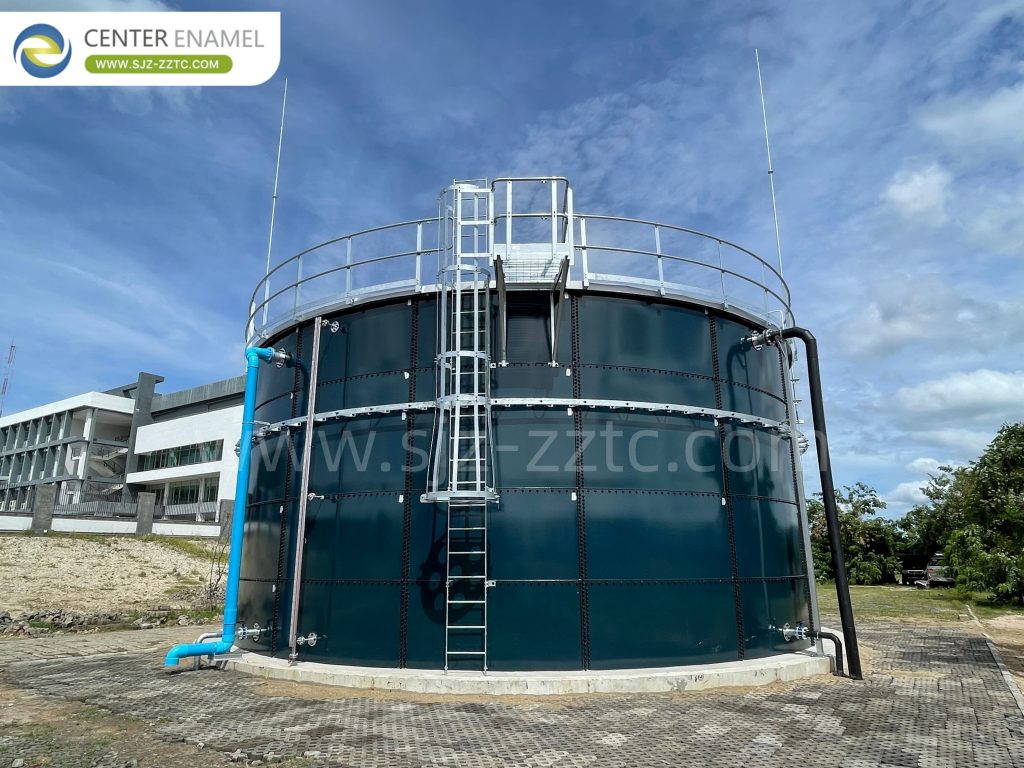
GFS Tanks (Glass-Fused-to-Steel Tanks): Serving as anaerobic fermentation reactors, raw material storage tanks and biogas storage tanks. Featuring strong corrosion resistance, excellent airtight performance and a service life of over 30 years, GFS tanks adapt to various raw materials and complex climatic environments.
Raw Material Pretreatment Equipment: Including shredders, mixers, solid-liquid separation machines and feeding conveying systems, used for crushing, screening, mixing and uniform feeding of straw, manure and food waste.
Stirring & Temperature Control System: Mechanical stirring equipment prevents scum floating and sedimentation inside the tank; constant temperature control systems maintain the optimal temperature for microbial activity and ensure stable biogas production all year round.
Biogas Purification & Desulfurization Equipment: Remove hydrogen sulfide, moisture and impurities from crude biogas to improve methane purity and avoid corrosion of subsequent power generation and utilization equipment.
Biogas Utilization & Residue Treatment Equipment: Including biogas generator sets, combustion boilers, and biogas residue processing systems, realizing energy output and harmless resource utilization of fermentation by-products.
Mainstream Anaerobic Technologies for Biogas Projects
According to different raw material characteristics, solid content and project scale, Center Enamel adopts four mature and customizable anaerobic technologies:
CSTR (Completely Stirred Tank Reactor)
Suitable for high-solid raw materials such as silage straw, dry crop straw and mixed organic waste. Uniform mechanical stirring makes raw materials fully contact with microorganisms, being the preferred process for large-scale centralized biogas plants.
UASB (Upflow Anaerobic Sludge Blanket)
Mainly applicable to low-solids organic wastewater, suitable for medium-sized food factories, breeding wastewater and industrial organic wastewater biogas projects, with low operating cost and high organic removal efficiency.
USR (Upflow Solids Reactor)
With simple structure, low investment and convenient maintenance, it perfectly adapts to scattered small rural biogas projects and small farm biogas plants.
IC (Internal Circulation Reactor)
The organic load is 3–5 times higher than traditional reactors, saving construction land significantly. It is ideal for space-limited industrial parks and large-scale commercial biogas projects.
Center Enamel’s Advantages & Rich Experience in Biogas Projects
As a global leading EPC Contractor specializing in anaerobic digestion and biogas projects, Center Enamel has outstanding professional strength and profound project experience:
1. Rich Experience in Multiple Biogas Raw Materials
Center Enamel has completed hundreds of biogas projects worldwide, covering livestock manure, food waste, crop straw, energy grass and silage straw. We are familiar with the fermentation characteristics and process design requirements of all mainstream biogas raw materials.
2. Mature Customized Anaerobic Technologies
With four core anaerobic processes, we can match the most suitable technical solution according to local raw material types, project scale and climate conditions, ensuring long-term stable and high gas yield.
3. High-Performance GFS Tank Core Advantage
As a professional GFS tank manufacturer, our glass-fused-to-steel tanks feature strong corrosion resistance, good airtightness, fast on-site assembly and 30+ years service life, perfectly adapting to tropical, subtropical and temperate regional biogas projects.
4. One-Stop Turnkey EPC Service
We provide full-chain services including project planning, process design, equipment manufacturing, on-site installation, commissioning and lifelong after-sales support, reducing investment risks and saving construction cycles for clients.
5. Global Project Layout & International Standard Quality
Center Enamel’s biogas projects are spread across Southeast Asia, South Asia, Europe and Africa. All products comply with ISO, AWWA, CE and other international standards, with strict quality testing to ensure safe and stable operation of each biogas plant.
There is no absolute single best material for biogas. Livestock manure, food waste, crop straw, energy grass and silage straw can all be efficiently used for biogas production through professional anaerobic digestion technology and reasonable project design. Mastering biogas generation principles, configuring core supporting equipment and selecting matched anaerobic processes are the keys to successful biogas projects.
With rich raw material adaptation experience, mature anaerobic technologies, high-performance GFS tanks and one-stop EPC services, Center Enamel has become a reliable partner for global biogas project investors, continuously promoting the efficient utilization of biomass energy and the development of circular economy.