
What Is the Best Route for Wet Organic Waste?
Anaerobic digestion (AD) is usually the best route for wet organic waste—typically waste with more than about 15–20% moisture and below 15% total solids—when the goal is energy recovery. AD converts the feed into biogas (55–65% CH₄) plus a nutrient-rich digestate, while composting suits drier, high-fiber residues and incineration suits mixed or low-moisture waste with no land-application route. The right choice follows the solids content, the energy goal, and local digestate rules.
What Counts as Wet Organic Waste
Wet organic waste is the organic fraction where water dominates: food waste, animal manure, sewage sludge, palm oil mill effluent (POME), thin stillage, and agri residues at 2–15% total solids (TS). Because most of its mass is water, burning it is inefficient (see moisture limits) and landfilling wastes both energy and nutrients—so a biological route is almost always preferable.
Route 1 – Anaerobic Digestion (Often Best)
AD runs in an oxygen-free, heated tank at mesophilic 35–38°C (or thermophilic 50–55°C). Microbes convert volatile solids into biogas at roughly 0.30–0.45 m³ per kg COD removed; the biogas fuels a combined heat and power (CHP) unit at 35–45% electrical and up to 80–90% total efficiency. The residue, digestate, returns nutrients to soil. For wet feeds this is the most energy- and nutrient-efficient option.
Route 2 – Composting
Composting is an aerobic, lower-energy route that stabilizes organic matter into a soil amendment. It needs a drier feed (usually TS >35–40% after dewatering) and gives no biogas, so it suits high-fiber residues such as yard waste, straw, and dewatered digestate rather than slurries. It is the better route only when energy recovery is not the priority.
| Route | Typical feed TS | Energy output | Byproduct | Best when |
| Anaerobic digestion | 2–15% | biogas + CHP | digestate (fertilizer) | wet feed, energy goal |
| Composting | 35–60% | low (heat lost) | compost | fibrous, dry, no gas need |
| Incineration | <30% after dry | heat/power | ash | mixed, no land route |
Route 3 – Incineration / Co-incineration
Burning wet organic waste only works after drying to below ~30–50% moisture (or with auxiliary fuel), and it recovers heat but destroys nutrients and needs emissions control. It is the route of last resort for wet streams—used mainly for mixed municipal waste or where digestate land application is banned.
How to Choose the Best Route
Decide in this order: (1) measure total solids—below ~15% strongly favors AD; (2) define the goal—energy recovery points to AD, soil product to composting; (3) check digestate acceptance and transport distance; (4) size the system to a steady feed. Co-digestion (mixing manures with food waste) often improves the AD balance and C:N ratio toward 20–30:1.
Technical Considerations
Wet AD needs reliable, corrosion-resistant tankage and mixing; high solids or grit call for pre-treatment and grit removal. Keep mesophilic operation at 35–38°C, manage ammonia if protein-rich feed is used, and plan digestate storage to avoid winter land-application gaps.
Project Case Study
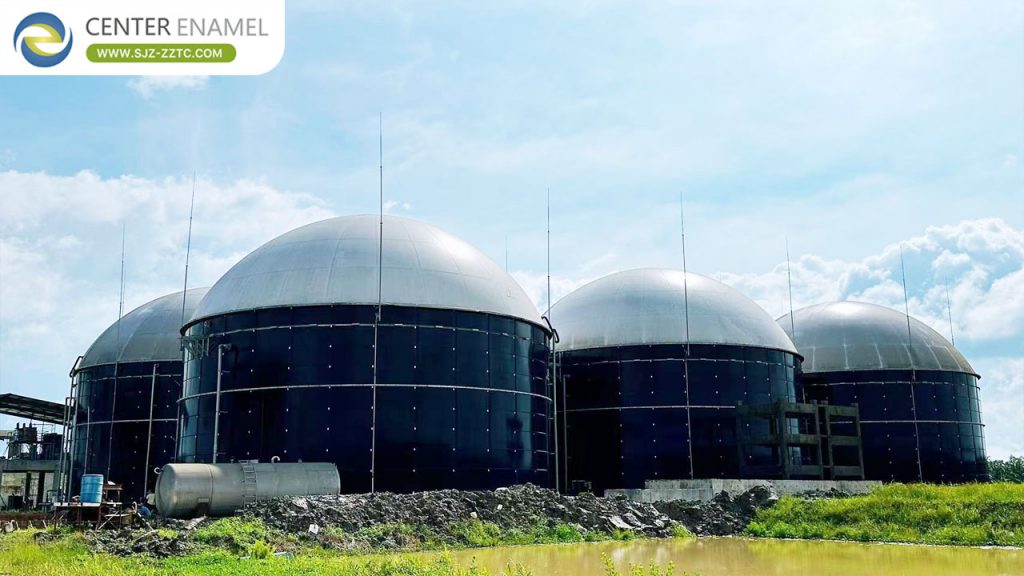
Pakistan Biogas Project. A CSTR waste-to-energy plant delivered with Center Enamel that converts food waste and napier grass (Pennisetum purpureum) into renewable biogas at 100 m³/day. It is a direct example of the AD route applied to wet, energy-rich organic waste, with the reactor tankage sized and specified for the food-waste feed.
| Project | Pakistan Biogas Project |
| Location | Pakistan |
| Industry | Waste-to-Energy / Biogas |
| Application | Food waste + napier grass digestion |
| Product | CSTR anaerobic digester system |
| Capacity | 100 m³/day biogas |
| Quantity | CSTR process, grass co-substrate |
| Material | Glass-Fused-to-Steel (GFS) |
| Standards | ISO 28765, AWWA D103 |
| Status | Delivered reference project |
About Center Enamel
Center Enamel demonstrates its manufacturing capability through bolted Glass-Fused-to-Steel (GFS) tanks produced in controlled, enamel-firing lines (glass fused to steel at 820–930°C). For wet organic-waste AD plants the company supplies digester, secondary, and digestate storage tanks in capacities from 200 m³ to 60,000 m³, manufactured under ISO 9001 with ISO 28765 / AWWA D103 tank standards and CE/EN 1090 structural marking—tankage built to survive the warm, corrosive, gas-bearing environment of a working digester.
Advantages and Limitations
AD is the best route for wet organic waste when energy recovery and nutrient recycling matter; it beats composting on energy and incineration on nutrient retention. Limits: it needs steady feed, digestate management, and robust tankage; very dry or contaminated streams are better composted or excluded.
Comparison of the Three Routes
| Criterion | AD | Composting | Incineration |
| Energy recovered | high (biogas) | negligible | medium (heat) |
| Nutrients kept | yes (digestate) | yes (compost) | no (ash) |
| Feed moisture | wet OK | needs dry | needs dry |
| CapEx profile | medium–high | low–medium | high |
For wet organic waste the best route is usually anaerobic digestion: it returns both energy (biogas, CHP 35–45% electrical) and nutrients (digestate). Composting fits drier, fibrous residue; incineration is the fallback for mixed or land-banned waste. Choose by total solids, energy goal, and digestate rules.
Frequently Asked Questions (FAQ)
Q1: What is the best route for wet organic waste?
A: Anaerobic digestion is usually best for wet feeds (<15% TS) when you want energy recovery; it yields biogas plus a fertilizer-grade digestate.
Q2: Is anaerobic digestion better than composting?
A: For wet, energy-rich waste, yes—AD recovers biogas (55–65% CH₄) and keeps nutrients; composting suits drier, fibrous residue with no gas goal.
Q3: When is incineration used?
A: Mainly for mixed municipal waste or where digestate land application is banned; it needs drying first and loses the nutrients.
Q4: How do I choose the route?
A: Measure total solids, define the energy vs soil-product goal, check digestate acceptance, then size the system to a steady feed.
Q5: Can I mix feeds?
A: Yes—co-digestion of manures with food waste improves gas yield and balances C:N toward 20–30:1.
Q6: What tank does AD need?
A: A sealed, heated, corrosion-resistant digester—Center Enamel supplies bolted GFS digester tanks from 200 to 60,000 m³.
Send your waste type, total solids, and daily volume. We will recommend the AD vs composting route, estimate biogas and digestate, and specify GFS digester and storage tanks with the right standards and capacity.