
What is the Best Way to Get Rid of Garden Waste? Turn Garden Waste into Biogas
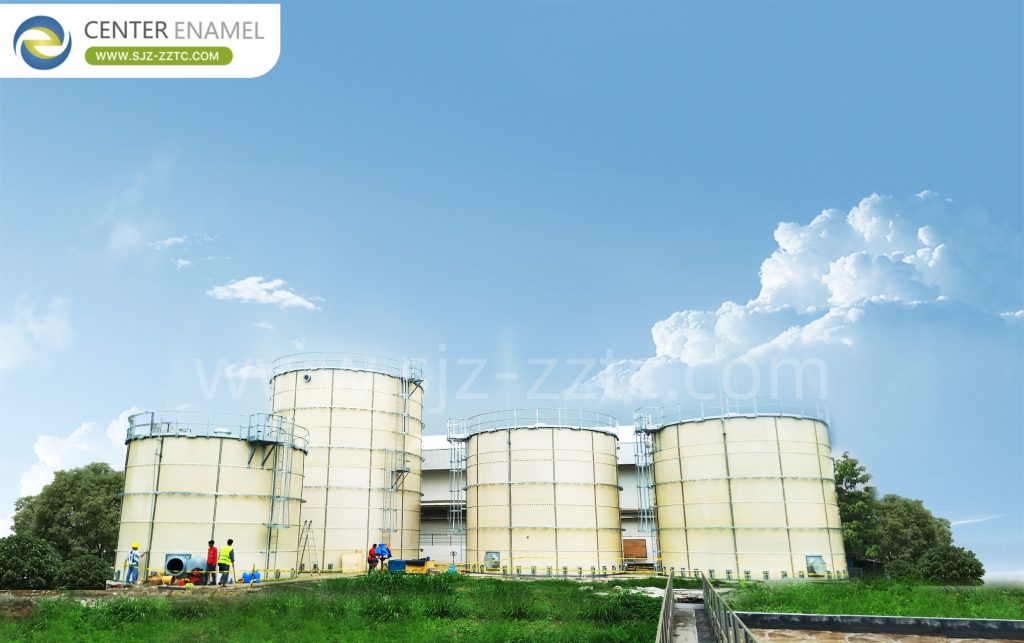
Every garden and community produces massive organic waste every year, including grass clippings, fallen leaves, branches and withered flowers. Traditional disposal methods such as open burning, random landfill and simple stacking cause air pollution, greenhouse gas emissions and waste of biomass resources. Many people are asking: What is the best way to get rid of garden waste?
The most eco-friendly, economical and sustainable solution is to convert garden waste into biogas through professional anaerobic digestion projects. This method realizes harmless treatment, resource recycling and clean energy production at the same time. This article introduces common types of garden waste, how garden waste generates biogas, core advantages of biogas conversion, mainstream anaerobic technologies, and professional biogas project strengths of Center Enamel.
Common Types of Garden Waste
Garden waste is a kind of biodegradable green biomass resource, mainly including the following categories, all suitable for biogas fermentation:
- Grass clippings from regular lawn trimming
- Fallen leaves and withered flowers
- Tree branches, shrub trimmings and twigs
- Garden weeds and rhizome residues
- Green plant residues from landscape maintenance
These garden wastes are rich in cellulose, hemicellulose, carbohydrates and organic proteins, providing high-quality raw materials for biogas production after simple pretreatment such as crushing and stacking.
How Does Garden Waste Generate Biogas
Garden waste produces biogas through anaerobic digestion, a natural biochemical process carried out by microorganisms under sealed oxygen-free conditions. The whole process includes four stable stages:
Hydrolysis Stage: Crushed garden waste’s macromolecular organic substances such as cellulose are decomposed into small-molecule sugars and amino acids by hydrolytic bacteria.
Acidification Stage: Small organic molecules are further converted into volatile fatty acids, hydrogen and carbon dioxide, laying a foundation for methane synthesis.
Acetogenesis Stage: Volatile fatty acids are decomposed into acetic acid, the key precursor for biogas production.
Methanogenesis Stage: Methanogenic bacteria convert acetic acid and inorganic gas into biogas containing 55%–70% methane. After desulfurization and purification, biogas can be used for power generation, heating and civil gas supply. The remaining biogas residue can be processed into high-quality organic fertilizer for garden planting, forming a perfect circular economy loop.
Advantages of Converting Garden Waste into Biogas
Turning garden waste into biogas is far better than burning or landfilling, with multiple environmental, economic and social advantages:
1. Eco-Friendly Waste Disposal
Avoid air pollution and haze caused by open burning; reduce landfill occupation and methane leakage from natural decomposition, effectively cutting greenhouse gas emissions.
2. Create Clean Renewable Energy
Garden waste is converted into stable biogas, replacing fossil fuels and firewood, easing community and rural energy shortages.
3. Realize Circular Economy
Biogas for energy use, biogas residue as organic fertilizer, returning nutrients to garden soil and reducing chemical fertilizer use.
4. Low-Cost Waste Treatment
Reduce manual cleaning, transportation and landfill costs; biomass raw materials are free and easy to collect, lowering overall project operation expenses.
5. Comply with Green Development Policies
Garden waste biogas projects fit carbon neutrality and environmental protection policies, helping communities and enterprises obtain policy support and carbon credit benefits.
Four Mainstream Anaerobic Technologies for Garden Waste Biogas
According to different garden waste characteristics and project scales, four mature anaerobic technologies are widely applied in biogas projects:
1. CSTR (Completely Stirred Tank Reactor)
Suitable for high-solid garden waste such as branches and mixed green residues. Uniform mechanical stirring prevents scum floating and sedimentation, ensuring full fermentation and stable high biogas yield for large-scale centralized projects.
2. UASB (Upflow Anaerobic Sludge Blanket)
Ideal for leachate and low-concentration organic wastewater produced by garden waste stacking, with low operating cost and high treatment efficiency for medium-sized projects.
3. USR (Upflow Solids Reactor)
Simple structure, low investment and easy maintenance, perfectly suitable for small decentralized biogas projects in communities and parks.
4. IC (Internal Circulation Reactor)
With 3–5 times higher organic load than traditional reactors, it saves construction land and is suitable for garden waste biogas projects in urban parks with limited space.
Center Enamel’s Advantages in Garden Waste Biogas Projects
As a global professional EPC contractor and anaerobic solution provider, Center Enamel has rich experience and prominent strengths in garden waste and various biomass biogas projects:
1. Rich Biomass Project Experience
Center Enamel has completed numerous garden waste, agricultural straw and municipal organic biogas projects worldwide. We are fully familiar with the pretreatment methods and anaerobic digestion rules of garden waste, providing stable and high-yield project design.
2. Customized Anaerobic Technology Matching
We flexibly select CSTR, UASB, USR and IC processes according to garden waste types, project scale and local climate, ensuring long-term stable operation.
3. High-Performance GFS Tanks
Our Glass-Fused-to-Steel (GFS) tanks serve as anaerobic digesters and storage tanks, featuring strong corrosion resistance, excellent airtightness, 30+ years service life, and perfect adaptability to humid and complex outdoor environments.
4. One-Stop Turnkey EPC Service
From project planning, process design, equipment manufacturing to installation, commissioning and lifelong after-sales maintenance, we provide full-chain services to reduce investment risks for clients.
5. International Standard Quality
All products comply with ISO, AWWA and CE international standards. Every GFS tank passes strict high-voltage spark testing to ensure airtight and corrosion-resistant performance for garden waste fermentation.
Undoubtedly, converting garden waste into biogas is the best way to get rid of garden waste. It solves pollution problems, produces clean energy, and realizes resource recycling at the same time. With mature anaerobic digestion principles and four core biogas technologies, garden waste can be efficiently turned into valuable biomass energy. As a reliable global biogas EPC contractor, Center Enamel relies on professional technology, high-performance GFS tanks and rich overseas project experience to provide one-stop customized solutions for garden waste biogas projects, promoting global green environmental protection and circular economy development.