
What is the Biological Process of Wastewater Treatment? A Complete Guide to Microbial Breakdown
When we flush a toilet, drain an industrial vat, or wash produce at a food processing plant, the resulting wastewater contains a complex cocktail of organic matter, nutrients, and pathogens. Removing these pollutants through physical or chemical means alone is expensive and often incomplete. This raises a critical question for environmental engineers and plant operators: What is the biological process of wastewater treatment?
At its core, the biological process is the use of naturally occurring microorganisms-bacteria, protozoa, fungi, and other microbes-to consume and break down organic pollutants in water. These tiny organisms metabolize dissolved and suspended organic matter, converting it into harmless byproducts such as carbon dioxide, water, and energy. In doing so, they transform filthy, pathogen-laden water into a clear effluent safe for discharge or reuse.
Biological treatment is the heart of modern wastewater management. It is cost-effective, environmentally sustainable, and capable of achieving high removal efficiencies for Biochemical Oxygen Demand (BOD), Chemical Oxygen Demand (COD), nitrogen, and phosphorus. This article explores the various biological processes, their mechanisms, and how robust infrastructure-including storage solutions from Center Enamel-supports their optimal performance.
The Core Principle: How Microorganisms Clean Water
To understand what is the biological process of wastewater treatment, we must first appreciate the "food" and "energy" relationship. Wastewater contains organic matter-essentially food for microbes. These microorganisms use enzymes to break down complex organic compounds (proteins, carbohydrates, fats) into simpler molecules, releasing energy for growth and reproduction.
The key to successful biological treatment is creating the ideal environment for these microbes to thrive. This includes controlling:
Oxygen levels (aerobic, anoxic, or anaerobic conditions).
Temperature (mesophilic or thermophilic ranges).
pH (typically neutral, 6.5–8.5).
Nutrients (nitrogen and phosphorus must be balanced).
Hydraulic retention time (the time water spends in the system).
When conditions are optimal, a healthy microbial community-often called "biomass" or "sludge"-develops, consuming pollutants and settling out as a solid that can be separated from the treated water.
Aerobic Treatment: The Oxygen-Dependent Powerhouse
The most common answer to what is the biological process of wastewater treatment is aerobic treatment. As the name suggests, aerobic microorganisms require dissolved oxygen to survive and metabolize organic matter.
The Activated Sludge Process:
This is the most widely used aerobic system. It involves an aeration tank where wastewater is mixed with a recycled population of microorganisms (return activated sludge). Air (or pure oxygen) is diffused into the tank, providing the oxygen required for the bacteria to oxidize organic compounds. The equation is simple:
Organic matter + O₂ + Microorganisms → CO₂ + H₂O + New cells (biomass)
After aeration, the mixture flows to a clarifier where the biomass settles. Some of this sludge is returned to the aeration tank to maintain a high concentration of microbes, while the excess is wasted for further processing.
Variants of Aerobic Treatment:
Extended Aeration: Longer retention times for lower sludge production, common in small municipal plants.
High-Rate Systems: High biomass concentrations for compact footprints.
Sequencing Batch Reactors (SBR): A fill-and-draw system that combines aeration and settling in a single tank.
Aerobic systems are highly efficient for BOD removal, often achieving 95%+ reductions. However, they are energy-intensive due to the continuous aeration requirement.
Anaerobic Treatment: Methane Production Without Oxygen
When considering what is the biological process of wastewater treatment, anaerobic digestion provides a fascinating and increasingly popular alternative. In the absence of oxygen, a consortium of bacteria-hydrolytic, acidogenic, acetogenic, and methanogenic-work synergistically to break down organic matter.
The Four Stages of Anaerobic Digestion:
Hydrolysis: Complex polymers (fats, proteins, cellulose) are broken into soluble sugars and amino acids.
Acidogenesis: Soluble organic compounds are fermented into volatile fatty acids (VFAs) and alcohols.
Acetogenesis: VFAs are converted into acetic acid, hydrogen, and carbon dioxide.
Methanogenesis: Methanogenic archaea convert acetic acid and hydrogen/CO₂ into methane (CH₄) and water.
Advantages:
Low Energy Consumption: No aeration required.
Biogas Production: Methane can be captured and used as renewable energy to heat the plant or generate electricity.
Lower Sludge Production: Anaerobic systems produce significantly less excess sludge than aerobic systems, reducing disposal costs.
Anaerobic treatment is ideal for high-strength industrial wastewater (e.g., food processing, brewery, distillery, and poultry slaughterhouse effluent). Common reactor designs include Upflow Anaerobic Sludge Blanket (UASB) and Covered Anaerobic Lagoons.
Anoxic Treatment and Biological Nutrient Removal (BNR)
Modern wastewater treatment goes beyond removing organic carbon; it must also address nitrogen and phosphorus-nutrients that cause eutrophication in receiving water bodies. This is where anoxic and combined systems become essential in understanding what is the biological process of wastewater treatment.
Nitrification (Aerobic): In the first step of nitrogen removal, aerobic bacteria (Nitrosomonas and Nitrobacter) convert ammonia (NH₃) into nitrite (NO₂⁻) and then into nitrate (NO₃⁻).
Denitrification (Anoxic): In the absence of dissolved oxygen but in the presence of nitrate (NO₃⁻), facultative bacteria use nitrate as an electron acceptor to "breathe," converting it into harmless nitrogen gas (N₂) that escapes into the atmosphere. This occurs in anoxic zones.
Phosphorus Removal:
Enhanced Biological Phosphorus Removal (EBPR) cycles microorganisms between anaerobic and aerobic zones. Phosphorus-accumulating organisms (PAOs) release phosphorus in anaerobic conditions and take up large amounts in aerobic conditions, which is then removed as phosphorus-rich sludge.
BNR systems require precise tank zoning and recirculation pumps to move mixed liquor between aerobic and anoxic compartments. This is a sophisticated process that demands reliable, corrosion-resistant tank infrastructure.
Attached Growth Systems vs. Suspended Growth Systems
When exploring what is the biological process of wastewater treatment, you'll encounter two primary configurations for hosting microorganisms: suspended growth and attached growth.
Suspended Growth:
Microorganisms are suspended in the liquid, forming flocs (as in activated sludge).
Contact between microbes and pollutants is maximized through mixing and aeration.
Advantages: Uniform distribution, flexible operation.
Disadvantages: Requires good settling characteristics; can suffer from bulking.
Attached Growth (Fixed-Film Systems):
Microorganisms attach to a solid support media (plastic bio-carriers, rocks, or synthetic media).
Wastewater flows over the media, allowing microbes to consume the organic film.
Examples: Trickling filters, Rotating Biological Contactors (RBCs), and Moving Bed Biofilm Reactors (MBBR).
MBBR (Moving Bed Biofilm Reactor): This hybrid approach uses small plastic carriers suspended in the aeration tank. Biofilm grows on the carriers, which are kept in constant motion by aeration. MBBR is highly resilient to shock loads and requires a smaller footprint than traditional activated sludge systems. It is particularly effective for industrial wastewater with variable flow rates.
The Importance of Solids Separation and Sludge Recirculation
Biological treatment is not just about microbes eating pollutants; it is also about separating the treated water from the microbial biomass. Answering what is the biological process of wastewater treatment fully requires discussing clarification and recirculation.
After the biological reaction phase, the mixed liquor (water + biomass) flows to a secondary clarifier. Here, gravity causes the heavier flocs and bio-carriers to settle to the bottom, forming a dense sludge layer. The clear supernatant (effluent) overflows to discharge or tertiary treatment.
Return Activated Sludge (RAS):
A portion of the settled sludge is pumped back to the aeration tank to maintain the required microbial population (biomass concentration). Proper RAS management is crucial for system stability.
Waste Activated Sludge (WAS):
The excess sludge that is not returned is removed from the system. This sludge is rich in organic matter and nutrients and must be thickened, dewatered, and processed (often via anaerobic digestion) to reduce volume and recover energy.
Efficient clarifiers and reliable pumping systems are essential to keep biological systems balanced. Solids that are not separated properly can wash out of the system, leading to permit violations.
Key Parameters for Monitoring Biological Health
To maintain an efficient biological process, operators must constantly monitor specific parameters. These KPIs not only answer what is the biological process of wastewater treatment in terms of performance but also provide early warnings of system distress.
Critical Parameters:
Dissolved Oxygen (DO): In aerobic systems, DO should be maintained between 2.0–4.0 mg/L. Too low, and the microbes suffocate; too high, and energy is wasted.
pH: Most biological processes prefer a pH range of 6.5–8.5. Extreme pH levels are toxic to microbes.
Temperature: Mesophilic bacteria perform best at 20–40°C. Anaerobic digesters are often heated to 35°C or 55°C for optimal methane production.
F/M Ratio (Food-to-Microorganism): This ratio balances the incoming organic load (BOD) against the available biomass in the system. A low F/M may cause starvation; a high F/M may cause incomplete treatment.
Sludge Volume Index (SVI): SVI measures the settling characteristics of the sludge. A high SVI indicates poor settling (bulking), which may be caused by filamentous bacteria overgrowth.
Modern biological plants are equipped with automated sensors and SCADA systems to allow real-time adjustments, ensuring continuous compliance with environmental permits.
Center Enamel: Your One-Stop Solution for Biological Wastewater Treatment Infrastructure
Understanding what is the biological process of wastewater treatment is essential, but successful implementation requires robust, durable, and corrosion-resistant infrastructure. This is where Center Enamel excels. As a global leader in bolted storage tanks and wastewater solutions, we provide the foundational tanks and components necessary to house and optimize biological treatment systems.
Our Specialized Solutions for Biological Treatment:
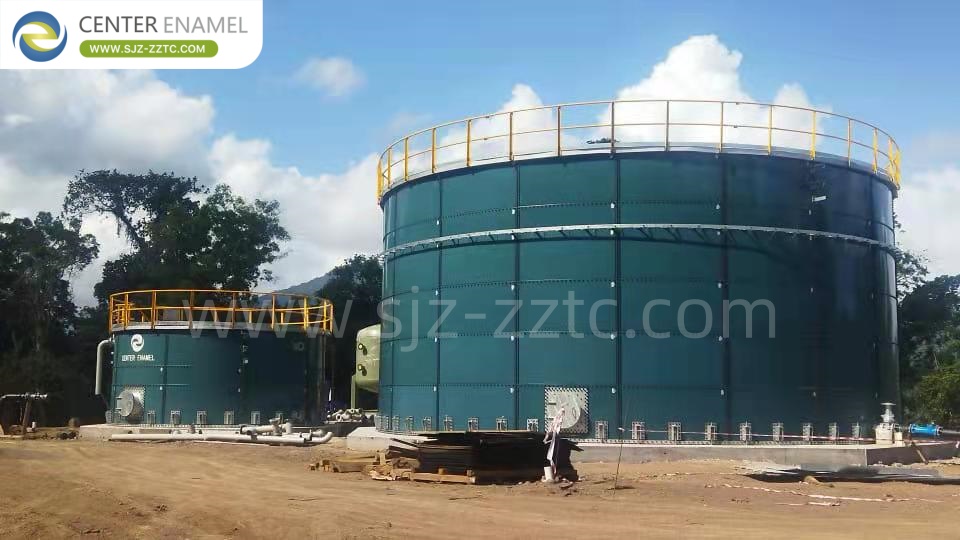
Glass-Fused-to-Steel (GFS) Tanks: Our signature product is the ideal choice for aeration basins, anaerobic digesters, equalization tanks, and clarifiers. The high-temperature fired glass coating is chemically inert, resisting the corrosive effects of acids, sulfides, and gases (like H₂S) produced during biological decomposition. The smooth enamel surface prevents biofilm buildup on tank walls, reducing maintenance.
Covered Anaerobic Digesters: Center Enamel supplies gas-tight covers and insulated tank systems for capturing valuable biogas (methane) from anaerobic digestion. This turns your waste into energy, lowering operational costs and reducing your carbon footprint.
Custom Engineering and Design: We understand that biological processes require precise hydraulic retention times and specific tank geometries. Our engineering team custom-designs tanks to match your unique flow rates, BOD loads, and process requirements-whether you need an MBBR basin or a nitrification tank.
Turnkey Installation: Center Enamel offers comprehensive project management, from site surveying and foundation design to tank installation and commissioning. Our bolted tank design ensures rapid assembly, significantly reducing construction timelines compared to concrete alternatives.
Sustainability and Longevity: Our GFS tanks are fully recyclable and engineered for a service life of over 30 years. By choosing Center Enamel, you invest in infrastructure that supports your biological processes reliably for decades.
By partnering with Center Enamel, wastewater treatment plants can achieve superior biological performance, minimize downtime, and maximize the recovery of valuable resources-all while maintaining the strictest environmental compliance.
Frequently Asked Questions (FAQ)
Q1: What is the difference between aerobic and anaerobic biological treatment?
Aerobic treatment uses oxygen to break down organic matter, producing CO₂, water, and large amounts of biomass (sludge). It is fast and efficient but energy-intensive. Anaerobic treatment occurs without oxygen, producing methane gas (biogas) and significantly less sludge. Anaerobic is better suited for high-strength industrial wastewater, while aerobic is typically used for lower-strength municipal sewage.
Q2: How long does biological wastewater treatment take?
The retention time varies significantly by process. Aerobic activated sludge systems typically require 4–12 hours of hydraulic retention time (HRT) in the aeration tank. Anaerobic digestion requires much longer-often 15–30 days-due to the slower growth rate of methanogenic bacteria. MBBR systems can achieve shorter retention times due to the dense biofilm population.
Q3: Why is sludge recirculation important in biological treatment?
Sludge recirculation (Return Activated Sludge or RAS) returns concentrated microorganisms from the clarifier back to the aeration tank. This maintains a high concentration of active biomass to rapidly consume incoming organic pollutants. Without adequate recirculation, the system would be "under-seeded," resulting in poor treatment efficiency and high effluent BOD.