
What Is the CBG Value Chain?
The compressed biomethane (CBG) value chain runs from feedstock, through anaerobic digestion and gas upgrading to 95-99% methane, then compression to 200-250 bar, storage, and finally vehicle fuel or grid injection. Each link adds value by raising purity or pressure, and the chain is only as strong as the interface between digestion, upgrading, and compression, so they are engineered as one system.
The Chain, Link by Link
Feedstock (manure, food waste, sludge) enters digestion to make raw biogas. Upgrading strips CO₂, water, and H₂S to reach fuel-grade methane. Compression raises pressure for storage and transport. Storage and distribution then deliver the gas to vehicles or the grid.
Design Parameter Table
| Chain link | Typical value or range | Value added |
| Feedstock | Manure / food / sludge | Organic input |
| Digestion | 0.30-0.45 m³/kg COD | Raw biogas |
| Upgrading | 95-99% CH₄ | Fuel-grade purity |
| Compression | 200-250 bar | Storable pressure |
| End use | Vehicle or grid | Delivered value |
| Limitation to check | Slip loss 0.1-3% | At upgrader |
Upgrading vs Compression
| Link | Output | Why it matters |
| Upgrading | 95-99% CH₄ | Meets fuel spec |
| Compression | 200-250 bar | Enables storage/transport |
| Both | CBG ready | Fuel or grid grade |
Project Case Study
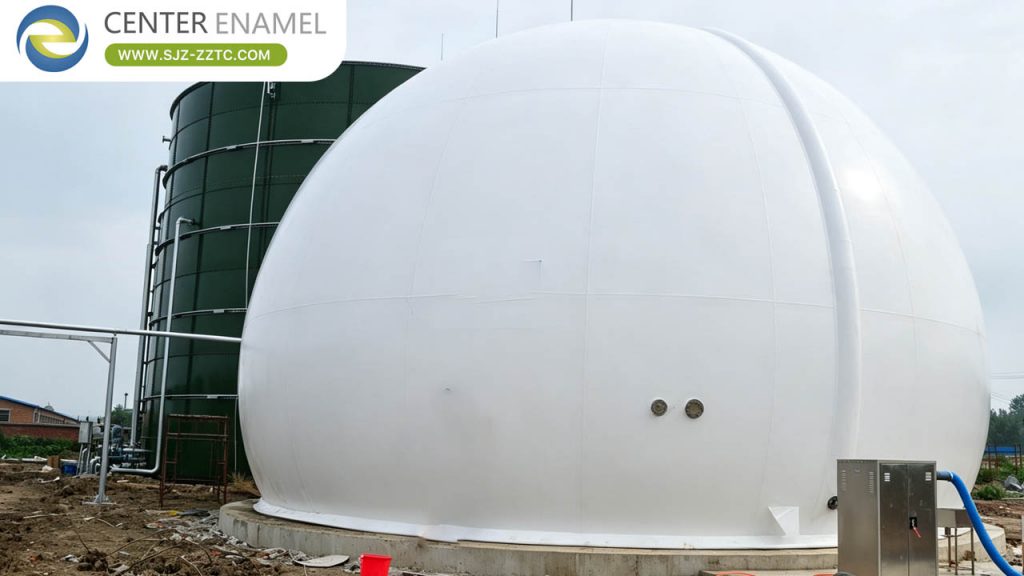
Zhenyuan Group Biogas Project, Henan. This plant turns 650 tonnes per day of farm manure and washing wastewater into 3 million m³ per year of vehicle-grade methane, a working example of the full CBG chain: digestion, upgrading, and fuel-grade handling delivering renewable transport fuel.
| Project | Zhenyuan Group Biogas Project, Henan |
| Location | Xinzheng, Henan, China |
| Industry | Agriculture / Renewable Fuel |
| Application | Vehicle-grade methane production |
| Product | CSTR primary 3 × Ø15.29 × 15 m, secondary Ø5.22 × 6 m |
| Result | 3,000,000 m³ vehicle-grade CH₄ per year |
| Status | Delivered 2013 |
About Shijiazhuang Zhengzhong Technology Co., Ltd (Center Enamel)
Shijiazhuang Zhengzhong Technology Co., Ltd (Center Enamel) supplies the product technology at both ends of the CBG chain: GFS digester and gas-holder tanks for biogas generation, and pressure-vessel manufacturing capability (I/II class license, ASME, ISO 9001) for the compression and storage end. The company frames the chain as one engineered system from feedstock to fuel.
The CBG chain is feedstock, digestion, upgrading, compression, storage, and use; engineer the interfaces together. Send your feedstock and target use and we will lay out the chain and size each link.
Frequently Asked Questions (FAQ)
Q1: What are the steps of the CBG chain?
A: Feedstock, anaerobic digestion, upgrading, compression to 200-250 bar, storage, and vehicle or grid use.
Q2: Where does upgrading fit?
A: After digestion, upgrading raises methane to 95-99% to meet fuel or grid specs.
Q3: How is CBG moved to users?
A: In cascade storage banks on-site or in tube trailers to off-site dispensers.
Q4: What is the end use of CBG?
A: Vehicle refueling or metering into the natural gas grid as renewable gas.
Q5: What purity is needed?
A: Typically 95-99% CH₄ for vehicle fuel or grid injection.
Q6: Where do slip losses occur?
A: Mainly at the upgrader, about 0.1-3% methane depending on technology.
Suggested CTA
Send your feedstock and intended use. We will lay out the CBG value chain and size the digester, upgrader, and storage.