
What Is the Cheapest Feedstock for Biogas?
The cheapest biogas feedstock is usually manure and other on-site agricultural residues, which often cost nothing — or even carry a tipping fee to accept — because the operator already owns the stream or is paid to take it. Food waste and source-separated organics can also be near-zero or negative cost when a disposal fee applies, while purpose-grown energy crops are the most expensive because they compete for land and harvest.
Why Manure Is Usually Cheapest
A dairy or swine farm already produces manure every day as a by-product it must manage anyway. Digesting it on-site turns a treatment cost into energy and a fertilizer (digestate), so the substrate price is effectively zero plus handling. Where a plant is not on a farm, taking manure or agricultural waste under a tipping-fee arrangement can make the feedstock negatively priced — the supplier pays you to remove it.
The Real Cost Is Logistics, Not the Substrate
Even “free” feedstock has a delivered cost: collection, transport, pre-processing, and contamination control. Food waste is cheap at the source but needs separation, screening, and often a gate fee that erodes the saving. Energy crops avoid contamination but carry land, seed, and agronomy cost. The cheapest feedstock on paper is the one with the lowest delivered cost per kg of VS after logistics.
Comparative Data Table: Indicative Delivered Cost
| Feedstock | Typical substrate cost | Main added cost |
| Own manure / on-site | negative to zero | handling only |
| Tipping-fee manure / waste | negative (paid to take) | transport, screening |
| Source-separated food waste | low to negative | collection, contamination |
| Sewage sludge | low | dewatering, transport |
| Agricultural residues | low–moderate | seasonal harvest, storage |
| Purpose-grown energy crops | moderate–high | land, seed, agronomy |
Technical Considerations
Cheap does not mean ideal on its own. Manure is nitrogen-heavy and low in degradable carbon, so mono-manure digestion leaves yield on the table; blending with a carbon co-feed (food waste, silage, residues) lifts output without raising substrate cost much. The carbon-to-nitrogen ratio should sit near 20–30:1, which is exactly why the cheapest base pairs well with a slightly costlier carbon stream.
Advantages and Limitations
Using cheap or negatively-priced feedstock dramatically improves project economics and shortens payback (often into the 5–9 year band for AD-CHP at $2,500–7,000/kW). The limitation is supply risk: a single free stream can disappear, so most resilient plants combine a cheap base with one or two contracted co-feeds.
Best Practices / How to Source Cheaply
Start from the streams you already control or can take for a fee, quantify the true delivered cost per kg VS, then add a carbon co-feed only as needed for C:N balance and yield. Lock volume with a feed-in agreement and hold 7–14 days of buffer so a free stream’s variability never starves the digester.
Conclusion
The cheapest biogas feedstock is the one you already own or are paid to take — manure and on-site residues — with food waste a close second when a tipping fee applies. The winning move is pairing a cheap base with a small carbon co-feed to lift yield at minimal extra cost.
Frequently Asked Questions (FAQ)
Q1: What is the cheapest feedstock for biogas?
A: Manure and on-site agricultural residues are usually cheapest — often free or negatively priced via a tipping fee — because the operator owns the stream or is paid to remove it.
Q2: Is manure really free?
A: On a farm it is a zero-cost by-product; off-farm it can be negatively priced if accepted under a tipping-fee arrangement. The real cost is transport and handling, not the substrate itself.
Q3: Does food waste cost more than manure?
A: Usually yes in substrate price, but a disposal gate fee can make food waste near-zero or negative; its added cost is collection, screening, and contamination control.
Q4: Are energy crops expensive?
A: They are the most expensive option because they compete for land and need seed and agronomy, so they are used as a storable carbon buffer rather than a low-cost base.
Q5: What is the true cost metric?
A: Delivered cost per kg of volatile solids after collection, transport, and pretreatment — not the gate price — is what decides which feedstock is actually cheapest.
Q6: How does cheap feedstock affect payback?
A: Cheap or negatively-priced feedstock is the biggest lever on economics, often pulling AD-CHP payback into the 5–9 year range at $2,500–7,000 per kW.
Project Case Reference
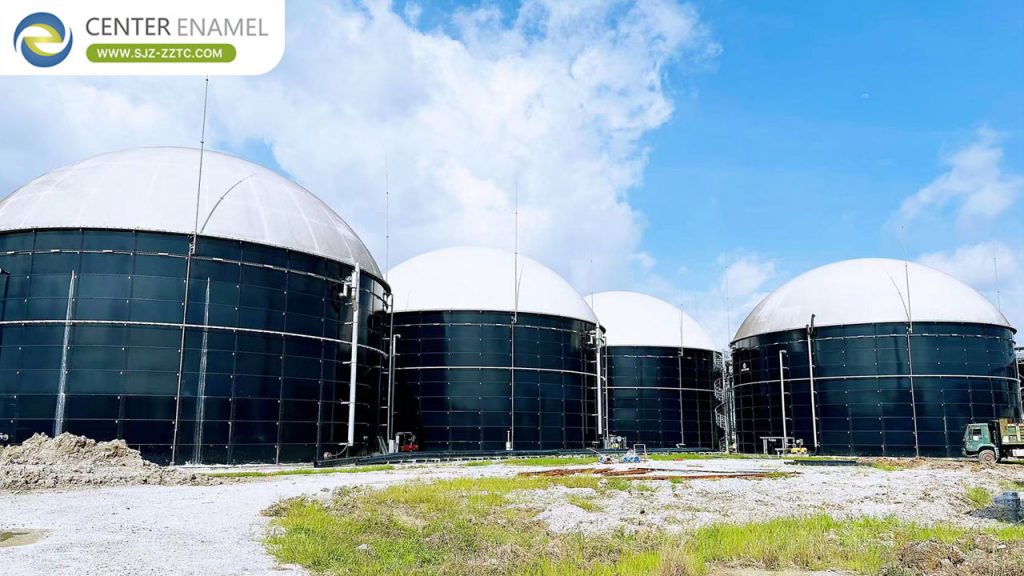
Zhaqi Biogas Project in Inner Mongolia — Xing'an, Inner Mongolia, China · 2017
900 m³/D Capacity · 4 CSTR Reactors · 20,000 m³ Biogas/Day
A medium-temperature anaerobic fermentation biogas project in Zhaqi, Inner Mongolia. The plant processes 900 m³/day of farm animal manure and agricultural waste including grass straw, producing 20,000 m³ of biogas daily. The project features 4 sets of CSTR (Continuous Stirred-Tank Reactor) anaerobic reactors specifically designed for cold climate operation.
Technical Specifications
Handling Capacity: 900 m³/D (manure + agricultural waste)
Treatment Type: Medium Temperature Anaerobic Fermentation
Reactor Type: CSTR (Continuous Stirred-Tank Reactor)
Reactor Size: 4 sets of Φ25.98 × 8.4 m
Daily Biogas Output: 20,000 m³/day
Feedstock: Animal manure + grass straw