
What Is the Composition of Palm Oil Mill Effluent (POME)? A Complete Guide to Biogas Conversion
Palm Oil Mill Effluent (POME) is a thick, high-strength organic wastewater generated during the extraction and clarification of crude palm oil. Understanding its composition is the first step toward treating it responsibly — and, increasingly, toward converting it into a valuable source of renewable biogas.
Understanding POME: A Composition Overview
POME is produced at several stages of the palm oil milling process, including sterilization of fresh fruit bunches, clarification of crude oil, and hydrocyclone separation. The combined wastewater from these stages is thick, brownish, acidic, and colloidal in nature, typically discharged at high temperature. Its composition varies somewhat depending on mill efficiency and fruit quality, but POME consistently contains a mixture of water, residual palm oil, suspended organic solids, and dissolved organic and inorganic compounds. This combination of high organic content and warm temperature makes POME an ideal environment for microbial activity — a property that, when properly managed, can be harnessed for anaerobic digestion rather than left to decompose uncontrolled in open lagoons.
Organic Load: COD and BOD Levels in POME
One of the defining characteristics of POME is its extremely high organic pollutant load, measured through chemical oxygen demand (COD) and biological oxygen demand (BOD). These values in raw POME are often many times higher than typical municipal or industrial wastewater, reflecting the concentrated organic matter left over from oil extraction. This high organic strength is precisely why untreated POME is so damaging if released into rivers or streams — it rapidly consumes dissolved oxygen as it decomposes, suffocating aquatic life. At the same time, this same organic richness is exactly what makes POME such an effective feedstock for anaerobic digestion, since more organic material available for microbial breakdown translates directly into greater biogas generation potential.
Solids, Oil, and Grease Content
POME contains a significant concentration of suspended solids, including fine fibrous material, cell wall debris, and other particulates carried over from the milling process. Alongside these solids, residual oil and grease remain present even after primary oil recovery, since complete separation during processing is never fully achievable. These oils and greases can interfere with downstream treatment equipment if not properly managed, which is why pretreatment steps such as mechanical screening and oil separation are essential before wastewater reaches an anaerobic digester. Managing solids and oil content effectively not only protects treatment equipment but also improves the consistency and efficiency of subsequent biological treatment stages.
Nutrients and Other Chemical Characteristics
Beyond organic load and solids, POME contains meaningful concentrations of nitrogen, phosphorus, and potassium, along with trace minerals derived from the palm fruit itself. These nutrients are part of what makes treated POME byproducts — particularly liquid digestate — valuable as agricultural fertilizer once the wastewater has passed through proper treatment. POME is typically acidic, with a pH often below neutral levels, and carries an elevated temperature directly from the milling process. These chemical characteristics all influence how POME must be handled: acidity and temperature affect microbial activity during digestion, while nutrient content determines the fertilizer value of the treated output.
Why POME's Composition Makes It an Ideal Biogas Feedstock
When viewed through the lens of anaerobic digestion, POME's composition is almost perfectly suited to biogas production. Its high organic content, in the form of COD and BOD, provides abundant material for methane-producing microorganisms to break down. Its total solids content, typically falling within a 3% to 6% range, matches well with anaerobic reactor designs such as the Upflow Solids Reactor (USR), which is specifically engineered for wastewater within this solids range. Its naturally elevated temperature reduces the energy required to reach optimal digestion conditions, while its consistent, year-round generation from active mills ensures a steady feedstock supply for continuous biogas production, unlike more seasonal organic waste streams.
The Biogas Conversion Process for POME
Converting POME into biogas begins with pretreatment: mechanical screening removes large solids, an oil separator reduces residual fats, and a regulating tank balances flow, temperature, and pH before digestion. The conditioned wastewater then enters an anaerobic reactor, where microorganisms break down organic matter in an oxygen-free environment, generating biogas rich in methane. This biogas is dehydrated and desulfurized to remove moisture and hydrogen sulfide before being used to fuel boilers, run generators for electricity, or be upgraded into compressed natural gas (CNG). The remaining digestate splits into a liquid fraction suitable for direct land application and a fibrous solid fraction that can be composted, allowing mills to recover both energy and fertilizer value from a single wastewater stream.
Key Advantages of Converting POME Into Biogas
Given its composition, converting POME into biogas offers several clear advantages over conventional disposal methods. Capturing methane during controlled digestion prevents this potent greenhouse gas from escaping into the atmosphere, substantially reducing a mill's overall emissions footprint. The biogas produced can directly offset diesel or grid electricity costs, lowering operating expenses. Enclosed digestion systems also require significantly less land than traditional open pond networks and provide more consistent, predictable treatment performance and effluent quality. Finally, the nutrient-rich digestate retains genuine agricultural value, reducing a mill's reliance on purchased chemical fertilizer and supporting a more circular approach to plantation management.
Center Enamel's Experience in POME Biogas Treatment
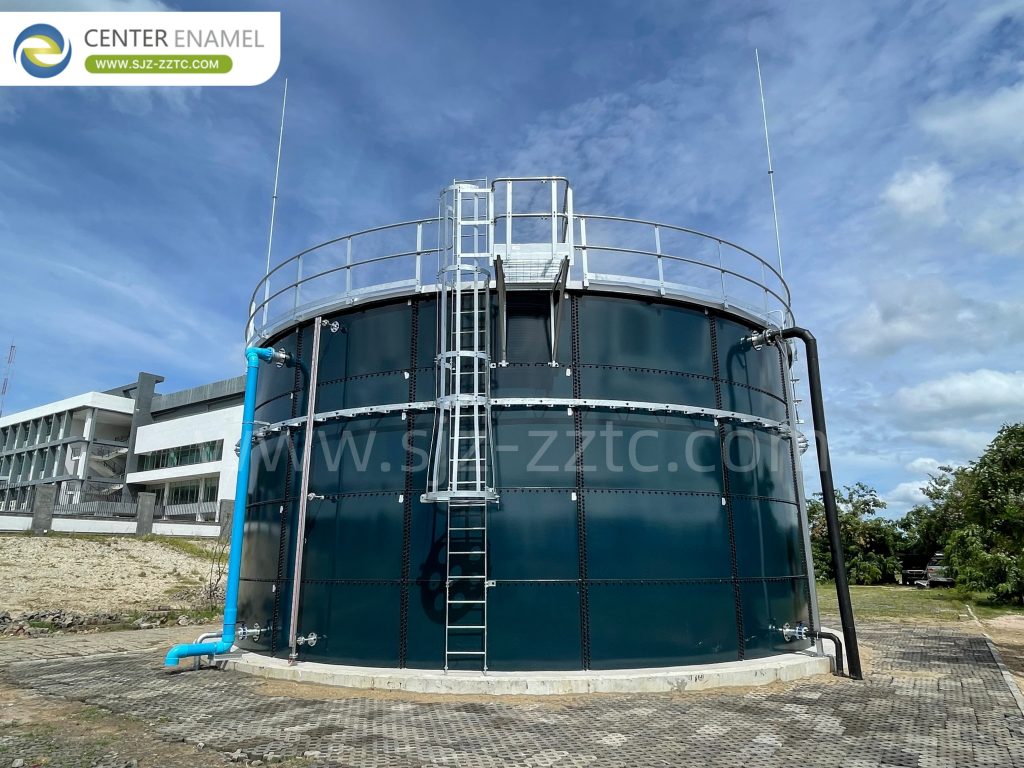
Turning POME's rich organic composition into usable biogas requires equipment and engineering specifically suited to its acidic, high-strength characteristics — an area where Center Enamel has developed substantial expertise. Operating from a large-scale research and production base with an annual manufacturing capacity of 250,000 sheets, Center Enamel designs and supplies complete biogas treatment systems, including USR reactors, Glass-Fused-to-Steel (GFS) tanks, and Double Membrane Roof gas storage solutions built for demanding organic wastewater like POME. The company's products carry international certifications including CE/EN1090, ISO 9001, NSF61, WRAS, and EN28765, and its project portfolio spans more than 100 countries. Offering full EPC services covering design, equipment supply, and construction, Center Enamel gives palm oil mill owners a single, dependable partner capable of converting POME's challenging composition into a functioning, revenue-generating biogas system.
Frequently Asked Questions
Q1: Why does POME have such high COD and BOD levels?
POME contains concentrated organic matter left over from palm oil extraction, including residual oil, fine solids, and dissolved organics, all of which contribute to its unusually high oxygen demand compared with typical wastewater.
Q2: Does POME's high solids content limit treatment options?
Not necessarily — POME's typical total solids range of 3% to 6% is well suited to reactor designs such as the USR, which is specifically engineered to handle wastewater within this range.
Q3: Can the nutrients in POME be recovered rather than wasted?
Yes, after anaerobic digestion, the resulting liquid digestate retains nitrogen, phosphorus, and potassium, making it suitable for direct application as fertilizer on plantation land.