
What Is the Composition of Palm Oil Mill Effluent?
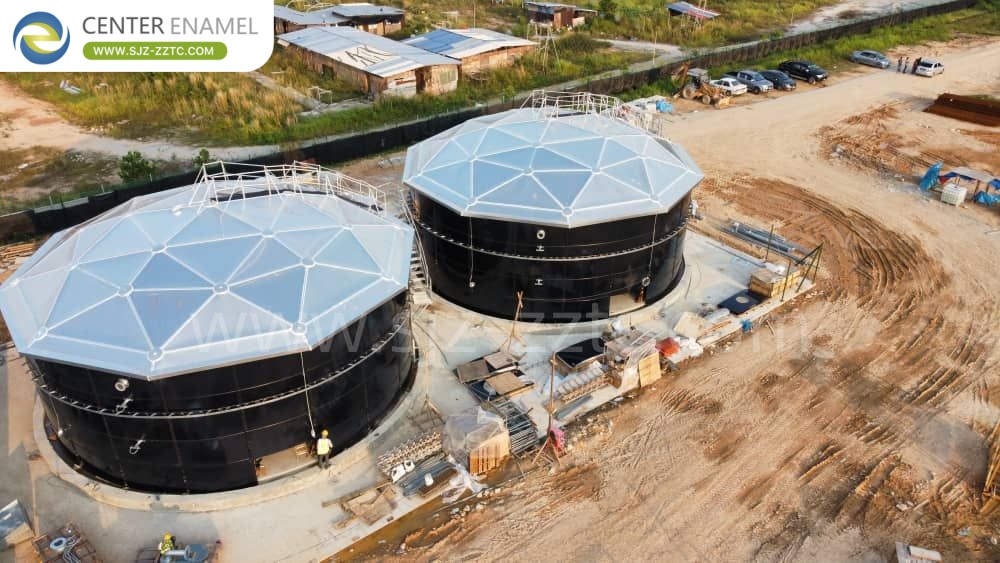
What is the composition of palm oil mill effluent? Palm Oil Mill Effluent (POME) is the high-strength organic wastewater discharged during crude palm oil extraction, clarification, sterilization and nut separation processes. Its basic composition includes over 94% water, 2%–4% suspended fiber and solid residues, 0.6%–1% oil and grease, plus abundant cellulose, lignin, carbohydrates, protein, ammonia nitrogen and organic acids. Raw POME is acidic with a pH of 3.4–5.2, high temperature up to 90°C, extremely high COD and BOD, and rich in nutrients that easily cause pollution and eutrophication.
Without professional treatment, POME becomes one of the most serious industrial pollution sources in Southeast Asia. Meanwhile, its high organic content makes it an excellent raw material for biogas production.
Center Enamel, as a professional EPC contractor for palm oil mill biogas and wastewater projects, provides mature anaerobic solutions, high-performance GFS tanks and full-turnkey services to help palm oil mills achieve pollution control, biogas energy recovery and circular economy development.
Hazards of Direct Discharge of Palm Oil Mill Effluent
Direct discharge of untreated palm oil mill effluent causes devastating damage to water bodies, soil, ecology and public health.
First, severe water hypoxia and aquatic death. POME has extremely high COD and BOD, dozens of times higher than domestic sewage. Natural decomposition consumes massive dissolved oxygen in rivers, leading to mass death of fish and aquatic organisms and collapse of aquatic food chains.
Second, water eutrophication and odor pollution. Rich nitrogen, phosphorus and organic matter trigger explosive algae growth, causing river blackening, odor overflow and loss of water self-purification ability.
Third, acidic corrosion and ecological damage. Raw POME is strongly acidic, lowering river pH value, corroding riverbed and farmland soil, destroying the living environment of aquatic plants and microorganisms.
Fourth, soil and groundwater contamination. Infiltration of POME pollutes surrounding farmland and groundwater, reduces crop yield, and endangers local drinking water safety.
Fifth, policy penalties and carbon emission risks. Southeast Asian countries such as Malaysia, Indonesia and Thailand have strict POME discharge standards. Illegal discharge faces heavy fines and production suspension. Open pond storage also releases large amounts of methane, aggravating greenhouse gas emissions and carbon footprint.
Complete Palm Oil Mill Effluent Treatment Process
Standard POME treatment adopts a scientific closed-loop process: Pretreatment → Anaerobic Digestion (Biogas Generation) → Aerobic Advanced Treatment → Effluent Reuse or Discharge.
Pretreatment Stage: Includes grid interception, oil-water separation, sedimentation and regulating tank homogenization. It removes palm fiber, floating oil and large suspended solids, balances water quality and temperature, and creates stable feeding conditions for subsequent anaerobic systems.
Center Enamel’s corrosion-resistant GFS Tanks are widely used as regulating tanks and sedimentation tanks, adapting to POME’s high temperature, acidity and oil corrosion.
Anaerobic Digestion Stage (Core Biogas Production): After pretreatment, POME enters sealed anaerobic reactors. Under oxygen-free conditions, microorganisms decompose organic matter into methane and carbon dioxide, realizing wastewater purification and biogas synchronous recovery. This is the core link of POME resource utilization.
Aerobic Advanced Treatment Stage: Anaerobically treated wastewater still contains residual organic matter and nitrogen phosphorus. Through activated sludge and biological contact oxidation processes, further degradation is completed to make the final effluent meet national discharge standards.
Resource Reuse Stage: Qualified effluent can be reused for palm oil mill cleaning and irrigation; biogas is used for power generation and heating; anaerobic digestate is made into organic fertilizer, forming a complete circular economy chain.
How Palm Oil Mill Effluent Generates Biogas
POME biogas generation relies on natural four-stage anaerobic digestion principle: hydrolysis, acidification, acetogenesis and methanogenesis.
Hydrolysis: Macromolecular organic matter such as cellulose, protein and grease in POME is decomposed into small-molecule sugars and amino acids by hydrolytic bacteria.
Acidification: Acid-producing bacteria convert small molecules into volatile fatty acids, hydrogen and carbon dioxide.
Acetogenesis: Intermediate products are further converted into acetic acid, the direct precursor of methane.
Methanogenesis: Methanogenic archaea use acetic acid to produce biogas composed of 55%–70% methane and 30%–45% carbon dioxide.
Under tropical high-temperature conditions, POME’s organic components are easily biodegradable, with high biogas yield. Each ton of palm oil mill effluent can produce stable biogas, which can be used for factory self-power supply, boiler heating or upgraded to biomethane for grid connection, effectively reducing enterprise energy costs and carbon emissions.
Four Mature Anaerobic Technologies for POME Biogas Projects
Center Enamel customizes four anaerobic technologies for different palm oil mill scales, POME concentration and land conditions.
1. CSTR (Completely Stirred Tank Reactor)
CSTR is most suitable for large palm oil mills with high-solids, high-fiber and high-oil POME. Mechanical full stirring ensures thorough mixing of wastewater and anaerobic sludge, effectively preventing crusting, stratification and sedimentation caused by palm fiber. It supports continuous feeding and stable high biogas output, perfectly matching large-scale continuous palm oil production.
2. USR (Upflow Solids Reactor)
USR is ideal for medium and small palm oil mills in rural areas. It has no mechanical stirring, uses upward water flow to retain sludge and suspended particles. With simple structure, low energy consumption and low maintenance cost, it is the most cost-effective choice for small and medium-sized POME biogas projects.
3. UASB (Upflow Anaerobic Sludge Blanket)
UASB is a globally proven high-efficiency process for low-solids POME. Wastewater flows upward through a dense granular sludge blanket, and organic matter is efficiently degraded. It features high treatment load, low operating cost and stable operation, widely used in pretreatment and secondary treatment of palm oil mill effluent.
4. IC (Internal Circulation Reactor)
IC is an advanced high-rate anaerobic technology driven by biogas internal circulation. Its treatment capacity is 3–5 times that of traditional reactors, with small footprint and excellent COD removal efficiency. It is the preferred solution for large integrated palm oil mills with limited land and pursuing maximum biogas energy recovery.
Overall Advantages of Center Enamel in Palm Oil Mill Biogas Projects
As a leading EPC contractor for Southeast Asian palm oil mill effluent treatment and biogas projects, Center Enamel has unique comprehensive strengths.
Professional Customized Design: According to local tropical climate, POME water quality, daily discharge and plant land area, we tailor anaerobic process selection, reactor volume and system layout to ensure stable treatment efficiency and biogas yield.
Super Anti-Corrosion Adaptability: POME features high temperature, acidity, oil and fiber corrosion. Our GFS tanks are sintered at over 820°C with full pH 1–14 corrosion resistance, adapting to long-term harsh POME operating environments and tropical high-humidity coastal climate.
Full Lifecycle Turnkey EPC Service: Covering scheme design, equipment manufacturing, installation, commissioning and after-sales maintenance, we provide one-stop solutions to reduce project coordination difficulties and operational risks for palm oil enterprises.
Maximize Biogas & Economic Benefits: Optimized anaerobic process improves biogas production efficiency. Recovered biogas replaces fossil energy for power generation and heating; treated water and digestate realize resource reuse, helping mills reduce costs and obtain carbon credit benefits.
Rich Southeast Asian Project Experience: We are familiar with environmental regulations, industrial standards and tropical construction conditions in Malaysia, Indonesia, Thailand and other palm oil producing countries, ensuring smooth project delivery and long-term stable operation.
The composition of palm oil mill effluent is dominated by water, suspended solids, oil and rich organic pollutants, with high acidity and strong pollution. Direct discharge seriously damages water ecology, soil and public health. Through standardized pretreatment, anaerobic biogas generation and aerobic advanced treatment, POME can achieve harmless treatment and resource recycling.
Center Enamel provides four mature anaerobic technologies including CSTR, USR, UASB and IC, matched with high-performance GFS tanks and full EPC services. We help global palm oil mills solve POME pollution problems, efficiently generate biogas energy, reduce carbon emissions and realize green and sustainable industrial development.