
What Is the Design Basis for a WWTP?
The design basis of a wastewater treatment plant (WWTP) is the set of inputs that fixes every downstream decision: influent flow and its characterization, the discharge standard to be met, site and climate constraints, sludge handling strategy, and any energy-recovery or reuse targets. Get these wrong and the plant is either undersized or needlessly expensive, so the basis is agreed before any tank is drawn.
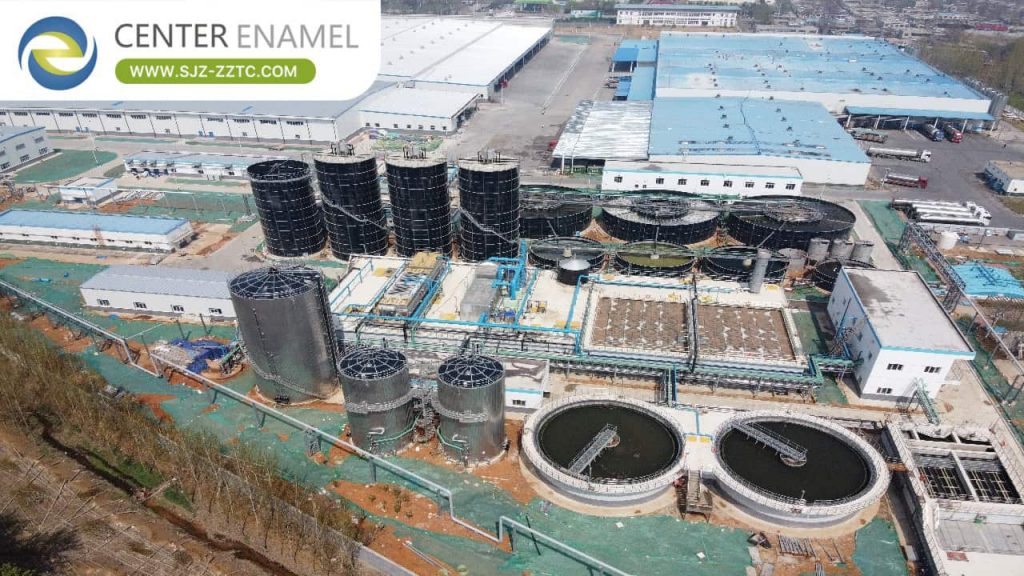
The Inputs That Fix the Design
Flow sets volume and equalization; characterization (COD, BOD, nitrogen, phosphorus, solids, pH) sets the biological and physical train; the discharge limit sets how deep each step must go; the site sets layout, elevation, and land cost; sludge and energy targets close the loop.
Design Parameter Table
| Design input | Typical value or range | Why it matters |
| Average daily flow | Site-specific m³/day | Sets tank volumes |
| Peak factor | 1.3-3.0 × average | Sizing for storms/peaks |
| Influent COD | 200-1,000 mg/L (municipal) | Biological load |
| Discharge limit | Local standard | Depth of treatment |
| Sludge target | Dewater / stabilize / reuse | Closes mass balance |
| Limitation to check | Land and elevation | Layout and pumping |
Why Characterization Comes First
| Parameter | What it sizes | Example impact |
| COD / BOD | Biological reactor | Load and retention |
| N and P | Nutrient removal | Adds anoxic/aerobic zones |
| Total solids | Primary and sludge | Settling and dewatering |
| pH and salts | Material choice | Tank coating selection |
Project Case Study
Domestic Sewage Treatment Project, Ghana. A municipal plant with 1,800 m³/day capacity was designed on a clear basis (influent COD 1,000 mg/L, BOD 500 mg/L, ammonia 30 mg/L, total phosphorus 10 mg/L) and built around UBF and A²/O tanks to meet a strict effluent limit, showing how the basis drives the train.
| Project | Domestic Sewage Treatment Project, Ghana |
| Location | Ghana |
| Industry | Municipal / Domestic Sewage |
| Application | UBF + A²/O biological treatment |
| Product | UBF Ø11.46 × 9.6 m, A²/O 2 × Ø20.64 × 6.6 m |
| Result | COD 1,000 → 100 mg/L, BOD 500 → 25 mg/L |
| Status | Delivered 2021 |
About Shijiazhuang Zhengzhong Technology Co., Ltd (Center Enamel)
Shijiazhuang Zhengzhong Technology Co., Ltd (Center Enamel) supports the installation and project side of a WWTP design basis: bolted GFS tanks for equalization, biological reactors, clarifiers, and sludge hold robust, fast-to-erect volume. The enamel is fused at 820-930°C for an inert barrier, built to ISO 28765 / AWWA D103 and CE-EN 1090, so the design basis translates directly into shippable, site-assembled tankage.
Start every WWTP with a written design basis: flow, characterization, discharge limit, site, sludge, and energy. Send your influent profile and local standard and we will propose a tank-by-tank train.
Frequently Asked Questions (FAQ)
Q1: What inputs define a WWTP design?
A: Influent flow and characterization, the discharge standard, site constraints, sludge handling, and energy-recovery targets.
Q2: How does the discharge standard affect design?
A: Stricter limits force deeper treatment (nutrient removal, polishing), which raises both capital and operating cost.
Q3: Why characterize the influent first?
A: COD, BOD, N, P, and solids decide reactor type, retention, and sludge volume; guessing them sizes the plant wrong.
Q4: What site factors change the design?
A: Available land, ground elevation, climate, and flooding set layout, pumping, and tank roof choices.
Q5: Where does energy recovery fit?
A: If the stream is high-strength, anaerobic treatment recovers biogas; the basis should state whether energy is captured.
Q6: Is a peak flow factor needed?
A: Yes, typically 1.3-3.0 × average to size equalization and hydraulics for storms and daily peaks.
Suggested CTA
Send your flow, influent characterization, and discharge limit. We will build the design basis and return a GFS tankage plan for the train.