
What Is the Difference Between Biogas and Renewable Natural Gas?
As the world accelerates its transition to clean energy, renewable gases have emerged as key players in decarbonizing hard-to-electrify sectors. Two terms often appear in sustainability discussions: biogas and renewable natural gas (RNG). While they are closely related, they are not interchangeable. Understanding the distinction is critical for policymakers, project developers, and businesses looking to invest in renewable energy infrastructure.
This article explores the fundamental differences between biogas and RNG, from production and composition to applications, economics, and storage requirements.
What is Biogas? The Raw Renewable Fuel
Biogas is the gaseous product of anaerobic digestion (AD) -a natural biological process in which microorganisms break down organic matter in an oxygen-free environment . This process occurs in engineered digesters, landfills, and wastewater treatment plants.
The feedstock for biogas production includes agricultural residues, food waste, animal manure, sewage sludge, and municipal solid waste. As these materials decompose, they release a mixture of gases. Typically, raw biogas contains:
45% to 75% methane (CH₄)
Carbon dioxide (CO₂) as the second major component
Trace impurities such as hydrogen sulfide (H₂S), water vapor, ammonia, and siloxanes
Because of its relatively low methane content and the presence of corrosive impurities, raw biogas has a lower calorific value than natural gas. It is most commonly used on-site for heat and power generation via combined heat and power (CHP) systems, or simply flared to mitigate greenhouse gas emissions .
What is Renewable Natural Gas (RNG)? The Upgraded Equivalent
Renewable natural gas (RNG)-also known as biomethane-is the refined, high-purity version of biogas . RNG is produced by upgrading raw biogas through a process that removes CO₂, H₂S, moisture, and other contaminants.
The goal is to increase the methane concentration to over 90%, often reaching 95% to 99% purity . Once upgraded, RNG is chemically identical to fossil natural gas. This means it can be:
Injected directly into existing natural gas pipelines
Used in residential and industrial natural gas appliances without modification
Compressed (bio-CNG) or liquefied (bio-LNG) for transportation fuel
The Australian Gas Networks notes that biomethane is "interchangeable with natural gas because it has the same chemical properties, allowing it to be seamlessly blended into existing gas networks" .
Key Differences Between Biogas and RNG
| Feature | Biogas | Renewable Natural Gas (RNG) |
| Methane Content | 45% – 75% | >90% (typically 95–99%) |
| CO₂ & Impurities | High levels present | Removed during upgrading |
| Energy Density | Lower | High, comparable to fossil natural gas |
| Production Cost | Lower (minimal processing) | Higher (requires upgrading equipment) |
| Applications | On-site CHP, heating, flaring | Grid injection, transport fuel, industrial feedstock |
| Infrastructure Compatibility | Requires specialized local equipment | Compatible with existing natural gas infrastructure |
RNG commands a premium price because it unlocks access to broader markets and qualifies for environmental credits such as Renewable Identification Numbers (RINs) and Low Carbon Fuel Standard (LCFS) credits .
The Upgrading Process: From Biogas to RNG
Converting biogas to RNG requires a upgrading facility that separates methane from CO₂ and impurities. The four most common commercial technologies are :
Water Scrubbing – CO₂ is absorbed into water under pressure.
Pressure Swing Adsorption (PSA) – CO₂ and other gases are adsorbed onto solid materials like activated carbon or zeolites at high pressure.
Membrane Separation – Specialized membranes allow CO₂ to pass through more quickly than methane.
Chemical Absorption – Solvents such as amines chemically bind with CO₂ for removal.
Each technology has trade-offs in terms of methane recovery rate, energy consumption, and capital cost. For example, PSA and VPSA are considered "well-established industrial processes" for biogas upgrading, achieving methane purities over 98% in some configurations . The choice of upgrading technology significantly impacts project economics and the final quality of the RNG produced.
Applications and Market Drivers
1. Grid Injection – The "Drop-in" Solution
RNG can be injected into natural gas pipelines, providing a renewable substitute for fossil gas without requiring pipeline or appliance modifications. The IEA notes that biomethane use has grown at an annual rate of 20% over the past five years, though it still represents only about 1% of global natural gas demand .
2. Transportation Fuel
Compressed RNG (bio-CNG) and liquefied RNG (bio-LNG) are used in heavy-duty trucks, buses, and even shipping. RNG offers significant GHG savings compared to diesel, particularly when produced from waste feedstocks that would otherwise release methane into the atmosphere .
3. Industrial Decarbonization
Many industrial processes require high-temperature heat that is difficult to electrify. RNG serves as a low-carbon substitute for natural gas in cement, steel, and chemical manufacturing .
4. Policy Incentives
The rapid growth of RNG is largely driven by policies and carbon credit markets. In the United States, RINs and LCFS credits have made RNG production financially attractive compared to electricity generation from biogas . However, these markets can be volatile, and RNG projects require higher capital investment than biogas-to-electricity systems .
Economic Considerations: Biogas vs. RNG
The economic case for upgrading biogas to RNG depends on several factors. While biogas-to-electricity systems are simpler and cheaper to build, RNG projects can generate higher returns when carbon credit prices are favorable .
A comparative analysis from Iowa State University found that RNG production requires significantly higher carbon credit values to break even compared to electricity generation or flaring. For example, a dairy farm with an anaerobic digester needed a carbon credit of approximately $119 per MG CO₂e mitigated for RNG to break even, compared to $55 for electricity generation .
However, RNG offers unique advantages: it provides a renewable replacement for natural gas in sectors where electrification is challenging, and its compatibility with existing infrastructure reduces the need for new pipeline networks .
The Role of Storage Infrastructure
For both biogas and RNG projects, reliable storage is essential. Biogas must be stored before it is used for on-site power generation or sent to an upgrading facility. RNG may require storage to manage grid injection schedules or transportation logistics.
Robust storage solutions must be:
Airtight to prevent methane leakage
Corrosion-resistant to withstand hydrogen sulfide and moisture
Durable to handle fluctuating gas volumes and pressures
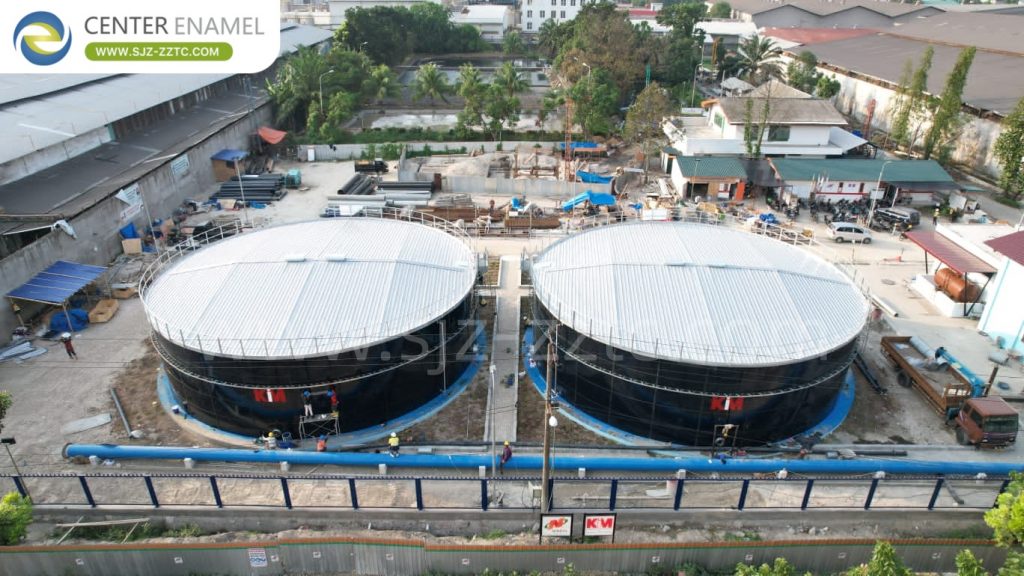
Glass-Fused-to-Steel (GFS) tanks and welded steel tanks are widely used for biogas storage due to their superior corrosion resistance and structural integrity . Poor storage can lead to methane slip, which negates the climate benefits of using renewable gas.
Conclusion
Biogas and renewable natural gas are not the same. Biogas is the raw, unprocessed product-a low-grade fuel best suited for localized heat and power generation. RNG is the upgraded, high-purity version that serves as a true substitute for fossil natural gas across multiple sectors.
Both play vital roles in the energy transition. Biogas represents an immediate, decentralized energy solution from waste, while RNG is a strategic energy asset capable of decarbonizing entire economies. The choice between producing electricity from biogas or upgrading it to RNG depends on project scale, policy incentives, infrastructure access, and risk tolerance. As carbon markets evolve and gas networks seek to decarbonize, RNG is positioned to become an increasingly important component of the global renewable energy mix.
Center Enamel: Your Partner for Biogas Storage Solutions
Successful biogas projects depend on reliable storage infrastructure. Center Enamel is a global leader in designing and manufacturing high-performance storage tanks for renewable energy applications. With over 30 years of experience, we provide Glass-Fused-to-Steel (GFS) tanks, welded steel tanks, and stainless steel solutions for biogas storage and anaerobic digestion .
Our tanks are engineered to withstand the corrosive environments typical of biogas production, featuring superior gas-tight sealing and long-term durability. Certified to international standards including ISO 9001, NSF/ANSI 61, AWWA D103, and ISO 28765, Center Enamel’s solutions are trusted by clients in over 90 countries .
Notable projects include biogas storage tanks for food waste treatment in Turkey and a welded steel tank for a biogas facility in Malaysia . Whether you are developing a farm-scale digester or a large RNG upgrading plant, Center Enamel provides the customized, durable storage infrastructure you need to succeed.
Frequently Asked Questions (FAQ)
1. Is renewable natural gas the same as biomethane?
Yes. The terms "renewable natural gas" (RNG) and "biomethane" are used interchangeably. Both refer to upgraded biogas that has been purified to meet pipeline-quality natural gas standards .
2. Can biogas be used in homes like natural gas?
No. Raw biogas contains too much CO₂ and impurities to be used in home appliances or injected into gas pipelines. It must first be upgraded to RNG (biomethane) to be compatible with existing natural gas infrastructure .
3. Why is RNG more expensive to produce than biogas?
RNG production requires additional processing equipment to remove CO₂, H₂S, and moisture-a process known as upgrading. These systems involve significant capital investment and ongoing energy costs, making RNG more expensive than raw biogas, which can be used with minimal treatment .