
What is the Difference Between UASB and EGSB? A Complete Guide to Anaerobic Wastewater Treatment
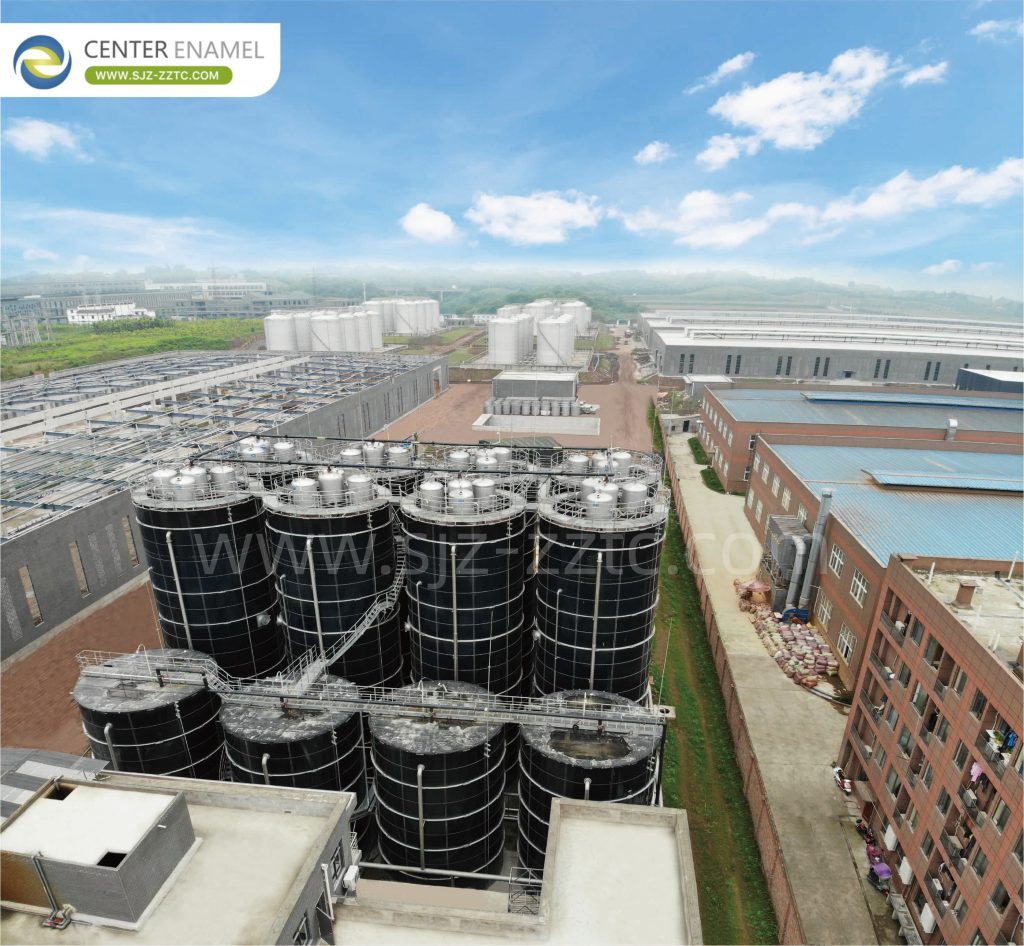
In the field of industrial wastewater treatment, two advanced anaerobic reactor technologies often stand out: the Upflow Anaerobic Sludge Blanket (UASB) and the Expanded Granular Sludge Bed (EGSB). Both are highly efficient systems that harness the power of anaerobic microorganisms to treat organic waste while generating valuable biogas. However, they differ significantly in design, operational parameters, and ideal applications. Understanding the difference between UASB and EGSB is crucial for selecting the right technology for your project's specific needs, whether you are treating high-strength industrial effluent or municipal wastewater.
This article provides a comprehensive comparison of these two cutting-edge systems. We will explore their working principles, key distinctions, advantages, and limitations to help you make an informed decision for your biogas and wastewater treatment project.
Understanding the UASB Reactor: The Proven Industry Standard
The Upflow Anaerobic Sludge Blanket (UASB) reactor is a widely recognized and mature technology, developed in the late 1970s by Lettinga and his co-workers in the Netherlands . Its use has rapidly spread globally due to its excellent performance and economic viability . The UASB reactor is considered a second-generation anaerobic reactor and remains the most established high-rate granular process available .
In a UASB reactor, wastewater flows upward through a dense "blanket" of granular sludge, which is a highly active biological mass of anaerobic microorganisms . As the wastewater passes through this sludge blanket, the organic compounds are degraded by the microorganisms. A key feature of the UASB is its Gas-Liquid-Solid (GLS) separator at the top. This device serves three critical functions: it allows biogas to escape and be collected, it enables the treated effluent to flow out, and, most importantly, it allows the granular sludge to settle back down into the blanket, ensuring high biomass retention within the system .
Understanding the EGSB Reactor: The Enhanced Successor
The Expanded Granular Sludge Bed (EGSB) reactor is an evolution of the UASB, developed to overcome some of its limitations and is considered a third-generation anaerobic reactor . The primary innovation of the EGSB is the creation of a much higher upward liquid velocity within the reactor. This is typically achieved by designing the reactor with a greater height-to-diameter ratio or by recirculating part of the treated effluent .
This high upflow velocity, which can reach up to 10 m/h compared to 0.5-2 m/h in a UASB, causes the granular sludge bed to "expand" . This expansion significantly enhances the mixing and contact between the wastewater and the biomass, leading to improved mass transfer and treatment efficiency . The EGSB was specifically designed to give wastewater more opportunity to contact the granules, improving performance, especially with difficult-to-treat or low-strength wastewaters .
Key Differences in Hydrodynamics and Design
The fundamental difference between UASB and EGSB reactors lies in their hydrodynamic conditions, which dictates the performance of each system. The UASB reactor operates with a relatively low upflow velocity and functions as a plug-flow reactor. This means there is low turbulence, and the liquid moves through the bed in a relatively orderly fashion . The EGSB, by contrast, operates with a high upflow velocity due to recirculation, which causes it to behave much like a continuous-stirred tank reactor (CSTR). The high turbulence ensures complete mixing and homogenization of the reactor contents .
This difference in hydrodynamics has a direct impact on mass transfer. In a UASB reactor, the liquid film mass transfer resistance can be significant, potentially limiting the overall reaction rate . The EGSB's high turbulence effectively reduces or eliminates this resistance, resulting in faster and more efficient substrate degradation . The EGSB is also generally taller than a UASB to accommodate the expanded bed, a design choice that contributes to a smaller footprint for the same treatment capacity .
Applications: When to Choose UASB or EGSB
The choice between a UASB and an EGSB depends largely on the characteristics of the wastewater to be treated and the project's goals.
UASB reactors are an excellent choice for:
High-strength soluble industrial wastewater: They are highly efficient at treating a wide variety of industrial effluents, including those from the food and beverage, paper, and chemical industries .
Municipal wastewater: UASB systems can effectively treat domestic sewage, especially in warmer climates .
Cost-effective solutions: As a mature technology, the UASB is often more economical in terms of initial investment and operational simplicity . It is a proven, reliable workhorse for many applications.
EGSB reactors are often preferred for:
Low-strength wastewater (e.g., dilute sewage): The enhanced contact and mass transfer allow the EGSB to achieve high removal efficiencies even with dilute effluents and at low temperatures .
Very high-strength or toxic wastewater: The EGSB can handle high organic loads (15-35 kg COD/m³/d) and is more resilient to toxic shocks and inhibitors .
Wastewater with high suspended solids: While both reactors require pre-treatment for very high solids, studies have shown that a UASB can be an excellent first stage to capture solids, with an EGSB polishing the effluent .
Advantages and Disadvantages Comparison
To further clarify the difference between UASB and EGSB, here is a direct comparison of their pros and cons based on operational data and design considerations.
UASB Reactor
Advantages:
Most mature and proven technology with thousands of full-scale installations .
Lower capital investment and simpler operation .
High organic loading capacity for its generation.
Excellent for a wide range of soluble industrial wastewaters .
Disadvantages:
Poorer mixing and mass transfer between biomass and substrate .
Performance can be unstable at higher hydraulic or organic loads due to sludge washout .
Higher liquid film mass transfer resistance can limit kinetics .
EGSB Reactor
Advantages:
Superior mixing and mass transfer, leading to higher efficiency .
Very high organic loading capacity (15-35 kg COD/m³/d), allowing for a much smaller footprint .
Excellent performance with both low- and high-strength wastewaters, including under low temperatures .
Higher tolerance to toxic shocks .
Disadvantages:
Higher capital investment and operational costs due to recirculation pumps and taller structures .
More complex design and operation .
Higher energy consumption due to pumping for recirculation.
The Synergy of UASB and EGSB in a Two-Step System
While often presented as alternatives, UASB and EGSB reactors can also be combined to create a highly effective two-stage treatment system. In this configuration, the UASB acts as the first stage, efficiently removing a large portion of the suspended solids and a significant fraction of the organic matter. This protects the downstream EGSB reactor, which can then operate at maximum efficiency to polish the effluent .
This two-step approach is ideal for complex wastewaters, such as those from department stores or other commercial buildings, which can contain high levels of both suspended solids and dissolved organics. Studies have shown that such a system can achieve over 90% removal of COD, BOD, and suspended solids while recovering biogas as a clean energy source . This demonstrates that the two technologies are not mutually exclusive but can be complementary.
Conclusion: Selecting the Right Technology for Your Project
The choice between a UASB and an EGSB reactor is a critical decision in designing a wastewater treatment and biogas recovery system. The UASB is a robust, cost-effective standard for high-strength soluble industrial wastewaters. The EGSB is a powerful, high-performance evolution best suited for projects requiring maximum efficiency, a compact footprint, or the treatment of difficult wastewaters, at a higher capital and operational cost.
By understanding the core differences in hydrodynamics, mass transfer, and application suitability, you can select the technology that best aligns with your site's specific wastewater characteristics, space constraints, and budget.
Center Enamel: Your Complete Biogas and Wastewater Treatment Solutions Provider
Selecting the right technology is only the first step; implementing it successfully requires reliable and durable equipment. As a leading storage tank manufacturer with over 30 years of experience, Center Enamel provides the critical infrastructure for biogas and wastewater projects worldwide. We offer high-quality, customizable solutions, including robust Glass-Fused-to-Steel (GFS) tanks ideal for UASB, EGSB, and other anaerobic reactors.
Our comprehensive service goes beyond tank supply. We partner with you to ensure your project has the integrated equipment needed for success, from gas storage to flare systems. Center Enamel is your one-stop-shop for building a safe, efficient, and profitable biogas operation.
Frequently Asked Questions (FAQ)
1. What does UASB stand for in wastewater treatment?
UASB stands for Upflow Anaerobic Sludge Blanket. It is a high-rate anaerobic reactor where wastewater flows upward through a dense bed of granular sludge, which digests the organic matter and produces biogas .
2. What are the main advantages of an EGSB reactor over a UASB?
The primary advantage of an EGSB reactor is its ability to handle a much higher organic loading rate (15-35 kg COD/m³/d) and achieve superior mixing and mass transfer due to a high liquid upflow velocity . This often results in a smaller footprint and improved performance, especially with low-strength or high-toxicity wastewater .
3. Which reactor is more cost-effective, UASB or EGSB?
Generally, a UASB reactor is more cost-effective in terms of initial capital investment and operational simplicity, making it a good choice for many standard industrial applications . However, an EGSB can be more economically viable for projects where a very small footprint is crucial or for treating challenging wastewaters that a UASB cannot handle efficiently, despite its higher upfront cost .