
What Is the Efficiency of Biological Methanation?
Biological methanation is highly efficient at using hydrogen—typically 80–95% of input H₂ is converted to methane—but the round-trip energy efficiency of power-to-gas (electricity → H₂ → CH₄) lands around 55–70% because electrolysis and conversion losses accumulate. It trades some efficiency for flexible, low-temperature, contaminant-tolerant operation.
Two Different “Efficiencies”
Keep two numbers separate. The H₂-to-CH₄ conversion efficiency measures how much fed hydrogen ends up as methane (often 80–95% biologically, >95% catalytically). The system or round-trip efficiency measures how much original electricity survives as methane energy after electrolysis, compression, and methanation—a much lower figure.
Hydrogen Conversion Efficiency
In a well-run biological reactor, most H₂ that reaches the microbes becomes methane; unconverted H₂ is usually recirculated rather than wasted. The ceiling is set by how well H₂ is delivered to the cells (mass transfer), not by the biochemistry, which is near-complete when contact is good.
Round-Trip (System) Efficiency
Electrolysis of water to H₂ is itself ~60–75% efficient by energy, and compression, the exothermic methanation step, and any CO₂ capture add further losses. Stacked together, the electricity→methane path typically retains about 55–70% of the input energy as usable methane—respectable for long-term storage but a real cost versus direct battery use.
Comparative Data Table: Biological vs Catalytic Methanation
| Metric | Biological | Catalytic (Sabatier) |
| H₂ → CH₄ conversion | 80–95% | >95% |
| Temp / catalyst | 35–65°C, none | 300–400°C, metal |
| Round-trip PtG | ~55–70% | similar, slightly higher |
| Impurity tolerance | higher | lower |
Technical Considerations
Efficiency is won or lost on the edges: minimizing electrolysis losses (high-quality electrolyzer, low-cost power), avoiding H₂ slip (good mass transfer, gas recirculation), and recovering the reaction heat. Biological systems also gain if they piggyback on a digester's existing heat and CO₂ rather than building standalone.
Advantages and Limitations
Biological methanation tolerates impurities, runs cool, and retrofits existing digesters, which can offset its slightly lower throughput. Limits: lower round-trip efficiency than direct electrification, slower kinetics, and biological sensitivity. It is chosen for its flexibility and fit, not for topping the efficiency chart.
Best Practices / How to Maximize It
Feed cheap/off-peak renewable power to the electrolyzer, recirculate unconverted H₂, recover methanation heat, and integrate with a digester for free CO₂ and heat. Track H₂ slip closely—it is the fastest leak of efficiency.
Biological methanation converts 80–95% of input H₂ to methane, but the full power-to-gas chain retains only about 55–70% of the original electricity as methane energy. It is a flexible, low-temperature storage route whose value lies in grid balancing and contaminant tolerance more than in peak efficiency.
Frequently Asked Questions (FAQ)
Q1: What is the efficiency of biological methanation?
A: H₂-to-CH₄ conversion is 80–95%, but the full power-to-gas round trip (electricity→H₂→CH₄) retains only about 55–70% of the input energy.
Q2: How efficient is the hydrogen conversion?
A: Typically 80–95% biologically; unconverted H₂ is usually recirculated, so little is wasted if mass transfer is good.
Q3: Why is round-trip efficiency so much lower?
A: Electrolysis (~60–75%), compression, CO₂ handling, and methanation losses stack up; only ~55–70% of the original electricity survives as methane.
Q4: Is biological or catalytic more efficient?
A: Catalytic edges out on H₂ conversion (>95%) and speed; biological trades some efficiency for cooler operation and impurity tolerance.
Q5: What wastes efficiency most?
A: H₂ slip from poor mass transfer and electrolysis losses from using expensive or peak power; both are controllable with design and scheduling.
Q6: When is lower efficiency still worth it?
A: When you need long-term, grid-scale storage of surplus renewable power as drop-in methane, and have a biogenic CO₂ source to reuse.
Project Case Reference
Malaysia Biogas Project — Malaysia · 2026
5 GFS Tanks · 27,000 m³ Total Volume · 22,000 m³ Biogas/Day
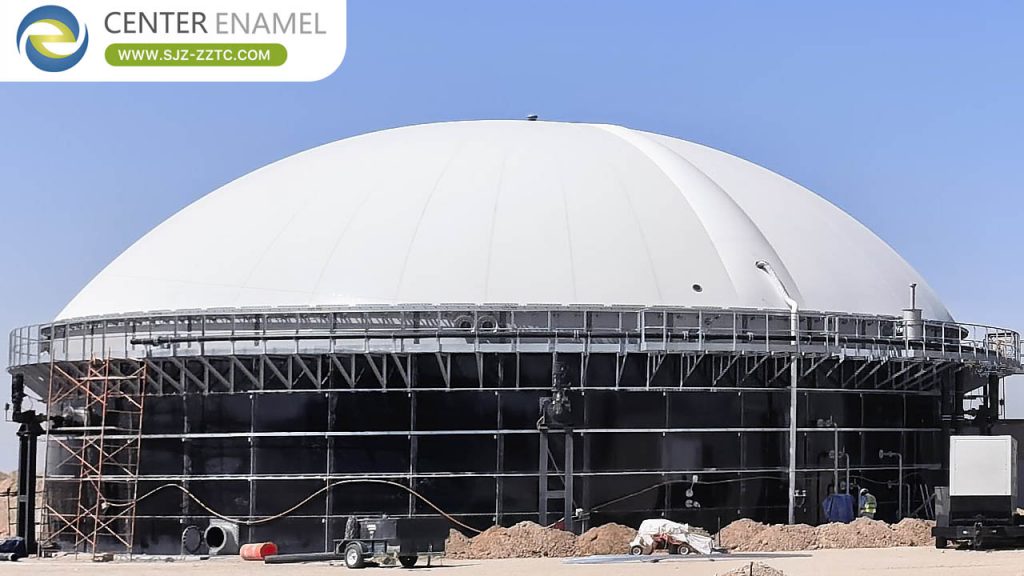
A large-scale biogas project in Malaysia featuring 5 Glass-Fused-to-Steel (GFS) tanks. The project achieves approximately 80% digestibility, with each single tank producing about 4,400 m³ of biogas daily, totaling 22,000 m³ per day across all 5 tanks.
Technical Specifications
Single Tank Volume: 5,400 m³ (Ø24.46 × 12 m)
Total Effective Volume: 27,000 m³ (5 tanks)
Daily Biogas Production: 22,000 m³ total
Digestibility: ≈ 80%
Gas Production Rate: 0.45 m³ / kg COD removed
Tank Type: Glass-Fused-to-Steel (GFS)
Water Quality Data
| Parameter | Inlet Water | Effluent |
| COD | ≥ 60,000 mg/L | ≥ 12,000 mg/L |
| BOD | ≤ 25,000 mg/L | ≤ 5,000 mg/L |