
What Is the Meaning of Industrial Wastewater?
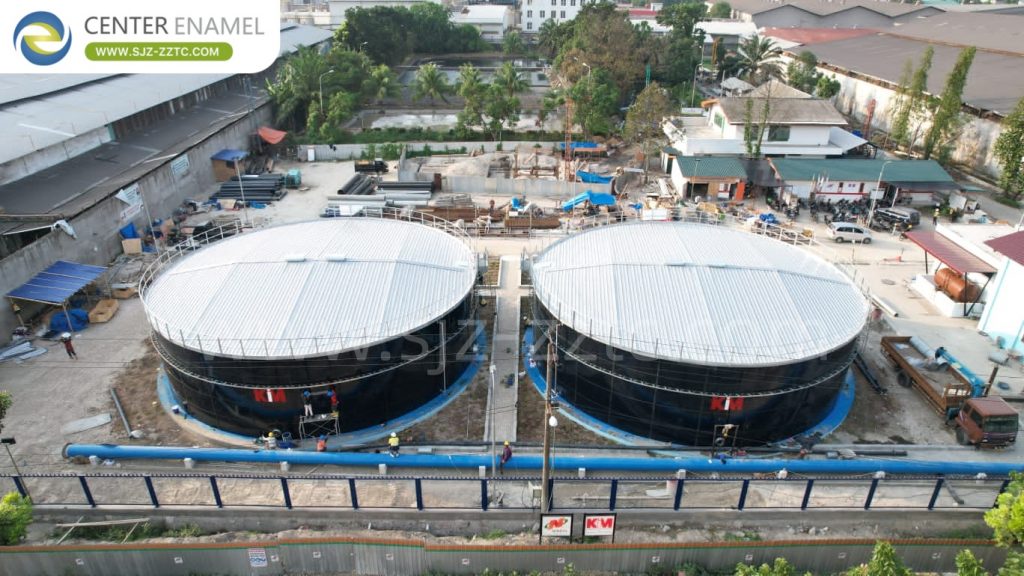
Industrial wastewater refers to the contaminated water generated and discharged during industrial production, processing, cooling, cleaning, chemical reactions and other manufacturing activities. Compared with domestic sewage, industrial wastewater features complex components, high concentration of organic or inorganic pollutants, high toxicity, strong corrosiveness, and large fluctuation of water quality and quantity. It has become one of the main sources of global water pollution. With the rapid development of global manufacturing, the treatment of industrial wastewater has become a mandatory requirement for enterprises to meet environmental regulations, control operational risks and achieve sustainable development.
Main Sources of Industrial Wastewater
Industrial wastewater widely exists in various manufacturing and processing industries, and its composition varies greatly according to different production processes. The main sources include:
Food and beverage processing industry: Including sugar, edible oil, dairy, seafood, starch, canning, brewery and beverage factories. Wastewater contains a lot of protein, fat, starch and sugar, with extremely high COD and BOD values, which is the most typical high-concentration organic wastewater.
Agricultural and sideline processing industry: Rice milling, cassava starch, fruit and vegetable processing, livestock and poultry slaughtering and other industries produce wastewater with high suspended solids, easy acidification and high pollution intensity.
Textile, printing and dyeing industry: Wastewater contains dyes, additives, acids and alkalis, with high chroma, poor biodegradability and great ecological harm.
Chemical and pharmaceutical industry: Wastewater contains organic solvents, residual drugs, catalysts and toxic substances, which is difficult to treat.
Petroleum and refining industry: Produce oily wastewater with hydrocarbons, sulfides and other pollutants.In addition, electronics, electroplating, mining, paper making and other industries will produce industrial wastewater containing heavy metals, toxic substances and high suspended solids, which pose a serious threat to the environment.
Hazards of Untreated Industrial Wastewater
Discharge of untreated industrial wastewater will cause long-term and irreversible harm to the ecological environment and human society:
Destroy aquatic ecological balance: High-concentration organic matter consumes a lot of dissolved oxygen in water, leading to eutrophication, fish death and even the complete collapse of the water ecosystem.
Toxic and harmful accumulation: Heavy metals, phenols, dyes and other toxic substances enter the food chain through biological enrichment, endangering human health.
Pollute groundwater and soil: Pollutants penetrate into the ground, damage soil structure, pollute drinking water sources, and affect agricultural production safety.
Corrode infrastructure: Acids, alkalis and salts in wastewater corrode pipelines, storage tanks and urban drainage systems, increasing operation and maintenance costs.
Legal and operational risks: Violating discharge standards will face heavy fines, production suspension, license revocation and other penalties, directly affecting the normal operation of enterprises.
Waste renewable resources: A large amount of organic matter in wastewater can be converted into biogas energy through professional treatment, and direct discharge is a huge waste of resources.
Standard Industrial Wastewater Treatment Process
A complete industrial wastewater treatment system is generally divided into three stages to achieve efficient removal of pollutants:
Pretreatment (Primary Treatment): Mainly use physical and chemical methods to remove large suspended solids, floating oil, sand and other impurities, and adjust pH value and water volume load. Common processes include grid filtration, desanding, oil separation, neutralization and precipitation, which create stable conditions for subsequent biological treatment.
Secondary Treatment (Biological Treatment): The core link of industrial wastewater treatment, which uses microbial metabolism to degrade organic pollutants. For high-concentration organic wastewater, anaerobic biological treatment is the most economical and efficient method, with the advantages of low energy consumption, less sludge production and recyclable biogas energy.
Advanced Treatment (Tertiary Treatment): For enterprises with high discharge or reuse standards, advanced processes such as filtration, disinfection and membrane separation are adopted to further remove residual pollutants to ensure stable compliance.
Four Core Anaerobic Treatment Technologies
Center Enamel provides four mature anaerobic processes for different industrial wastewater characteristics, covering various working conditions from high suspended solids to high concentration solubility:
CSTR Process (Completely Stirred Tank Reactor): Adopt full mechanical stirring to realize uniform mixing of wastewater and sludge. It has strong anti-impact load capacity and is suitable for high-solid and high-impurity wastewater such as food residues and pulp. It can maintain stable biogas production and is widely used in food processing and agricultural and sideline wastewater.
UASB Process (Upflow Anaerobic Sludge Blanket): Rely on high-activity granular sludge and three-phase separator to treat soluble organic wastewater efficiently. It has the advantages of mature technology, stable operation, low energy consumption and less supporting equipment, and is the preferred process for beverage, starch and sugar wastewater.
USR Process (Upflow Solid-state Anaerobic Reactor): Simple structure, no mechanical stirring, relying on sedimentation to retain sludge and organic matter. It has strong anti-clogging performance, low investment and operation cost, and is especially suitable for high-SS wastewater such as cassava starch and fruit and vegetable processing.
IC Process (Internal Circulation Reactor): The third-generation high-efficiency anaerobic reactor, driven by biogas lifting to realize internal circulation. Its volume load is 3-5 times that of traditional reactors, with small floor area and fast startup, which is the best choice for large-scale industrial parks and high-capacity projects.
Advantages of GFS Tanks in Industrial Wastewater Treatment
Glass-Fused-to-Steel (GFS) tanks are the core equipment of modern industrial wastewater treatment systems, and Center Enamel GFS tanks have obvious advantages:
Super corrosion resistance: Fused at high temperature above 820°C, resistant to pH 1-14 environment, adapting to acid, alkali, salt and organic corrosive wastewater.
Long service life: Designed service life of more than 30 years, no need for frequent painting and maintenance, greatly reducing the full-life cycle cost.
Fast construction speed: Factory prefabricated, on-site bolted assembly, no on-site welding, short construction period, less affected by weather.
Space-saving: Vertical modular design, greatly reducing the floor area, suitable for factories with limited land.
Strong weather and seismic resistance: Adapt to high temperature, humidity, coastal salt spray and other harsh environments, with good seismic performance.
Easy maintenance: Smooth glass surface is not easy to hang sludge and scale, reducing cleaning and maintenance workload.
Center Enamel: Leading EPC Contractor for Industrial Wastewater Treatment
Center Enamel is a globally recognized professional EPC contractor focusing on industrial wastewater treatment and biogas energy recovery, providing full-process turnkey solutions for enterprises worldwide.
Core Advantages
Customized solutions: Design targeted processes and configurations according to wastewater characteristics, land conditions and discharge standards of different industries to ensure stable compliance.
Complete anaerobic technology system: Master CSTR, UASB, USR, IC four core processes, covering all types of industrial wastewater treatment needs.
High-quality core equipment: Asia's largest GFS tank manufacturing base, each steel plate passes 1500V spark test, in line with ISO, AWWA, NSF/ANSI 61 and other international standards.
Full-process EPC service: Provide one-stop service from design, production, transportation, installation to commissioning, training and after-sales, reducing customer coordination costs and project risks.
Rich project experience: Have a large number of successful cases in food, starch, aquaculture, chemical and other industries, and understand the environmental policies and process characteristics of various countries.
Energy recycling: While treating wastewater, convert organic pollutants into biogas energy for power generation, heating and production, realizing the integration of environmental protection and economic benefits.
Industrial wastewater is an important environmental problem faced by the manufacturing industry, with wide sources, great harm and high treatment requirements. Scientific treatment needs standardized processes, reliable equipment and professional engineering partners. Center Enamel, with its four core anaerobic treatment technologies, high-performance GFS tanks and full-process EPC service capabilities, provides safe, stable, economical and efficient solutions for industrial wastewater treatment. It helps enterprises meet environmental regulations, reduce operation costs and realize green and sustainable development, and is a reliable partner for industrial wastewater treatment worldwide.