
What Is the Newest Biogas Upgrading Method?
The newest biogas upgrading methods gaining real deployment are membrane separation and cryogenic liquefaction, which cut the solvent use and energy of older amine or water scrubbing, alongside emerging biological methanation and ionic-liquid routes. All of them still aim for the same endpoint: biomethane at about 98% methane suitable for grid injection or vehicle fuel.
What “Upgrading” Means
Raw biogas is roughly 55–65% methane with CO₂, water, H₂S, and trace siloxanes. Upgrading removes those impurities to reach pipeline- or vehicle-grade biomethane (≥98% CH₄). The goal is a drop-in gas that is interchangeable with natural gas, with a clean CO₂ stream as a useful by-product.
Established Methods Still Dominant
Water scrubbing and amine (chemical) scrubbing remain the most installed routes because they are proven and tolerant of variable gas. Pressure swing adsorption (PSA) and activated-carbon systems fill the small-plant niche. The newer methods are not replacing these everywhere—they are chosen where energy cost or solvent handling is the deciding factor.
The Newer Routes
Membrane separation pushes biogas across selective polymer or ceramic membranes that let CO₂ and water pass faster than methane, with no solvent and simple skid-mounted units. Cryogenic upgrading cools the gas so CO₂ and water freeze or liquefy out, and—usefully—delivers liquid CO₂ that can be sold (see biogenic-CO₂ products). Biological methanation and lab-stage ionic-liquid solvents are the frontier, trading throughput for very low operating energy.
Comparative Data Table: Upgrading Routes
| Method | Maturity | Relative energy use | Note |
| Amine scrubbing | established | high | solvent handling needed |
| Water scrubbing | established | medium-high | water demand |
| PSA | established | medium | small plants |
| Membrane | growing | lower | no solvent, simple |
| Cryogenic | growing | lower | liquid CO₂ by-product |
| Biological / ionic-liquid | emerging | lowest | low throughput |
Technical Considerations
Newer does not mean universally better. Membrane systems need consistent pressure and good pre-cleaning (H₂S, siloxanes) to protect the membranes; cryogenic systems need enough gas volume to justify the cooling duty; biological routes are sensitive to trace toxins. Specific energy for legacy routes is often around 0.3–0.5 kWh per Nm³ of biomethane, with membrane and cryogenic aiming below that band.
Advantages and Limitations
Membranes and cryogenics reduce chemical use and can lower operating energy, and cryogenics adds a sellable CO₂ stream. Limits: higher capital for cryogenic, membrane fouling risk, and that biological routes are still small-scale. The right choice depends on gas volume, offtake, and how much you value avoiding solvents.
Best Practices / How to Choose
Match the method to scale and gas quality: large steady streams suit scrubbing or cryogenic; small or solvent-averse sites suit membranes; plants already capturing CO₂ may favor cryogenic or biological to monetize it. Pre-treat gas well, and size to steady flow rather than peaks.
The newest biogas upgrading methods are membrane and cryogenic separation—lower-energy, solvent-light alternatives to amine and water scrubbing—with biological methanation and ionic liquids as the emerging low-energy frontier. Whatever the route, the target remains ~98% methane biomethane.
Frequently Asked Questions (FAQ)
Q1: What is the newest biogas upgrading method?
A: Membrane separation and cryogenic liquefaction are the newest routes gaining deployment, with biological methanation and ionic-liquid solvents as emerging low-energy options; all target ~98% CH4.
Q2: Which upgrading method uses the least energy?
A: Emerging biological and ionic-liquid routes aim for the lowest operating energy; among commercial options, membrane and cryogenic typically beat amine and water scrubbing.
Q3: Is biological methanation a new upgrading method?
A: It is an emerging route that reacts biogenic CO₂ with renewable H₂ to form methane via microbes; still smaller-scale than scrubbing or membranes but valued for low energy use.
Q4: What methane purity do they reach?
A: All credible routes target ≥98% methane for grid or vehicle grade; legacy and newer methods differ mainly in energy and solvent use, not the purity ceiling.
Q5: Does cryogenic upgrading give a useful CO₂?
A: Yes—it can deliver liquid CO₂ as a by-product, which plants can sell for beverages, dry ice, or other uses rather than venting.
Q6: Should I switch from amine to membrane?
A: Only if your gas volume and pre-treatment support it; membranes avoid solvent handling but need clean, steady feed. Compare lifecycle energy and O&M, not just the headline method.
Project Case Reference
Zhenyuan Group Biogas Project in Henan — Xinzheng, Henan, China · 2013
650 T/D · CSTR Process · 3M m³ Vehicle-grade CH₄/Year
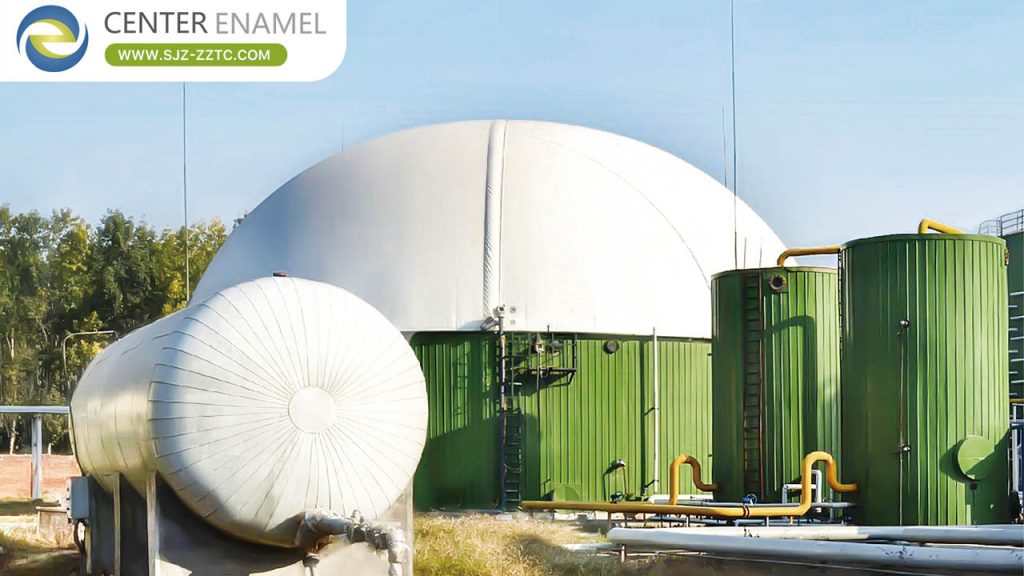
A vehicle-grade methane production project for Zhenyuan Group in Henan Province. Using medium-temperature anaerobic fermentation with CSTR technology, the plant treats 650 T/D of farm animal manure and washing wastewater, producing 3 million cubic meters of methane annually for vehicle fuel. The system includes 3 primary and 1 secondary anaerobic reactors for two-stage digestion.
Technical Specifications
Handling Capacity: 650 T/D (manure + washing wastewater)
Treatment Type: Medium Temp. Anaerobic Fermentation
Reactor Type: CSTR (Continuous Stirred-Tank Reactor)
Primary Reactors: 3 sets, Φ15.29 × 15 m
Secondary Reactor: 1 set, Φ5.22 × 6 m
Annual Methane Production: 3,000,000 m³ (vehicle-grade)