
What Is the Primary Purpose of Wastewater Treatment? Complete Guide
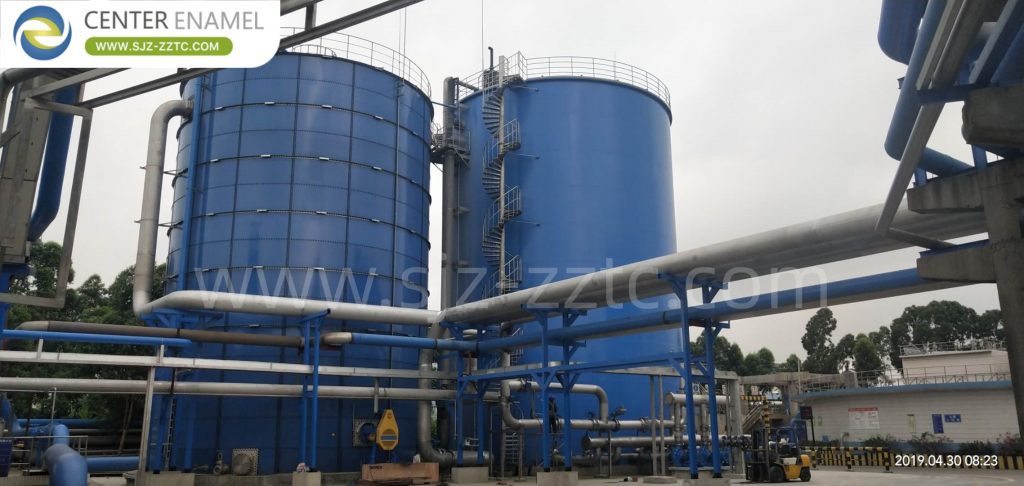
Many environmental engineers, factory owners and municipal planners frequently ask: What is the primary purpose of wastewater treatment? The core primary purpose of wastewater treatment is to remove harmful pollutants from sewage, purify contaminated water, and enable safe environmental discharge or reusable water recycling. Untreated wastewater contains massive organic matter, suspended solids, pathogens, chemicals and nutrients that severely damage rivers, soil and groundwater. Professional wastewater treatment eliminates these hazards, protects ecological balance, complies with environmental regulations, and realizes sustainable water resource reuse.
This article explains the core purpose, complete treatment workflow, application industries, reused scenarios, as well as Center Enamel’s overall strengths, four advanced anaerobic processes and high-performance GFS Tanks in global wastewater treatment projects.
The Primary Purpose of Wastewater Treatment
The fundamental primary purpose of wastewater treatment includes three core goals:
Remove Pollutants & Reduce Environmental Harm
Eliminate suspended solids, organic pollutants, nitrogen, phosphorus, pathogens and toxic chemicals in wastewater to prevent river eutrophication, groundwater contamination and soil degradation.
Meet Environmental Discharge Standards
Treat raw sewage up to national and international discharge standards, helping factories and municipalities avoid fines and meet environmental compliance requirements.
Realize Water Resource Recycling
Purify wastewater into reclaimed water for industrial reuse, agricultural irrigation and municipal use, easing global water shortage pressure and promoting circular economy.
All treatment processes and technologies are designed around these three primary purposes.
Complete Wastewater Treatment Process
Wastewater treatment follows four standardized stages to achieve thorough purification:
1. Pretreatment
Use mechanical bar screens and grit chambers to intercept large debris, plastic fibers, sand and gravel, protecting subsequent equipment from blockage and abrasion.
2. Primary Treatment
Adopt sedimentation tanks to settle suspended solids and floating impurities physically, reducing turbidity and initial COD pollution load.
3. Secondary Biological Treatment
Use microorganisms to decompose dissolved organic matter. Anaerobic digestion is the most cost-effective method, converting pollutants into biogas while purifying water. This is the core stage of wastewater treatment.
4. Tertiary Advanced Treatment
Apply filtration, disinfection, dephosphorization and denitrification for deep purification, making water quality reach reuse standards.
Main Fields That Need Wastewater Treatment
Wastewater treatment is essential in almost all industries and living areas:
- Municipal Sewage: Urban domestic sewage and community wastewater
- Livestock Farms: Pig, cattle and poultry breeding wastewater
- Food Industry: Cassava, palm oil, beverage and food processing wastewater
- Industrial Parks: Chemical, textile, paper and pharmaceutical wastewater
- Rural Areas: Scattered domestic and agricultural sewage
- Municipal Landfill: Leachate wastewater treatment
All these fields must build standardized wastewater systems to avoid pollution.
Where Can Treated Wastewater Be Reused
After professional treatment, reclaimed water can be widely reused:
- Agricultural irrigation and orchard watering
- Industrial circulating cooling water and production water
- Urban road watering, landscape river and greening water
- Groundwater recharge to replenish water resources
- Farmland and ecological wetland replenishment
Wastewater reuse greatly saves freshwater consumption and improves water utilization efficiency.
Overall Advantages of Center Enamel in Wastewater Treatment
As a global leading EPC contractor serving over 100 countries, Center Enamel has comprehensive strengths in wastewater and biogas projects:
- Provides one-stop turnkey services including project design, equipment manufacturing, installation, commissioning and after-sales support.
- Customizes treatment solutions according to local water quality, climate and discharge standards.
- Owns Asia’s largest GFS Tank manufacturing base and over 200 patented enamel formulas.
- Complies with ISO, AWWA, NSF and other international standards with strict quality testing.
- Adopts optimized installation process suitable for mountainous, rural and coastal construction conditions.
- Rich global project experience adapting to various regional environmental requirements.
Four Advanced Anaerobic Technologies for Wastewater Treatment
Center Enamel masters four mature anaerobic processes perfectly suitable for different wastewater characteristics:
CSTR (Completely Stirred Tank Reactor): Ideal for high-solids breeding and food wastewater. Mechanical stirring ensures full mixing of sludge and sewage, maintaining stable anaerobic reaction and biogas production.
UASB (Upflow Anaerobic Sludge Blanket): Classic low-cost process for medium-concentration industrial wastewater. Wastewater flows upward through granular sludge to efficiently degrade organic pollutants with simple operation and low maintenance.
USR (Upflow Solid Reactor): Suitable for rural and small factory wastewater. Simple structure, low investment and strong adaptability to complex sewage quality.
IC (Internal Circulation) Process: High-rate advanced anaerobic technology with 3–5 times higher loading capacity than traditional reactors. It saves land and has excellent COD removal efficiency for large industrial wastewater projects.
Advantages of GFS Tanks in Wastewater Treatment
GFS (Glass-Fused-to-Steel) Tanks are the core infrastructure for modern wastewater treatment:
- Resist corrosion in pH 1–14 range, adapting to acidic, alkaline and high-salinity industrial wastewater.
- Excellent UV aging and seismic resistance, suitable for tropical, temperate and coastal environments.
- Factory prefabricated bolted assembly, no on-site welding, fast construction and short cycle.
- Service life over 30 years with minimal maintenance, lowering long-term operation costs.
- Smooth inner surface reduces sludge adhesion, easy cleaning and stable water treatment efficiency.
The primary purpose of wastewater treatment is to remove pollutants, meet discharge standards and realize water recycling. With complete treatment processes and wide application fields, it has become indispensable for global environmental protection. Center Enamel relies on professional EPC strength, four mature anaerobic technologies and high-performance GFS Tanks, providing reliable customized wastewater treatment solutions for worldwide clients, supporting ecological protection and sustainable water resource development.