
What Is the Problem with Fruit Waste?
Fruit waste is one of the most significant yet overlooked contributors to global environmental degradation. Each year, the world generates approximately 1.3 billion tonnes of food waste, with fruits and vegetables accounting for a staggering 30% to 60% of their original weight as waste. This translates to over 110 million tonnes of fruit bio-waste annually, placing immense pressure on landfills, water resources, and the atmosphere. Understanding the full scope of this problem is essential for developing sustainable solutions that turn waste into opportunity.
The Staggering Scale of Fruit Waste Generation
Fruit waste originates from multiple points across the supply chain. In developed nations, losses occur primarily at retail and consumer levels, while developing countries experience up to 40% losses during post-harvest and processing stages. The fruit processing industry alone generates an estimated 0.5 billion tonnes of waste annually, including peels, seeds, pomace, and pulp. For specific fruits, the waste rates are alarming: citrus processing produces waste accounting for over 50% of fresh fruit mass, mango and pomegranate generate 30-50% waste, and banana production creates approximately 20% waste. Even in major producing countries, such as Italy with its 3 million tonnes of annual citrus production, roughly 700,000 to 800,000 tonnes become waste by-products.
Environmental Impacts: Methane, Pollution, and Ecosystem Damage
When fruit waste is sent to landfills, it does not simply disappear. The organic matter undergoes anaerobic decomposition, releasing methane—a greenhouse gas over 25 times more potent than carbon dioxide in trapping heat. The fruit processing industry contributes approximately 8-10% of annual global greenhouse gas emissions. Beyond climate impacts, fruit waste presents multiple environmental threats:
Water Resource Contamination: The high moisture content of fruit waste—often exceeding 90%—generates large volumes of concentrated leachate that seeps into groundwater, damaging aquatic ecosystems and contaminating drinking water sources.
Soil and Land Degradation: Improper disposal through open dumping pollutes land and contributes to soil deterioration. The rapid decomposition of fruit waste attracts pests, bacteria, and mold, creating public health hazards.
Resource Waste: Approximately 280 litres of water are required to produce just 1 kg of strawberries; when fruit is wasted, all the water, arable land, and energy invested in its production are also wasted.
Why Traditional Waste Management Methods Are Failing
Conventional approaches to fruit waste disposal are increasingly unsustainable. Landfilling remains the primary method for organic waste disposal in many regions, yet space for new landfills is diminishing. Approximately 70.5% of waste from the food processing sector and 50% of waste from wholesale and retail sectors are incinerated, while significant portions continue to be dumped in landfills. These methods fail to address the fundamental problem of resource loss and environmental damage. Composting, while beneficial for soil fertility, requires ample space and time, and not all varieties of fruit bio-waste are conducive to effective composting. Animal feed applications risk nutrient imbalance and health hazards if not properly monitored. The high acidity and low buffering capacity of fruit processing waste also make traditional disposal methods particularly challenging, often leading to "acid crash" conditions that destabilize biological treatment processes.
The Hidden Economic Costs of Fruit Waste
Beyond environmental damage, fruit waste represents a massive economic loss. Globally, nearly 30% of food intended for human consumption—the equivalent of output from 1.4 billion hectares of agricultural land—is wasted. This inefficiency undermines food supply systems, drives up production costs, and reduces profitability for farmers and processors. The fruit industry generates more waste than other food processing sectors, creating substantial costs for waste management and disposal. Additionally, fruit waste contains valuable bioactive compounds—including polyphenols, flavonoids, dietary fibres, pectin, and essential oils—that represent a lost opportunity for revenue generation through valorization. These discarded materials could otherwise be transformed into high-value products for the food, pharmaceutical, and cosmetic industries.
The Vicious Cycle of Waste and Climate Change
Fruit waste contributes to a destructive feedback loop that accelerates climate change. As organic matter decomposes in landfills, it releases methane and other greenhouse gases. These emissions intensify global warming, which in turn threatens fruit production through extreme weather events, changing growing seasons, and increased pest pressures. The result is more crop losses and even more waste. The Mediterranean region, one of the world's major fruit producers, exemplifies this challenge—it is already significantly affected by climate change, biodiversity loss, water scarcity, and land degradation. Breaking this cycle requires moving beyond linear "take-make-dispose" models toward circular economy approaches that valorize waste as a resource.
Biogas Conversion: The Sustainable Solution for Fruit Waste
The most promising solution to the fruit waste problem is anaerobic digestion (AD), which converts organic waste into renewable biogas and nutrient-rich digestate. Anaerobic digestion addresses multiple challenges simultaneously: it diverts waste from landfills, captures methane for energy instead of releasing it to the atmosphere, and produces a valuable soil amendment.
Fruit waste as an ideal feedstock: Fruit peels, seeds, pulp, and trimmings are rich in readily biodegradable organic matter, making them excellent candidates for biogas production. Studies have demonstrated that fruit and vegetable waste can yield up to 720 litres of biogas per kg of volatile solids under optimal conditions. For example, a mixture of banana peelings and pineapple residues achieved a biogas production potential of 526 litres per kg of volatile suspended solids with methane concentrations around 54%.
Addressing process challenges: While fruit waste has high biogas potential, its low pH and limited buffering capacity can destabilize the AD process. This is why co-digestion with nitrogen-rich substrates like manure is recommended to balance nutrients, increase alkalinity by up to 249%, and reduce volatile acidity by 83%. Studies have confirmed that replacing a portion of fruit waste with lignocellulosic biomass significantly improves methane yield and prevents "acid crash".
Real-world application: The biogas produced can generate electricity, heat, or be upgraded to biomethane for vehicle fuel. For a fruit processing facility, anaerobic digestion could supply up to 73% of the facility's electricity demand and save approximately 450,000 litres of heavy oil annually for heat generation.
Center Enamel: Your One-Stop Biogas Project Solutions Provider
Center Enamel, with over 36 years of experience and a legacy, is a global leader in providing comprehensive biogas solutions. As the largest manufacturer of Glass-Fused-to-Steel (GFS) tanks in Asia, Center Enamel delivers high-quality, durable, and cost-effective equipment for biogas projects worldwide.
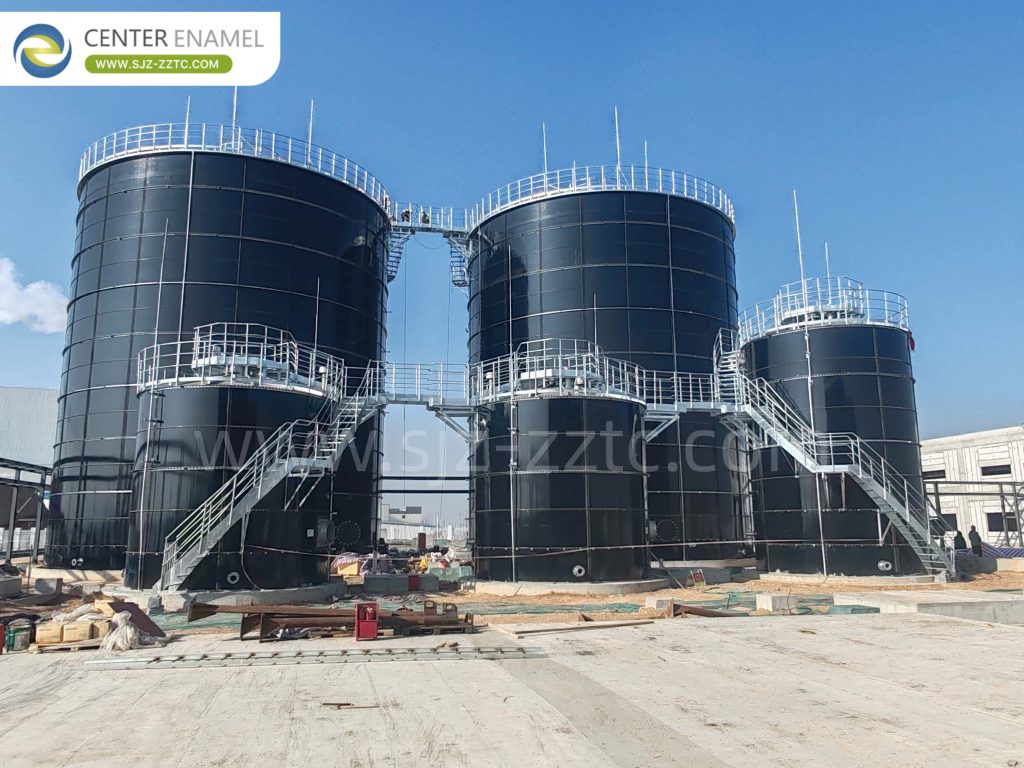
Premium GFS Tanks for Anaerobic Digestion: Center Enamel's GFS tanks are manufactured using high-temperature glass-fused-to-steel technology, where steel panels are fired between 820°C and 930°C to create a chemically inert and inorganic bond. This process combines the strength of steel with exceptional corrosion resistance—ideal for the acidic environment of fruit waste digestion. The coating withstands organic acids and hydrogen sulfide, ensuring a service life exceeding 30 years with minimal maintenance.
Integrated Biogas Solutions: Beyond storage and digestion vessels, Center Enamel provides comprehensive equipment packages including gas holders, solid-liquid separators, torch systems, and dehydration and desulfurization tanks. The company offers full EPC services covering project design, equipment production, transportation, installation, system commissioning, operator training, and long-term after-sale support.
Global Standards Compliance: All Center Enamel tanks are designed and manufactured in strict accordance with international standards including AWWA D103, ISO 28765, NSF/ANSI 61, and CE/EN 1090, guaranteeing safety, quality, and reliability. With a presence in over 100 countries and a production capacity of over 250,000 sheets per year from its 150,000m² facility, Center Enamel is equipped to handle biogas projects of any scale.
Frequently Asked Questions (FAQs)
1. Why is fruit waste particularly problematic for landfills compared to other organic waste?
Fruit waste has moisture content often exceeding 90%, which generates large volumes of concentrated leachate that can contaminate groundwater. Its rapid decomposition releases methane and creates odors, attracting pests and posing public health risks.
2. Can all types of fruit waste be used for biogas production?
Yes, most fruit wastes—including peels, pulp, pomace, and seeds—are suitable for anaerobic digestion. However, due to low buffering capacity, co-digestion with nitrogen-rich substrates like manure is recommended to prevent acidification and optimize biogas yield.
3. How long does it take to see economic returns from a fruit waste biogas project?
Studies show fruit waste is the most viable feedstock for anaerobic digestion, with discounted payback periods as short as 2.33 batches. Combined with energy generation and fertilizer production, biogas projects deliver strong economic returns.