
What Is the Process of Desulfurization? A Technical Guide of Desulfurization in Wastewater Treatment
Desulfurization in wastewater treatment is a critical process for removing sulfur compounds-particularly hydrogen sulfide (H2S) and sulfides-from industrial and municipal wastewater streams. As environmental regulations tighten globally, understanding the complete desulfurization process has become essential for plant operators, environmental engineers, and facility managers. This comprehensive guide explores the technical aspects of biological and chemical desulfurization, the importance of H2S removal, and how modern solutions are transforming wastewater treatment.
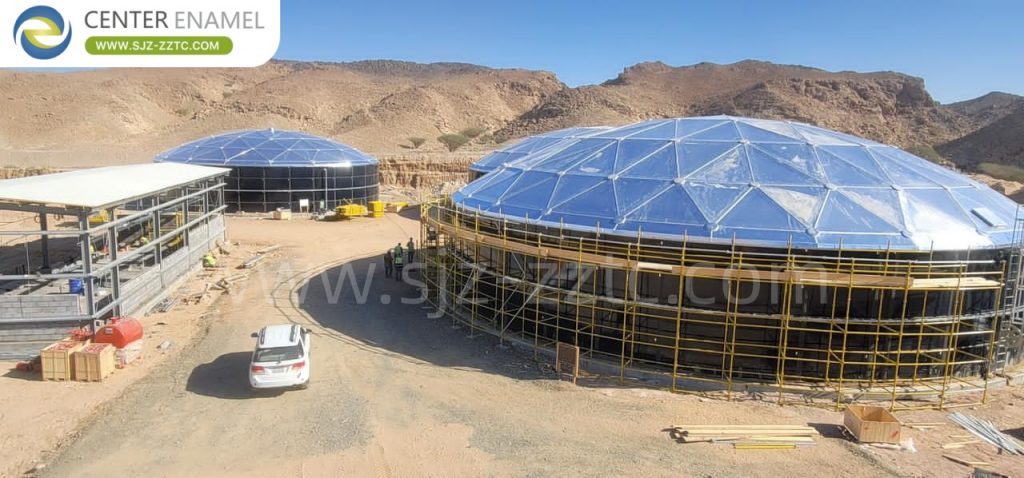
What Is Desulfurization in Wastewater Treatment?
Desulfurization refers to the removal of sulfur-containing compounds from wastewater and biogas streams generated during anaerobic digestion. When organic matter decomposes in oxygen-free environments-such as anaerobic digesters-sulfur-reducing bacteria convert sulfates into hydrogen sulfide (H2S), creating a highly corrosive and toxic gas that poses significant operational and safety risks. The desulfurization process eliminates these sulfur compounds, protecting downstream equipment, enabling biogas utilization, and ensuring regulatory compliance.
Why H2S Removal Is Critical
Hydrogen sulfide presents three major challenges in wastewater treatment:
Corrosion: H2S oxidizes in the tank headspace to form sulfuric acid-a substance that rapidly destroys concrete and standard steel, leading to costly equipment failures.
Toxicity: H2S is acutely toxic to humans and aquatic life, requiring stringent removal before discharge.
Energy Recovery: Biogas from anaerobic digestion typically contains H2S that must be removed before combustion to prevent sulfur dioxide emissions and equipment damage.
The Chemistry Behind Sulfur Compounds in Wastewater
Understanding the chemistry of sulfur in wastewater is fundamental to effective desulfurization. Sulfur enters wastewater streams through multiple pathways: from industrial processes like flue gas desulfurization (FGD), petrochemical operations, agricultural runoff, and the natural breakdown of organic matter.
Under anaerobic conditions, sulfate-reducing bacteria convert sulfate ions (SO4²⁻) into sulfide (S²⁻), which combines with hydrogen to form H2S. The pH of the wastewater largely determines the form sulfur takes-at acidic pH levels, H2S gas readily volatilizes, while at alkaline pH, sulfide remains in ionic form, staying dissolved in the liquid phase. This pH-dependent behavior is central to designing effective desulfurization strategies.
Biological Desulfurization-The Eco-Friendly Approach
Biological desulfurization has emerged as a preferred method because it offers no secondary pollution and allows for recovery of elemental sulfur as a valuable product. This process harnesses sulfur-oxidizing bacteria (SOB) to convert harmful sulfides into elemental sulfur, sulfite, or sulfate.
Research has identified that mixed microbial consortia-dominated by genera such as Pseudomonas, Alishewanella, and Zobellella-can efficiently oxidize high-strength sulfide loads. Operating parameters such as sulfide loading rate, pH, and oxidation-reduction potential (ORP) significantly influence sulfur recovery efficiency. Studies demonstrate that at an ORP of -360 mV, optimal conversion of sulfide to elemental sulfur and sulfate can be achieved.
Key Process Parameters in Biological Desulfurization
Successful biological desulfurization depends on carefully controlling several critical parameters:
Sulfide Loading Rate: The concentration of influent sulfide directly impacts bacterial activity and sulfur conversion efficiency. Research has evaluated sulfide loads ranging from 3,000 to 6,000 mg/L, with higher loads requiring longer incubation periods and optimized bacterial consortia.
pH Control: Maintaining the appropriate pH range ensures optimal bacterial activity. Most sulfur-oxidizing bacteria thrive in near-neutral conditions, though specific applications may require pH adjustment for maximum sulfur recovery.
Oxidation-Reduction Potential (ORP): ORP monitoring is essential for controlling the biological oxidation process, with specific ORP values favoring either elemental sulfur recovery or complete sulfate formation.
Chemical Desulfurization-Traditional and Effective Methods
Chemical desulfurization remains widely used, particularly in flue gas desulfurization (FGD) wastewater treatment. The process typically follows a sequential treatment train:
Oxidation: An oxidizing agent-often hypochlorite or ozone-is added to the wastewater to convert sulfites and sulfides into sulfates.
Neutralization: The pH is adjusted to 7–9.5 using alkaline agents, precipitating heavy metals and facilitating their removal.
Solid-Liquid Separation: Membrane separation or settling tanks separate precipitated solids from treated water.
Ozonation has proven particularly effective, with studies showing COD removal at treatment rates of 2.07 g O3/hr with 30 minutes of retention time. Electrochemical oxidation serves as another viable chemical treatment option, achieving COD removal rates of 45% at 10V.
Flue Gas Desulfurization Wastewater Treatment-A Specialized Challenge
Flue gas desulfurization (FGD) processes in power plants and industrial facilities generate wastewater with unique treatment challenges. FGD wastewater contains high levels of sulfates, heavy metals, and suspended solids requiring specialized treatment.
Modern FGD wastewater treatment employs multi-stage systems including gypsum separation, oxidation, neutralization, and membrane separation. The oxidation tank receives filtrate from gypsum separation, where oxidizing agents are added at pH 3–4. Neutralization follows at pH 7–9.5, precipitating heavy metals such as manganese and decomposing COD components. These stages are often arranged vertically to allow gravity flow, minimizing energy consumption and reducing facility footprint.
Biogas Desulfurization in Anaerobic Digestion Systems
Anaerobic digestion produces biogas rich in methane and carbon dioxide, but also containing corrosive hydrogen sulfide. Biogas desulfurization is essential for energy recovery applications, such as combined heat and power (CHP) systems.
For high-strength H2S streams-such as those from sugarcane vinasse fermentation, which can reach 50,000 ppmv-biotrickling filters (BTFs) provide effective treatment. These systems employ sulfur-oxidizing bacteria immobilized on packing materials, achieving complete H2S removal with elimination capacities exceeding 140 g S-H2S m⁻³ h⁻¹.
Critical factors for BTF performance include packing material surface area, empty bed residence time (EBRT), and nitrate-to-sulfur ratios. Proper control prevents elemental sulfur accumulation and maintains stable operation.
Advanced Desulfurization Technologies
Emerging technologies offer enhanced efficiency and broader application ranges:
Ozone-Based Treatment: Ozonation effectively removes COD from FGD wastewater while simultaneously oxidizing sulfide compounds, serving as a dual-purpose treatment step.
Membrane Separation: Integrating membrane technology with oxidation and neutralization creates compact treatment units that efficiently remove heavy metals and difficult-to-degrade COD components.
Hybrid Aerobic-Anoxic Systems: Combining aerobic and anoxic zones within biotrickling filters supports both sulfide oxidation and denitrification, enabling complete nitrogen and sulfur removal in a single unit.
Monitoring and Quality Control in Desulfurization
Effective desulfurization requires comprehensive monitoring to ensure process stability and effluent quality:
Online Monitoring: Real-time pH, temperature, and ORP monitoring enables precise process control and rapid response to changing influent conditions.
Biogas Analysis: Regular biogas composition testing confirms H2S removal efficiency and validates system performance.
Effluent Testing: COD, sulfide, and sulfate measurements verify compliance with discharge permits and assess treatment effectiveness.
Center Enamel-Professional Wastewater Treatment Solutions Provider
Center Enamel stands as a global leader in providing comprehensive wastewater treatment solutions, with deep expertise in anaerobic digestion and desulfurization technologies. As the only company globally achieving integrated enamel frit R&D, self-manufacturing, and Glass-Fused-to-Steel (GFS) tank application, Center Enamel delivers end-to-end solutions across diverse industries including food waste, leachate, municipal wastewater, livestock biogas, petrochemical/metallurgical, and seawater desalination.
Key Capabilities Include:
Corrosion-Resistant Infrastructure: Center Enamel's proprietary GFS tanks feature double-sided hot-rolled double-layer enamel anti-corrosion technology, resistant to strong acids/alkalis, high salinity, and microbial corrosion-essential for desulfurization and biogas applications where H2S and sulfuric acid attack are constant threats.
Complete Biogas Systems: Center Enamel provides integrated biogas collection systems including piping, water seals, dual-membrane gas holders, and desulfurization units for biogas purification and storage. These systems are engineered to handle high-strength organic loads, with anaerobic reactors achieving COD removal rates of approximately 80% in demanding applications.
EPC Project Delivery: As a professional EPC contractor, Center Enamel offers one-stop turnkey biogas solutions, from design through commissioning, backed by global certifications including CE, NSF, WRSA, ISO9001, BSCI, and ASME, ensuring compliance with international standards.
Proven Global Track Record: With over 30,000 successful projects spanning Singapore, Sweden, Canada, France, and numerous other countries, Center Enamel has demonstrated capability in managing large-scale biogas infrastructure, including landmark projects like the 16,760 m³ Inner Mongolia bio-natural gas facility and the 42,188 m³ Eswatini alcohol wastewater project.
Anaerobic Technology Expertise: Center Enamel provides multiple mature anaerobic technologies-including CSTR (Completely Stirred Tank Reactor), UASB (Upflow Anaerobic Sludge Blanket), USR (Upflow Solids Reactor), and IC (Internal Circulation)-each optimized for specific wastewater characteristics and project scales.
Conclusion
The desulfurization process in wastewater treatment encompasses a diverse array of biological, chemical, and physical technologies, each suited to specific applications and sulfur loading conditions. Understanding the underlying chemistry, process parameters, and available technologies enables operators to select and optimize appropriate treatment strategies. As environmental regulations continue to tighten and the demand for renewable energy from biogas grows, effective desulfurization has become essential to protect equipment, ensure compliance, and maximize energy recovery.
Center Enamel's comprehensive capabilities-from corrosion-resistant tank infrastructure to complete biogas collection and desulfurization systems-position the company as a trusted partner for wastewater treatment projects worldwide. With industry expertise, international certifications, and a proven track record of major installations, Center Enamel delivers the technical solutions needed to address today's complex desulfurization challenges.
Frequently Asked Questions
What is the difference between biological and chemical desulfurization?
Biological desulfurization uses naturally occurring sulfur-oxidizing bacteria to convert sulfides into elemental sulfur, which can be recovered as a valuable byproduct. Chemical desulfurization employs oxidizing agents, pH adjustment, and precipitation to remove sulfur compounds, offering faster treatment but generating chemical sludge requiring disposal.
Why is desulfurization necessary in anaerobic digestion systems?
Anaerobic digestion produces biogas containing hydrogen sulfide (H2S), which is corrosive to equipment, toxic to personnel, and produces sulfur dioxide emissions when burned. Desulfurization protects CHP engines, enables safe biogas utilization, and ensures compliance with air quality regulations.
How does Center Enamel support desulfurization in wastewater treatment projects?
Center Enamel provides corrosion-resistant GFS tanks that withstand H2S and sulfuric acid attack, complete biogas collection systems with integrated desulfurization units, and full EPC services backed by international certifications. Their modular tank solutions and process expertise ensure reliable, long-term desulfurization performance.