
What is the Process of Wastewater Treatment in the Food Industry?
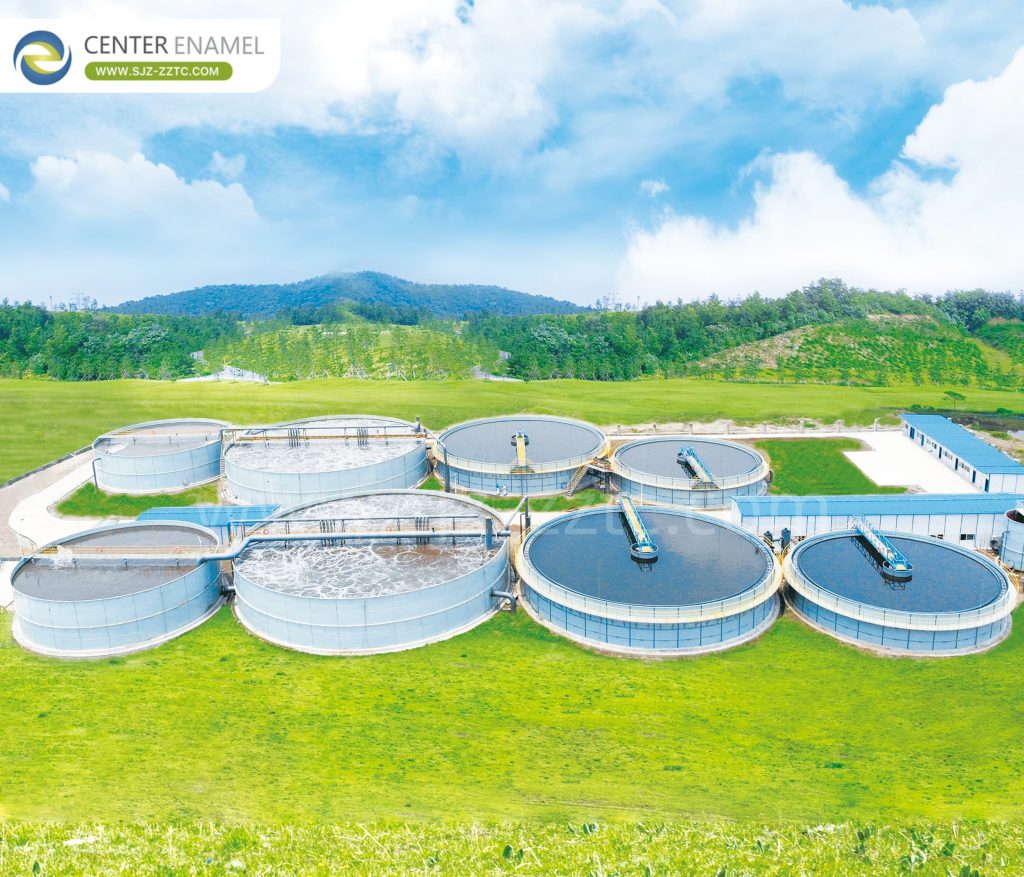
Food processing is one of the most water-intensive and wastewater-producing sectors globally. Wastewater from food manufacturing contains high concentrations of organic matter, oils, greases, suspended solids, sugars, proteins, and nutrients, making it highly polluting if discharged untreated. This article explains how food wastewater is generated, its environmental hazards, the full treatment process, four core anaerobic technologies, and the unique advantages of Center Enamel as a leading EPC provider for Food Processing Wastewater Treatment Project.
How Food Processing Wastewater Is Generated
Food processing wastewater is produced across nearly every stage of production:
Washing and cleaning: Raw fruits, vegetables, grains, meat, and seafood are washed, removing soil, pesticides, surface debris, and microorganisms.
Peeling, cutting, and blanching: Peels, pulp, residues, and soluble organics enter water streams.
Cooking, boiling, and fermentation: Starch, sugar, fat, and protein dissolve into process water.
Equipment and floor washing: Detergents, sanitizers, and leftover materials increase pollutant levels.
Filtration and refining: High-strength effluent from starch, dairy, and beverage processing.
Typical characteristics include:
Extremely high organic load: COD often ranges from 8,000 to 40,000 mg/L.
High oils, greases, and suspended solids (SS): Easily cause clogging and equipment wear.
Rapid acidification: Low pH inhibits microbes and corrodes standard tanks.
Strong fluctuation: Seasonal and batch production cause unstable loading.
High biodegradability: Ideal for anaerobic treatment with biogas recovery.
Dangers of Untreated Food Wastewater Discharge
Untreated food wastewater poses severe risks:
Ecological damage: High organic load depletes dissolved oxygen, killing aquatic life and causing eutrophication.
Water source pollution: Contaminates rivers, groundwater, and coastal zones, affecting drinking water safety.
Health hazards: Pathogens, odors, and toxins threaten public health.
Equipment and pipeline failure: Grease and solids block systems, increasing maintenance costs.
Regulatory penalties: Violations lead to fines, production suspension, or license revocation.
Effective Food Processing Wastewater Treatment Project is essential for compliance, cost control, and sustainable development.
Standard Process of Food Processing Wastewater Treatment
A complete, reliable system follows four key stages:
1. Pretreatment
Screening: Removes large solids like peels, fibers, and debris to prevent clogging.
Oil and grease removal: API separators or dissolved air flotation (DAF) remove FOG to protect biological systems.
Equalization and pH adjustment: Balances flow, concentration, and pH to stabilize subsequent treatment.
2. Anaerobic Biological Treatment (Core Stage)
High-concentration organics are decomposed by anaerobic microbes into biogas (methane + carbon dioxide). This stage achieves COD removal >80% while producing renewable energy.
3. Aerobic Post-Treatment
Further degrades residual organics, ammonia nitrogen, and pollutants to meet discharge standards. Common processes: A/O, A²/O, bio-oxidation, MBR.
4. Tertiary Treatment & Reuse
Sedimentation and filtration: Removes residual suspended solids.
Disinfection: UV, chlorine, or ozone eliminates pathogens.
Reuse: Treated water recycled for washing, cooling, or irrigation.
Four Core Anaerobic Technologies for Food Wastewater
Anaerobic processes are the most economical and efficient for high-strength food wastewater. Center Enamel provides four leading Anaerobic Technologies to match different conditions.
1. IC Process (Internal Circulation Reactor)
Principle: Two-stage vertical design; biogas lift drives internal circulation, enhancing mass transfer.
Advantages: Loading rate 3–5× higher than conventional reactors; small footprint; fast startup; strong shock resistance.
Application: Large-scale starch, beverage, and food industrial parks with high COD and large flow.
2. UASB Process (Upflow Anaerobic Sludge Blanket)
Principle: Wastewater flows upward through granular sludge; three-phase separator retains biomass.
Advantages: Mature, stable, high efficiency, low energy use, widely applied in Southeast Asia.
Application: Soluble organics from sugar, dairy, and refined starch processing.
3. CSTR Process (Completely Stirred Tank Reactor)
Principle: Mechanical stirring ensures full mixing; prevents crusting and sediment buildup.
Advantages: Strong resistance to high solids and impurities; stable biogas for zero-waste plants.
Application: Pulp, fruit/vegetable waste, and high-solid food residues.
4. USR Process (Upflow Solid-state Anaerobic Reactor)
Principle: Upflow flow retains solids via sedimentation; long SRT boosts efficiency.
Advantages: Simple structure, low investment, anti-clogging, ideal for high SS.
Application: Cassava starch, fruit/vegetable, and small-to-medium food enterprises.
Why Center Enamel Leads Food Processing Wastewater Treatment Project
As a global top EPC contractor for high-concentration organic wastewater and biogas projects, Center Enamel offers unmatched advantages:
1. Advanced Core Equipment
Glass-Fused-to-Steel (GFS) Tanks: Fused above 820°C; pH 1–14 corrosion resistance; seismic, UV, and salt-spray proof; bolted for fast installation.
FBE Tanks: Cost-effective for equalization and clean water storage with uniform coating.
Biogas systems: Double-membrane gas holders and aluminum dome roofs ensure safe, efficient energy recovery.
2. Tailored, Stable Processes
Customized pretreatment + anaerobic + post-treatment combinations adapt to high organic, high SS, acidification, and fluctuation.
3. Extreme Environment Adaptability
Systems resist tropical humidity, coastal salinity, high temperature, and seismic risks for long-term durability.
4. Full-Scope EPC Service
One-stop solution: design, production, transportation, installation, commissioning, training, and after-sales.
5. Quality & Standards Leadership
Asia’s largest GFS manufacturing base.
200+ patented enamel formulas; self-produced frit.
Compliance with ISO, AWWA, OSHA, NSF/ANSI 61; 1500V spark test per plate.
Drafts China’s GFS tank industrial standard.
6. Efficient Installation
Hydraulic jacking system: top-down installation without high scaffolding.
Factory prefabrication: bolted assembly, no on-site welding.
Rapid commissioning: no curing time; early startup and ROI.
Food processing wastewater treatment requires a systematic, professional approach: pretreatment → anaerobic digestion → aerobic polishing → advanced filtration. With high organic loads and complex characteristics, food wastewater demands robust Anaerobic Technologies — IC, UASB, CSTR, and USR — to balance efficiency, cost, and energy recovery. Center Enamel’s advanced GFS equipment, customized processes, full EPC capability, and global project experience make it the preferred partner for Food Processing Wastewater Treatment Project worldwide, helping clients achieve compliance, energy savings, and sustainable growth.