
What Is the Sludge Yield per COD?
Sludge yield per COD (the observed yield coefficient Y) is the mass of biomass produced per unit of COD removed: a UASB anaerobic system makes only 0.05-0.10 kg VSS per kg COD removed, while aerobic activated sludge makes 0.3-0.6 kg VSS/kg COD — a tenfold gap that drives both sludge cost and reactor sizing.
Defining the Yield Coefficient
The yield coefficient is written Y = ΔVSS / ΔCOD_removed, the grams of volatile suspended solids grown for each gram of COD destroyed. It is the single number that links treatment performance to the sludge you must handle, and it differs by orders of magnitude between anaerobic and aerobic biology.
Typical Yield Values
| Process | Yield (kg VSS/kg COD) | Note |
| UASB anaerobic | 0.05-0.10 | Granular sludge retained |
| Aerobic activated sludge | 0.3-0.6 | Biomass wasted daily |
| Granular anaerobic (e.g. pharma) | Low + ≥70% COD cut | High-salinity feed |
| Limitation | Seed quality varies | Affects start-up |
Why the Gap Exists
Anaerobic microbes shunt most organic carbon to methane and CO₂ rather than to new cells, so little biomass accumulates. Aerobic microbes oxidize carbon for energy and, in doing so, build far more cell mass. The result is the same COD removed but a fraction of the sludge.
Project Case Study
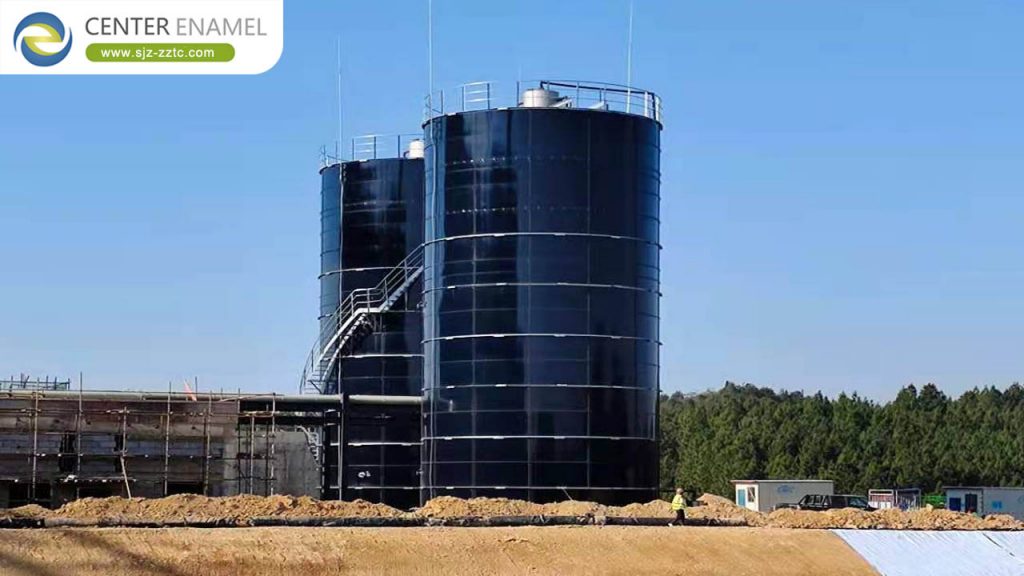
Jiangdong Pharmaceutical Wastewater Project, Hangzhou. Six granular anaerobic reactors (12.66 × 24 m) achieve COD removal of at least 70% under high-salinity conditions — a low-yield, low-biomass anaerobic result that keeps sludge handling modest even on a tough stream.
| Project | Jiangdong Pharmaceutical Wastewater Project |
| Location | Xiaoshan District, Hangzhou, China |
| Industry | Pharmaceutical / Industrial Wastewater |
| Application | Granular anaerobic, low observed yield |
| Product | 6 granular anaerobic reactors (12.66 × 24 m) |
| Result | COD 11,200 → 3,024 mg/L, ≥ 70% removal |
| Status | Delivered 2019 |
About Shijiazhuang Zhengzhong Technology Co., Ltd (Center Enamel)
Shijiazhuang Zhengzhong Technology Co., Ltd (Center Enamel) supplies the product technology that underpins a low observed yield: durable GFS tankage rated for corrosive, H₂S-bearing anaerobic liquor, with coatings selected per zone (2C2F for gas space, 2C1F for liquid) and documented 1500V spark testing. A leak-free, corrosion-free shell is what lets the low-yield biology deliver its sludge advantage in practice.
Advantages and Limitations
Using the correct yield in design prevents both oversized sludge trains and under-built digesters. Limits: the coefficient shifts with feed, temperature, and seed quality, so it should be confirmed on a pilot or with a granular seed rather than taken from a textbook value alone.
Comparison: Yield and Implications
| Metric | UASB | Aerobic |
| Yield | 0.05-0.10 | 0.3-0.6 |
| Sludge cost | Low | High |
| Biogas | Yes | No |
Sludge yield per COD is the number that turns treatment performance into a handling bill: 0.05-0.10 kg VSS/kg COD for UASB anaerobic versus 0.3-0.6 for aerobic. Use it early in design to size both the reactor and the sludge train. Send your COD and flow and we will build the mass balance.
Frequently Asked Questions (FAQ)
Q1: What is sludge yield per COD?
A: The observed yield coefficient Y = biomass (VSS) produced per kg of COD removed; UASB gives 0.05-0.10, aerobic 0.3-0.6.
Q2: Why is anaerobic yield so low?
A: Anaerobic microbes convert organics to methane and CO₂, not to new cells, so little biomass accumulates.
Q3: How is yield measured?
A: Track VSS increase against COD removed over a steady operating period.
Q4: Does yield affect reactor size?
A: Indirectly; low yield means less sludge handling, but reactor size follows organic loading, not yield.
Q5: What is a good yield for design?
A: Use 0.05-0.10 kg VSS/kg COD for granular UASB and 0.3-0.6 for aerobic in mass balances.
Q6: Can yield change?
A: Yes with feed, temperature, and seed; well-granulated beds hold the low end.
Suggested CTA
Share your influent COD, flow, and temperature. We will set the yield coefficient and size the UASB and sludge handling for you.