
What Is the Use of Wastewater? From Disposal Challenge to Valuable Resource
Wastewater has long been viewed primarily as a disposal problem—something to be treated and released. However, this perspective is rapidly shifting. Modern wastewater management recognizes that wastewater is not merely waste but a valuable resource containing water, energy, nutrients, and organic matter that can be recovered and reused . From agricultural irrigation to renewable biogas production, the uses of wastewater are expanding as technology enables us to unlock its hidden value.
What Is Wastewater and Why Does It Matter?
Wastewater is the used water that flows from residential, commercial, industrial, and agricultural activities. It contains a complex mixture of organic matter, nutrients (nitrogen and phosphorus), suspended solids, and potentially harmful contaminants . Globally, approximately 380 billion cubic metres of wastewater are generated annually, with Asian countries contributing the largest share . When untreated or improperly managed, wastewater poses severe environmental risks: oxygen depletion in water bodies, eutrophication, contamination of drinking water sources, and harm to aquatic ecosystems . However, these same characteristics that make wastewater a pollution threat also make it a resource. The organic matter in wastewater contains embedded energy; the nutrients can be recycled as fertilizer; and the water itself can be treated and reused .
Traditional Uses of Wastewater: Agriculture and Beyond
For centuries, communities have recognized the value of wastewater for agricultural purposes. In many regions, treated or even untreated wastewater has been used for irrigation, providing both water and nutrients to crops. This practice is particularly common in water-scarce areas where freshwater resources are limited. Wastewater irrigation can reduce the demand for synthetic fertilizers and support agricultural productivity . However, traditional uses have significant limitations. Improperly treated wastewater can introduce pathogens, heavy metals, and toxic compounds into the food chain and soil. Health risks to farmworkers and consumers, along with long-term soil degradation from salt and heavy metal accumulation, are serious concerns . These challenges have driven the development of modern treatment technologies that enable safe, productive use of wastewater while protecting public health and the environment.
Modern Wastewater Treatment: A Multi-Stage Approach
Modern wastewater treatment transforms contaminated water into a resource through a systematic series of physical, chemical, and biological processes. The treatment pathway typically follows four stages: preliminary, primary, secondary, and tertiary treatment .
Preliminary and Primary Treatment involve physical separation—screening out large debris, removing grit, and allowing suspended solids to settle as primary sludge . This stage reduces the organic load on subsequent biological processes.
Secondary Treatment is the biological heart of the plant. Microorganisms, including bacteria and fungi, consume dissolved organic matter in aerated tanks, converting it into biomass that settles out as secondary sludge . The most common approach is the activated sludge process, though alternatives like membrane bioreactors (MBRs) and anaerobic treatment are increasingly used.
Tertiary Treatment provides advanced polishing, removing remaining nutrients, pathogens, and emerging contaminants such as pharmaceuticals and microplastics . Technologies include filtration, advanced oxidation processes (AOPs), and disinfection. This stage enables wastewater to be safely reused for irrigation, industrial cooling, and even potable applications.
Anaerobic Digestion: Unlocking Energy from Wastewater
One of the most promising uses of wastewater is the recovery of energy through anaerobic digestion (AD). Anaerobic biological treatment is a cost-effective and energy-efficient method for treating high-strength organic wastewater while simultaneously producing biogas—a renewable energy source composed primarily of methane .
The anaerobic digestion process occurs in the absence of oxygen, where microorganisms break down complex organic compounds through four stages: hydrolysis, acidogenesis, acetogenesis, and methanogenesis . During this process, methane-rich biogas is produced, which can be used for electricity generation, heating, or upgraded to biomethane for vehicle fuel.
Modern high-rate anaerobic reactors, such as the Up-flow Anaerobic Sludge Blanket (UASB) and Internal Circulation (IC) reactors, achieve high treatment efficiency with a small footprint . These technologies are increasingly employed in industrial sectors—including food processing, palm oil milling, and chemical manufacturing—to convert wastewater from a disposal cost into an energy asset.
Resource Recovery: From Waste to Valuable Products
Beyond energy, modern wastewater treatment plants are evolving into biorefineries that recover a range of valuable products. The concept is known as “wastewater mining” or resource recovery .
Nutrient Recovery: Nitrogen and phosphorus, which are finite resources for fertilizer production, can be recovered as struvite or ammonium solutions for agricultural use .
Bioplastics: Certain bacteria can convert volatile fatty acids from wastewater into polyhydroxyalkanoates (PHAs)—biodegradable plastics .
Biohydrogen: Microbial electrolysis can produce hydrogen from organic acids in wastewater .
Protein-Rich Biomass: Single-cell protein can be produced from wastewater for animal feed .
These recovery processes align with circular economy principles, transforming wastewater treatment from a cost centre into a revenue-generating operation .
The Infrastructure of Modern Wastewater Treatment
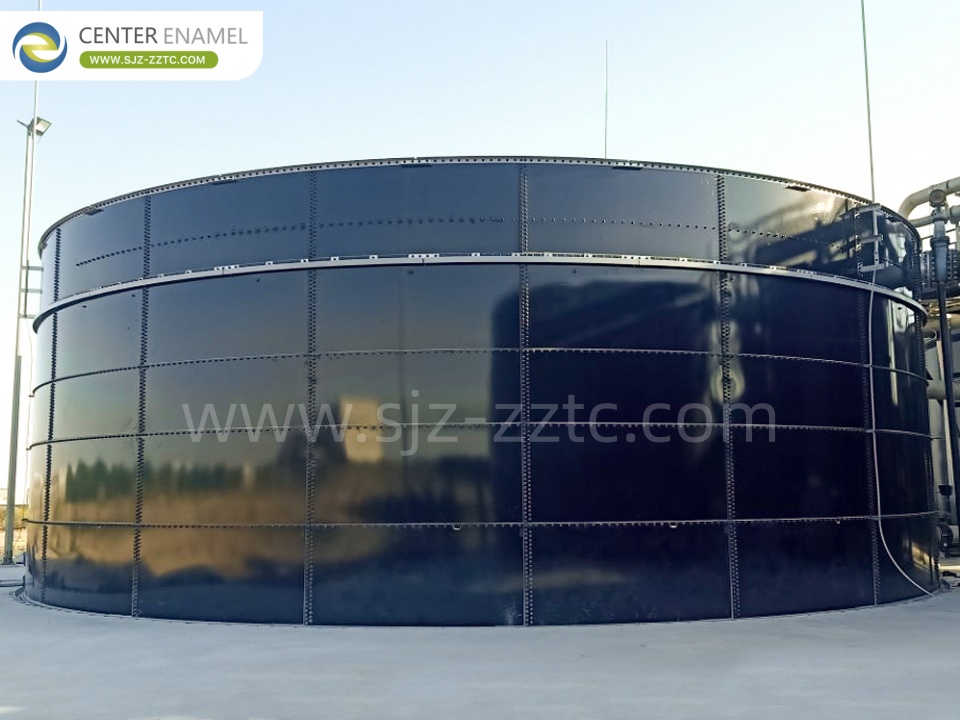
Reliable, durable infrastructure is essential for effective wastewater treatment and resource recovery. Center Enamel (Shijiazhuang Zhengzhong Technology Co., Ltd.) specializes in providing turnkey solutions for industrial and municipal wastewater projects worldwide. With installations in over 100 countries and a reputation as Asia’s largest manufacturer of Glass-Fused-to-Steel (GFS) tanks, Center Enamel has extensive experience in engineering systems for challenging wastewater streams .
The company’s core product—GFS Tanks—is manufactured by fusing glass to steel at temperatures exceeding 820°C, creating an inert surface that resists corrosion from aggressive industrial effluents, acidic wastewater, and biogas environments. These tanks are ideal for anaerobic reactors, equalization basins, sludge storage, and treated water reservoirs. Center Enamel integrates various anaerobic technologies—including CSTR, UASB, USR, and IC processes—into complete EPC solutions, from design and equipment fabrication to installation and commissioning . This comprehensive approach, supported by international certifications (ISO 28765, AWWA D103, NSF/ANSI 61, CE, OSHA), ensures that wastewater treatment projects deliver long-term reliability and maximum resource recovery.
Conclusion
The uses of wastewater have evolved dramatically from simple disposal and agricultural irrigation to a sophisticated system of resource recovery and renewable energy generation. Modern treatment technologies—particularly anaerobic digestion and advanced biological processes—enable us to extract clean water, biogas, nutrients, and even bioplastics from what was once considered waste. This shift from seeing wastewater as a liability to recognizing it as a valuable resource is central to achieving a sustainable, circular economy. With proven infrastructure from experienced partners like Center Enamel, industries and communities can unlock the full potential of their wastewater streams, reducing environmental impact while creating new economic value.
Frequently Asked Questions (FAQs)
1. What are the main uses of treated wastewater?
Treated wastewater can be used for agricultural irrigation, industrial cooling, landscape watering, groundwater recharge, and, in some advanced systems, direct or indirect potable reuse. The specific use depends on the level of treatment applied .
2. How is biogas produced from wastewater?
Biogas is produced through anaerobic digestion, a process in which microorganisms break down organic matter in the absence of oxygen. This produces methane-rich biogas that can be used for electricity generation, heating, or as fuel for vehicles .
3. What makes Center Enamel's GFS Tanks suitable for wastewater treatment?
GFS Tanks are manufactured by fusing glass to steel at over 820°C, creating a corrosion-resistant surface that withstands aggressive wastewater, acids, and biogas environments. Their bolted design allows rapid assembly, and they meet international quality standards, making them ideal for long-term anaerobic digestion and storage applications .