
What is the Waste of the Brewing Industry?
The brewing industry, one of the world's oldest and most beloved sectors, is facing a modern challenge: waste management. While beer production generates significant economic value, it also produces substantial organic by-products and wastewater that require careful handling. Producing just one liter of beer can generate between 4 to 11 liters of wastewater, underscoring the scale of the industry's environmental footprint . This article explores the various types of waste generated by the brewing industry, their environmental impact, and the advanced treatment solutions that are transforming waste into valuable resources.
What Are the Main Types of Brewing Industry Waste?
Liquid Waste (Wastewater)
Brewery wastewater is the industry's most significant waste stream. It consists primarily of water used in the brewing process, combined with cleaning operations and rinsing. The two main sources are:
Process water: Water used for mashing, lautering, and cooling, which contains high levels of dissolved organic matter including sugars, starch, proteins, and amino acids .
Cleaning water: Water used for washing equipment and bottles, which contributes to the wastewater's chemical oxygen demand (COD) and alters its pH balance while increasing nitrogen and phosphorus content .
Brewery wastewater is characterized by high organic loads, making it highly biodegradable but also potentially harmful if discharged untreated into water bodies .
Solid By-Products
The brewing process generates three primary solid wastes :
Brewers' Spent Grain (BSG): This is the residual malt grain remaining after mashing, comprising approximately 85% of total by-products generated during the brewing process . It is rich in cellulose, proteins, and carbohydrates, with global annual production estimated at 36.4 million tons .
Hot Trub: Formed during wort boiling, hot trub consists of coagulated proteins, hop particles, and resins. It contains 50-60% protein, 15-20% resins, and 2-3% ash, though its bitter taste limits its direct use in animal feed .
Residual Yeast: Collected after fermentation, residual yeast is rich in proteins and nutrients and has a carbon-to-nitrogen ratio near the optimal 10:1 for agricultural applications .
For every hectoliter of beer produced, approximately 14-19 kg of BSG, 0.2-0.4 kg of hot trub, and 2-4 kg of residual yeast are generated .
Why Is Brewing Waste a Significant Environmental Concern?
Environmental Impact of Untreated Wastewater
When brewery wastewater is discharged without adequate treatment, several serious environmental issues arise:
Oxygen Depletion: High organic content leads to rapid oxygen consumption in receiving waters, harming aquatic life.
Nutrient Pollution: Excess nitrogen and phosphorus can trigger eutrophication, causing algal blooms that further degrade water quality .
High Energy Demand for Treatment: The high COD levels (typically 2,000-20,000 mg/L) require intensive and expensive treatment processes .
Waste Disposal Challenges
Traditional disposal methods for solid waste create their own environmental burdens. Landfilling BSG is particularly problematic, as every ton of BSG in a landfill can emit approximately 513 kg of CO₂-equivalent greenhouse gases . Furthermore, the significant water and energy consumption in brewing-combined with the costs of wastewater treatment-places substantial economic pressure on the industry .
Modern Solutions for Brewing Waste Management
Wastewater Treatment Technologies
Conventional wastewater treatment plants (WWTPs) are commonly used but can be costly and energy-intensive. Aeration treatment, a widely used biological process, requires substantial energy input . However, emerging technologies offer more sustainable alternatives:
Anaerobic Digestion: This biological process breaks down organic matter in an oxygen-free environment, significantly reducing COD while producing biogas that can be used for energy generation . Studies have shown that anaerobic digestion can reduce greenhouse gas emissions by up to 25.90% compared to conventional disposal methods .
Microalgal-Bacterial Granular Sludge (MBGS): This innovative approach achieves up to 93% COD removal and 82% total nitrogen removal while reducing the need for aeration, representing a significant energy saving .
Vegetation Filters: These nature-based solutions use plants to treat wastewater, offering a sustainable alternative to conventional treatment plants, though they require careful management of sodium levels to maintain system health .
Valorization of Solid By-Products
The brewing industry is increasingly embracing the circular economy by finding valuable uses for its solid wastes:
Energy Recovery: Both anaerobic digestion and gasification can convert solid by-products into renewable energy .
Agricultural Applications: Hot trub and residual yeast show promise as soil enrichers or fertilizers due to their nutrient content .
Biochar Production: Brewery waste can be converted into biochar for water treatment applications, such as removing heavy metals like hexavalent chromium .
Material Recovery: BSG can be processed to extract valuable compounds including proteins, carbohydrates, and phenolic compounds for use in food, pharmaceutical, and cosmetic industries .
The Role of Advanced Infrastructure in Brewing Wastewater Treatment
Effective treatment of brewery wastewater requires robust, corrosion-resistant infrastructure that can handle the aggressive nature of high-organic industrial effluent. Anaerobic digesters, equalization tanks, and storage vessels must withstand organic acids, hydrogen sulfide, and continuous operational demands.
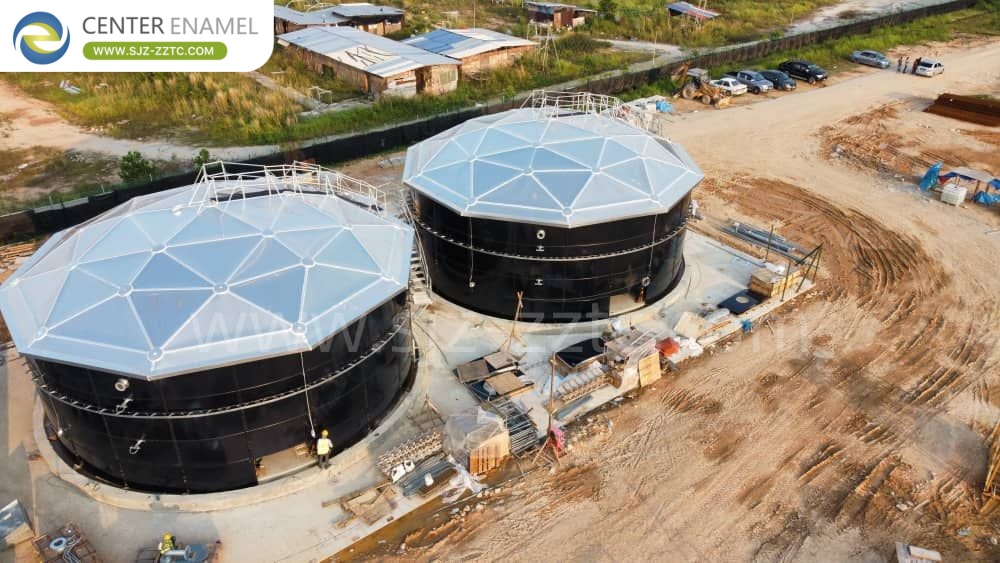
Center Enamel, a world leader in storage tank technology, provides the specialized engineering infrastructure essential for modern wastewater treatment projects. With over 30 years of innovation and projects in more than 100 countries, Center Enamel offers comprehensive turnkey solutions that include:
Glass-Fused-to-Steel (GFS) Tanks: The global benchmark for anaerobic reactors, these tanks combine the structural strength of steel with the chemical inertness of glass, providing unparalleled corrosion resistance at temperatures above 820°C .
Epoxy Coated Tanks: These provide high-performance, corrosion-resistant storage solutions for equalization tanks, digestate storage, and buffer tanks.
Double Membrane Roof Systems: Engineered for efficient biogas capture and pressure regulation, these systems maximize energy recovery from anaerobic digestion processes.
A notable example is the Sichuan Brewing Wastewater Treatment Project, which utilized 6 units of Center Enamel's high-performance GFS tanks, demonstrating their expertise in treating high-strength organic wastewater from a major beverage producer while ensuring stable biological performance and efficient gas recovery .
Conclusion
The brewing industry's waste-both liquid and solid-presents significant environmental challenges, from high organic loads in wastewater to the vast quantities of spent grain requiring disposal. However, modern treatment technologies and circular economy approaches are transforming these challenges into opportunities. Advanced anaerobic digestion and resource recovery can reduce greenhouse gas emissions by up to 45%, generate renewable energy, and produce valuable by-products for agricultural and industrial use .
Center Enamel stands at the forefront of this transformation, providing the infrastructure essential for efficient wastewater treatment and resource recovery. With their Glass-Fused-to-Steel tanks, FBE tanks solutions, and integrated gas management systems, Center Enamel enables brewing facilities to meet environmental regulations while maximizing the value of their waste streams.
Frequently Asked Questions (FAQs)
1. What is brewers' spent grain and how is it typically managed?
Brewers' spent grain (BSG) is the residual malt grain remaining after the mashing process in beer production. It comprises approximately 85% of all brewing by-products and is rich in cellulose, proteins, and carbohydrates. Traditionally, BSG has been used as animal feed or sent to landfill. However, modern approaches increasingly valorize BSG through anaerobic digestion for energy production, extraction of valuable compounds for food and pharmaceutical applications, or conversion into biochar for water treatment applications .
2. What makes brewery wastewater treatment challenging?
Brewery wastewater is challenging to treat because of its high organic load (high chemical oxygen demand), which requires intensive biological treatment. The wastewater is highly biodegradable but contains significant concentrations of sugars, starch, proteins, and suspended solids. Treatment is also energy-intensive, particularly with conventional aerobic methods that require substantial aeration. Additionally, the seasonal and batch-based nature of brewing operations can cause fluctuations in wastewater volume and composition, complicating consistent treatment performance .
3. How can anaerobic digestion benefit brewing wastewater treatment?
Anaerobic digestion offers multiple benefits for brewery wastewater treatment: it significantly reduces the organic load (COD) of the wastewater; it produces biogas (primarily methane) that can be captured and used for combined heat and power generation; it reduces the volume of residual sludge requiring disposal; and it lowers overall energy consumption compared to aerobic treatment methods. Studies have shown that implementing anaerobic digestion can reduce greenhouse gas emissions by 25-45% compared to conventional waste disposal practices .