
What Is the Wastewater of Cassava Processing? Turning Cassava Wastewater into Renewable Biogas Energy
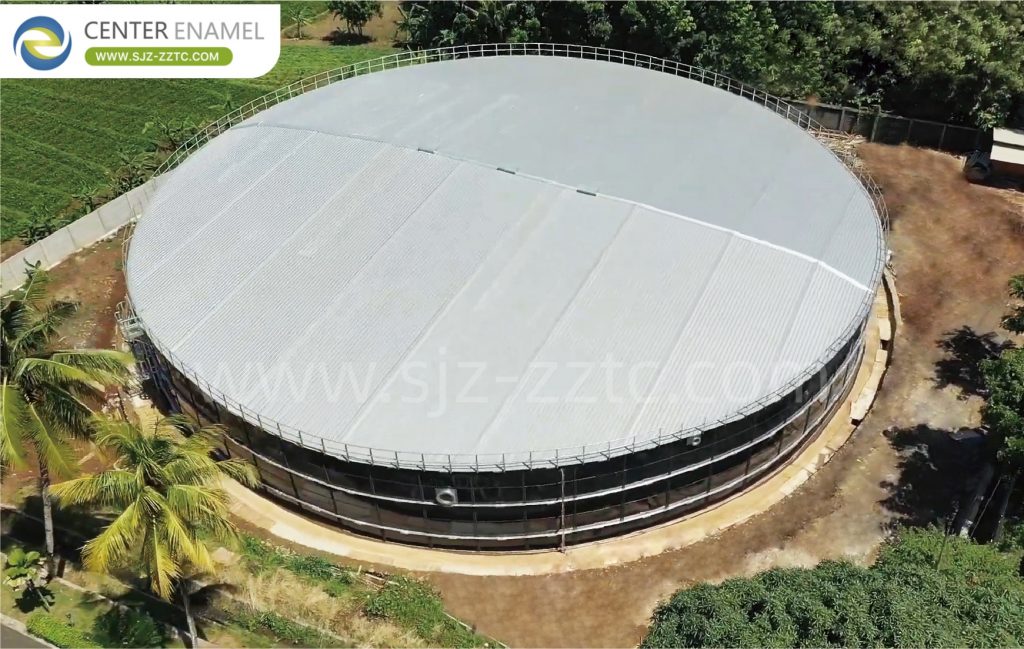
Cassava processing wastewater (CPWW) is the liquid residue generated during the production of cassava flour, starch, and other cassava-derived products. With the cassava processing industry generating at least 600 liters of wastewater per ton of processed root—and sometimes up to 6,100 liters for starch extraction—managing this high-strength organic effluent has become a critical environmental challenge for cassava-producing nations . However, this wastewater is not merely a disposal problem; it is a valuable resource that can be converted into renewable biogas energy through advanced anaerobic digestion technologies like the CSTR Process and durable GFS Tanks.
What Is Cassava Processing Wastewater?
Cassava processing wastewater, also known as manipueira in Brazil, is the mixture of process water from root and starch washing with the water liberated from cassava disintegration . It has a light yellow milky appearance and contains high concentrations of organic matter, including starch, soluble carbohydrates, proteins, mineral salts, and cyanide compounds .
The volume and concentration of wastewater vary significantly by processing type:
Flour production generates approximately 280–400 liters of highly concentrated manipueira per ton of cassava
Starch extraction uses more water, generating up to 6,100 liters of effluent per ton, though it is less concentrated than flour production effluent
Cassava processing wastewater is characterized by high Chemical Oxygen Demand (COD) levels ranging from 6,000 to 56,000 mg/L, and low pH values that can drop to 4.3–5.4 . Its C:N:P ratio of approximately 100:1.43:0.86 and BOD5/COD ratios around 0.47–0.49 indicate that it is highly biodegradable, making it an ideal substrate for anaerobic biological treatment .
The Cassava Processing Flow and Wastewater Sources
To understand cassava wastewater, it helps to understand the processing flow. Cassava processing typically involves:
Washing: Roots are washed to remove soil and debris, generating initial wash water.
Crushing/Disintegration: Cassava roots are crushed to break down cell walls.
Pressing/Extraction: The crushed mass is pressed to separate solid material (fiber, peel) from liquid residue—the manipueira .
Starch Separation (for starch production): Water is added to extract starch, generating larger volumes of starch extraction effluent .
Concentration/Drying: Starch slurry is concentrated and dried.
For every 200 kg of cassava roots processed into 50 kg of starch, the system generates approximately 40 kg of cassava peel, 60 kg of pulp, and 850 kg of wastewater . Approximately 95% of the water consumed during processing leaves the factory as effluent .
Environmental Impact of Untreated Cassava Wastewater
Untreated cassava processing wastewater poses serious environmental risks. Its high organic matter content—with COD levels far exceeding environmental discharge standards—can cause severe pollution when improperly disposed .
Key environmental concerns include:
Water pollution: High BOD and COD levels deplete dissolved oxygen in receiving water bodies, killing fish and other aquatic life .
Eutrophication: Nutrients (nitrogen and phosphorus) promote excessive algal growth, blocking sunlight and further reducing oxygen levels .
Toxicity: Cyanogenic glycosides and free cyanide in the effluent can be toxic to aquatic organisms and vegetation .
Soil contamination: Soil disposal can contaminate groundwater and negatively affect local vegetation .
Odor emissions: Unpleasant odors from fermentation and acidification affect surrounding communities .
Traditional treatment methods like stabilization ponds can effectively remove over 90% of organic matter, but they require large areas of land, can emit unpleasant odors, and are poorly efficient at removing nutrients .
Traditional Uses and Management of Cassava Wastewater
Despite its pollution potential, cassava wastewater has several traditional and emerging applications:
Condiment Production (Tucupi): In Brazil's northern region, manipueira is fermented for 72 hours and cooked to produce Tucupi, a traditional condiment .
Nematicide/Insecticide: Due to its cyanide content, manipueira shows promise as a natural pesticide and fungicide .
Animal Feed: With cyanide removed through spontaneous volatilization, the effluent can be used to feed animals .
Fertigation: The nutrient-rich effluent can be applied to crops, though careful management is required to avoid soil nutrient imbalance and pH reduction .
However, these applications often do not fully address the volume and pollution load of cassava wastewater generated by modern industrial processing. The most promising solution—biogas production through anaerobic digestion—offers both environmental treatment and renewable energy recovery.
How Cassava Wastewater Generates Biogas
Cassava processing wastewater is rich in starch, carbohydrates, and organic nutrients that can be efficiently converted into biogas through sealed anaerobic digestion. Under oxygen-free conditions, the organic matter undergoes four biological stages :
Hydrolysis Stage: Hydrolytic bacteria decompose macromolecular starch and organic matter into small-molecule sugars and amino acids.
Acidification Stage: Small-molecule organics are converted into volatile fatty acids (VFAs), hydrogen, and carbon dioxide.
Acetogenesis Stage: Intermediate substances are further decomposed into acetic acid—the key precursor for methane generation.
Methanogenesis Stage: Methanogenic bacteria produce biogas containing 55–70% methane and 30–45% carbon dioxide.
Research has demonstrated that the CSTR Process can achieve high organic removal rates exceeding 90% when treating cassava wastewater . Studies have also shown that optimizing temperature—such as increasing from ambient conditions to 45°C—can improve methane yield from 0.1 to 0.2 L-methane/g-TS-added .
The CSTR Process: Optimizing Biogas Production
The CSTR Process (Continuous Stirred-Tank Reactor) is the most suitable anaerobic treatment technology for high-solids cassava processing wastewater . This highly effective system ensures fermentation raw materials and microorganisms are fully mixed in a closed tank, maximizing biogas production.
Key features of the CSTR Process for cassava wastewater treatment:
Complete mechanical stirring: Prevents scum crusting and sediment accumulation—common issues when treating cassava wastewater with high suspended solids .
Continuous or semi-continuous feeding: Maintains stable fermentation conditions and consistent biogas output.
Temperature control: Optimal performance is achieved at approximately 45°C, significantly improving methane production efficiency .
Research has shown that the CSTR Process can treat cassava pulp at an organic loading rate of 2.94 kg-TS/m³·d, achieving biogas production of 424.49 m³ per ton of total solids added . CSTR systems with a 10-day hydraulic retention time have been successfully implemented at industrial scale, processing 75 tons of cassava pulp per day .
GFS Tanks: The Infrastructure for Reliable Biogas Projects
The success of any Biogas Project depends on the integrity of its containment infrastructure. Center Enamel's GFS Tanks (Glass-Fused-to-Steel) provide the ideal solution for anaerobic digesters in cassava wastewater-to-energy projects.
GFS Tanks are manufactured using a unique high-temperature firing process (820°C–930°C) that fuses glass to steel, creating an inert, inorganic bond with outstanding corrosion resistance . This makes them immune to the aggressive acids, ammonia, and hydrogen sulfide (H₂S) generated during the anaerobic digestion process.
Key advantages of GFS Tanks:
pH resistance: Withstand pH 1–14 environments, resisting acid erosion from cassava wastewater
Excellent airtightness: Sealed bolted structure prevents biogas and odor leakage
Long service life: Over 30 years with minimal maintenance, far surpassing concrete tanks
Fast installation: Factory prefabricated parts with on-site bolt assembly, no long curing periods required
Climate adaptability: Resist high temperature, heavy rainfall, and coastal salt spray
Center Enamel: Your Biogas Project Partner
Center Enamel brings extensive experience to biogas projects worldwide. With installations in over 100 countries, the company specializes in providing complete biogas solutions from design through installation and commissioning .
For cassava processing wastewater-to-energy projects, Center Enamel offers:
Turnkey EPC services covering project design, equipment manufacturing, installation, and after-sales support
Glass-Fused-to-Steel (GFS) tanks engineered for superior corrosion resistance and long service life
Multiple anaerobic technologies including CSTR, UASB, USR, and IC processes, tailored to specific wastewater characteristics
Double membrane gas holders for integrated biogas storage and odor control
The company's proven track record includes successful biogas installations across Southeast Asia, Africa, and Europe .
Conclusion
Cassava processing wastewater represents both a significant environmental challenge and a valuable renewable energy opportunity. With its high organic content and excellent biodegradability, it is an ideal substrate for biogas production through anaerobic digestion. The CSTR Process optimizes methane yield from cassava wastewater, while GFS Tanks provide the durable infrastructure required for long-term project success. Center Enamel's professional EPC solutions, combined with international certifications and deep regional experience, make it a reliable partner for cassava processors seeking to transform wastewater liability into sustainable energy assets.
Frequently Asked Questions (FAQs)
1. What are the main pollutants in cassava processing wastewater?
Cassava processing wastewater contains high concentrations of organic matter (COD 6,000–56,000 mg/L), nutrients (nitrogen and phosphorus), total suspended solids, and cyanogenic compounds. Its high BOD5/COD ratio (0.47–0.49) indicates excellent biodegradability .
2. Why is cassava wastewater difficult to treat with conventional methods?
Cassava wastewater tends to acidify quickly and has low buffering capacity. It requires large treatment areas for stabilization ponds and can emit unpleasant odors. Its high organic load and variable composition make consistent treatment challenging .
3. How much biogas can be generated from cassava processing wastewater?
At industrial scale with the CSTR Process at 45°C, a system processing cassava pulp can achieve biogas production of 424.49 m³ per ton of total solids added . Research has also shown that an industrial digester can process 75 tons of cassava pulp per day, generating substantial renewable energy .