
What Microbes Convert Hydrogen to Methane?
The microbes that convert hydrogen to methane are hydrogenotrophic methanogens—archaea such as *Methanobacterium*, *Methanothermobacter*, and *Methanococcus* that reduce CO₂ with H₂ to form CH₄ (4 H₂ + CO₂ → CH₄ + 2 H₂O). They are the living engine behind biological methanation and hydrogen-fed biogas upgrading.
What a Methanogen Is
Methanogens are a group of archaea (not bacteria) that produce methane as their energy metabolism. They are strict anaerobes—oxygen is toxic to them—and they sit at the end of the anaerobic food chain, taking the simplest molecules and closing it with methane.
Hydrogenotrophic vs Other Methanogens
There are three feeding styles. Hydrogenotrophic methanogens use H₂ + CO₂ (the focus here). Acetoclastic methanogens split acetate into CH₄ + CO₂ (the main route in normal digesters). Methylotrophic ones use methyl compounds. In biological methanation, the hydrogenotrophic pathway is what lets you feed externally produced H₂ and pull more methane out.
Key Genera
*Methanobacterium* and *Methanothermobacter* are common mesophilic-to-thermophilic hydrogenotrophs used in methanation reactors; *Methanococcus* and related marine/hypersaline genera appear in specialized settings; *Methanocorpusculum* handles lower-temperature, lower-H₂-partial-pressure conditions. The mix is selected by temperature and feed.
Conditions They Need
They require strict anaerobiosis (no O₂), a stable pH near neutral, and a temperature window—mesophilic around 35–38°C or thermophilic 50–65°C. They are sensitive to H₂ partial pressure (too much slows them), sulfide, and ammonia, and they need trace nutrients like nickel and cobalt for their enzymes.
Comparative Data Table: Hydrogenotrophic Genera
| Genus | Temperature range | Typical role |
| Methanobacterium | mesophilic–thermophilic | common methanation workhorse |
| Methanothermobacter | thermophilic | high-rate, hot reactors |
| Methanococcus | meso–thermo, saline | specialized / marine |
| Methanocorpusculum | low-temp, low H₂ | low-pressure conditions |
Technical Considerations
The dominant engineering bottleneck is H₂ mass transfer: H₂ is poorly soluble in water, so unless the reactor mixes vigorously or recirculates gas, the microbes starve for H₂ even when it is plentiful above the liquid. Good gas-liquid contact, not just bug selection, sets the rate. Trace metals and redox control keep the culture healthy.
Advantages and Limitations
Biological H₂-to-CH₄ conversion runs at mild temperature, tolerates some impurities, and needs no precious-metal catalyst. Limits: slow compared with catalytic Sabatier, sensitive to O₂ and toxins, and mass-transfer-limited without good reactor design. It is a microbial process, so it needs biological stability, not just plumbing.
Best Practices / How to Use Them
Run strictly anaerobic with stable pH and temperature; supply H₂ via strong mixing or gas recirculation to beat mass transfer; add trace nickel/cobalt; and start from a healthy digester seed. Monitor for O₂ ingress and sulfide, the two fastest ways to lose the culture.
Hydrogen to methane is converted by hydrogenotrophic methanogens—archaea such as *Methanobacterium*, *Methanothermobacter*, and *Methanococcus*—that reduce CO₂ with H₂ at 35–65°C. They are the biological heart of methanation, provided oxygen stays out and H₂ reaches the cells.
Frequently Asked Questions (FAQ)
Q1: What microbes convert hydrogen to methane?
A: Hydrogenotrophic methanogens—archaea like Methanobacterium, Methanothermobacter, and Methanococcus—that reduce CO₂ with H₂ to CH₄ (4 H₂ + CO₂ → CH₄ + 2 H₂O).
Q2: How do they differ from other methanogens?
A: Hydrogenotrophic use H₂ + CO₂; acetoclastic split acetate (the main route in normal digesters); methylotrophic use methyl compounds. Methanation relies on the hydrogenotrophic path.
Q3: Which genera matter most?
A: Methanobacterium and Methanothermobacter are the common workhorses; Methanococcus and Methanocorpusculum cover saline or low-temperature, low-H₂ conditions.
Q4: What conditions do they need?
A: Strict anaerobiosis, near-neutral pH, 35–38°C (or 50–65°C thermophilic), plus trace nickel/cobalt and protection from O₂, sulfide, and ammonia.
Q5: What limits their rate?
A: Hydrogen mass transfer—H₂ is poorly water-soluble, so without vigorous mixing or gas recirculation the microbes cannot access it even when plenty is available.
Q6: Are they used in real biogas plants?
A: Yes—biological methanation reactors seed from digester sludge and add H₂ to raise methane content, using exactly these hydrogenotrophic archaea.
Project Case Reference
Malaysia Biogas Project — Malaysia · 2026
5 GFS Tanks · 27,000 m³ Total Volume · 22,000 m³ Biogas/Day
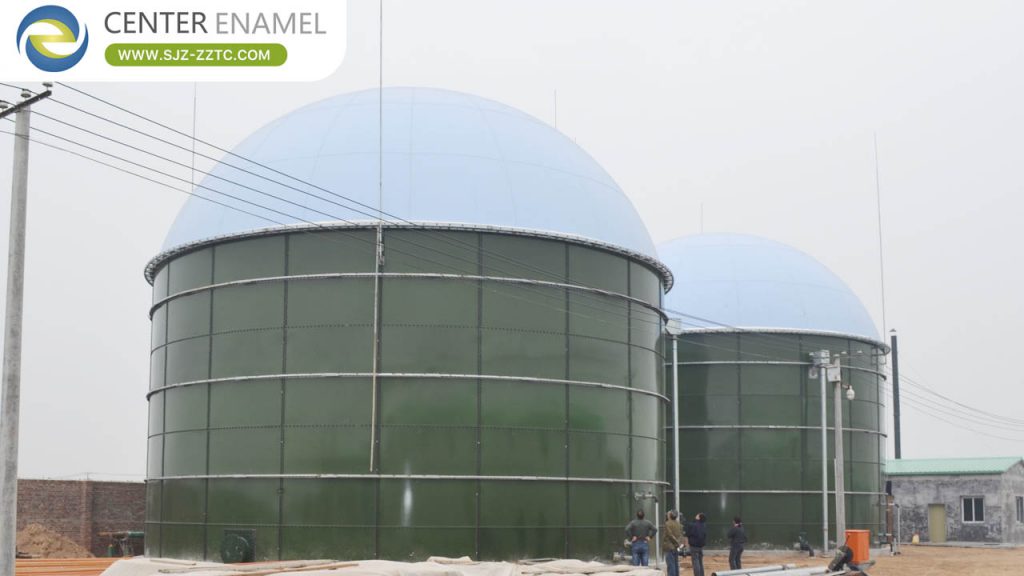
A large-scale biogas project in Malaysia featuring 5 Glass-Fused-to-Steel (GFS) tanks. The project achieves approximately 80% digestibility, with each single tank producing about 4,400 m³ of biogas daily, totaling 22,000 m³ per day across all 5 tanks.
Technical Specifications
Single Tank Volume: 5,400 m³ (Ø24.46 × 12 m)
Total Effective Volume: 27,000 m³ (5 tanks)
Daily Biogas Production: 22,000 m³ total
Digestibility: ≈ 80%
Gas Production Rate: 0.45 m³ / kg COD removed
Tank Type: Glass-Fused-to-Steel (GFS)
Water Quality Data
| Parameter | Inlet Water | Effluent |
| COD | ≥ 60,000 mg/L | ≥ 12,000 mg/L |
| BOD | ≤ 25,000 mg/L | ≤ 5,000 mg/L |