
What Pre-Treatment Helps Cattle Manure?
Thermal hydrolysis and mechanical disruption help cattle manure the most. Heating manure to 70–160°C (often with pressure) breaks cell walls and lignin, typically raising biogas yield 20–40%; mechanical shredding/grinding and chemical (alkali) dosing add a smaller 10–25%. The right choice follows your scale, energy balance, and whether you already have waste heat to spare.
Why Manure Needs Pre-Treatment
Cattle manure is fibrous and lignin-heavy, so a chunk of its volatile solids is locked in plant cell structures that microbes digest slowly. Pre-treatment aims to release that locked VS and speed hydrolysis—the rate-limiting first step of anaerobic digestion—so more gas comes out in the same retention time.
Thermal Hydrolysis
Heating to 70–160°C (often under pressure, then flash) ruptures cells and solubilizes organics. It gives the largest yield gain (20–40%) and also pasteurizes the output—a plus for land application. The catch is energy: it needs heat, so it pays best when you have surplus digester or CHP heat to use.
Mechanical Disruption
Milling, grinding, or high-shear mixing physically breaks fibers and grit. Gains are more modest (10–20%) but capital and energy are lower, and it helps homogenize a variable feed. For sand-heavy manure, grit removal ahead of the digester is itself a form of mechanical pre-treatment that protects pumps and mixers.
| Pre-treatment | Yield gain | Energy need | Best when |
| Thermal hydrolysis | 20–40% | high (use waste heat) | large plants, pasteurization needed |
| Mechanical | 10–20% | low–medium | fibrous / variable feed |
| Chemical (alkali) | 10–25% | medium | lignin-rich, lime available |
| Grit / screening | indirect | low | sand-heavy manure |
Chemical (Alkaline) Pre-Treatment
Dosing with lime (Ca(OH)₂) or low alkali at mild temperature swells and partially delignifies fiber, adding ~10–25% yield. It is cheap where lime is local, but adds salts and raises pH that must be managed in the digester and in digestate land application.
Applications
Thermal hydrolysis suits larger plants with heat to spare or a pasteurization mandate; mechanical suits farms wanting a low-energy edge; chemical suits lignin-rich, lime-cheap sites. Most manure plants start with grit removal and good mixing before spending on thermal.
Technical Considerations
Energy balance is everything—if you buy heat for thermal hydrolysis, the extra gas must exceed the heat cost. Keep mesophilic operation at 35–38°C after treatment, avoid over-dosing alkali (ammonia/osmotic stress), and protect equipment from sand with upstream grit removal.
How to Choose
Rank by: surplus heat availability, feed lignin content, plant scale, and digestate rules. Default to mechanical + grit removal; add thermal only if waste heat covers it or pasteurization is required.
Project Case Study
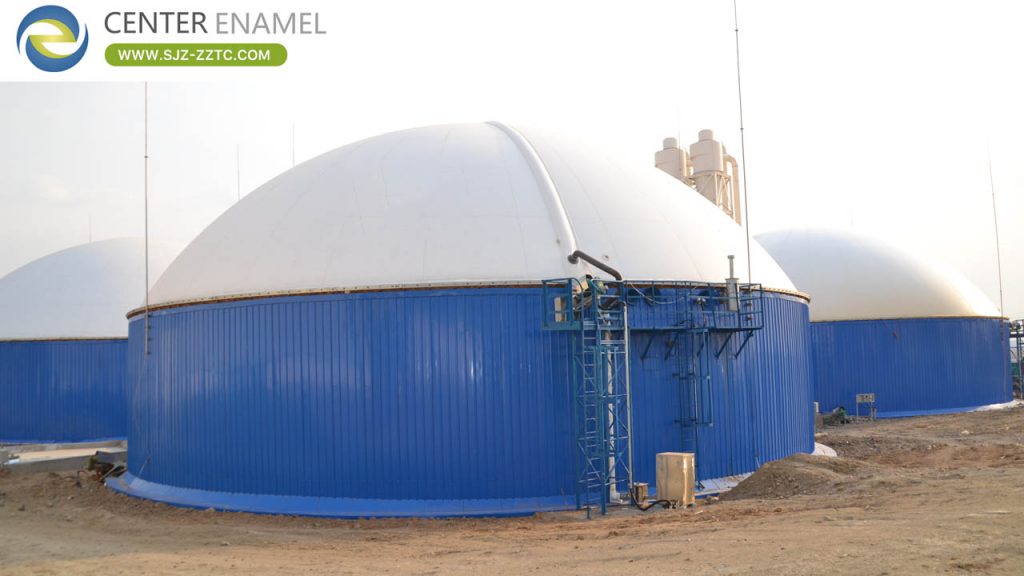
Pakistan Biogas Project. A CSTR waste-to-energy plant converting food waste and napier grass (Pennisetum purpureum) into biogas, producing 100 m³/day, delivered with Center Enamel. Fiber-rich grass benefits from particle-size reduction and mixing, illustrating mechanical pre-treatment logic for lignocellulosic co-substrates alongside manure.
| Project | Pakistan Biogas Project |
| Location | Pakistan |
| Industry | Waste-to-Energy / Biogas |
| Application | Food waste + napier grass digestion |
| Product | CSTR anaerobic digester system |
| Capacity | 100 m³/day biogas |
| Quantity | CSTR process, grass co-substrate |
| Material | Glass-Fused-to-Steel (GFS) |
| Standards | ISO 28765, AWWA D103 |
| Status | Delivered reference project |
About Center Enamel
Center Enamel supports pre-treatment integration through customization capability: GFS digester tanks and receiving pits can be specified with heating jackets, mixing penetrations, and grit-settling provisions so thermal or mechanical pre-treatment ties into the reactor cleanly. The enamel-fired GFS shell (820–930°C, ISO 28765 / AWWA D103, ISO 9001, CE/EN 1090) resists the warmer, more corrosive conditions of pre-treated feeds, and bolted panels allow later retrofit of pre-treatment capacity without a full rebuild.
Advantages and Limitations
Thermal hydrolysis gives the biggest, pasteurizing boost but is energy-hungry; mechanical is cheap and robust; chemical is low-cost but salt-loading. All help, none is free—the gain must clear its own energy and O&M cost.
Comparison of Pre-Treatments
| Criterion | Thermal | Mechanical | Chemical |
| Yield gain | highest | low–medium | medium |
| CapEx | high | medium | low–medium |
| OpEx (energy) | high | low | medium |
| Side benefit | pasteurization | homogenizing | delignify |
Cattle-manure pre-treatment that helps most is thermal hydrolysis (20–40% yield gain) when waste heat is available, with mechanical disruption (10–20%) as the low-energy default and alkali (10–25%) where lime is cheap. Choose by energy balance, not headline gain.
Frequently Asked Questions (FAQ)
Q1: What pre-treatment helps cattle manure?
A: Thermal hydrolysis gives the biggest boost (20–40% more biogas); mechanical disruption and alkali dosing add 10–25%; grit removal protects equipment.
Q2: Which gives the biggest yield increase?
A: Thermal hydrolysis, 20–40%, because it ruptures cells and solubilizes locked volatile solids.
Q3: Is thermal hydrolysis worth the energy?
A: Only if you have surplus digester/CHP heat; otherwise the bought energy can erase the extra gas gain.
Q4: What about mechanical pre-treatment?
A: Grinding or shearing adds ~10–20% at low energy and homogenizes variable, fibrous manure—a good first step.
Q5: Does chemical pre-treatment help?
A: Lime/alkali delignifies fiber for ~10–25% gain but raises salts and pH that must be managed downstream.
Q6: Should I pre-treat at all?
A: Start with grit removal and good mixing; add thermal only when waste heat or pasteurization justifies it.
Share your manure TS/VS, available waste heat, and plant scale. We will model pre-treatment options, estimate the net yield gain after energy cost, and specify GFS digester tanks with the right heating and mixing provisions.