
What Pressure Is CBG?
CBG (compressed bio gas) is stored and dispensed at roughly 200–250 bar — the same pressure class as compressed natural gas (CNG) — while the raw digestate gas upstream sits at only 4–10 bar, buffered in a holder that decouples the digester from the high-pressure cascade. The 200–250 bar class lets CBG use existing CNG vehicle and dispenser infrastructure.
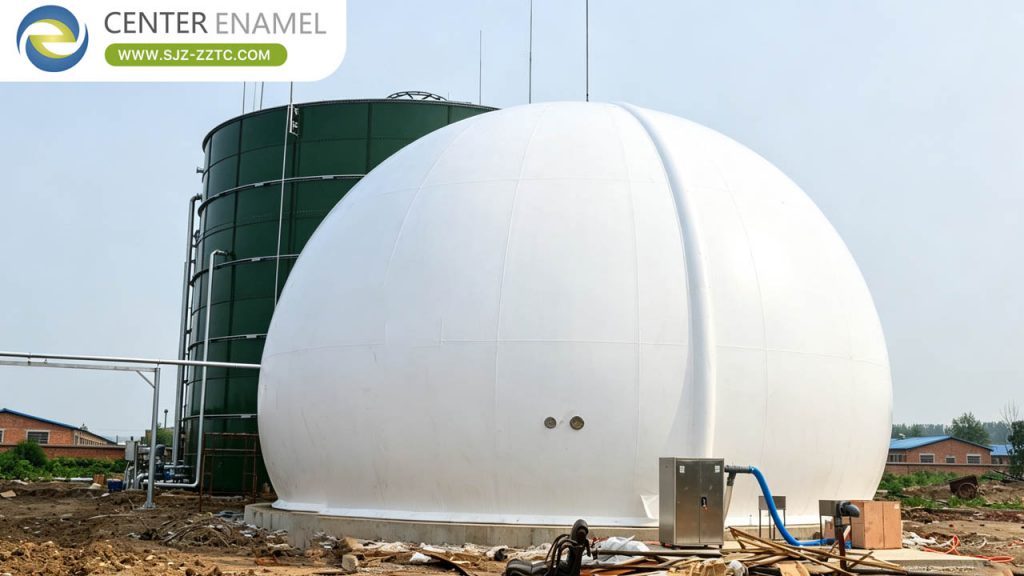
The Pressure Ladder
Pressure rises in stages: digestate gas (~slight positive to 4–10 bar) is buffered, then the compressor raises it through intermediate stages to a final 200–250 bar for storage cascades and dispensing. Each stage is a separate vessel rating.
Why 200–250 bar?
CNG-class pressure maximizes energy density in a vehicle tank and matches standard CNG dispensers and cascades. Lower pressures would need larger vehicle tanks; higher pressures add cost and material grade without proportional benefit for most fleet uses.
| Pressure class | Typical range | Use |
| Digestate / buffer | 4–10 bar | Steady compressor feed |
| Intermediate | 50–100 bar | Compression stage |
| CBG storage / dispense | 200–250 bar | Vehicle / CNG grade |
Pressure Vessel Standards
High-pressure CBG storage cascades are pressure vessels and must be built and inspected to recognized codes. Applicable references include ASME BPVC for pressure vessels and regional equivalents; low-pressure GFS holders follow AWWA D103 / ISO 28765 for the enameled steel construction. Specifying the right code per pressure class is a safety and compliance requirement.
Technical Considerations
Cascade banks are filled in pressure order to avoid over-pressurizing the compressor; relief valves, gas detection, and ventilation are mandatory. Material grade and wall thickness scale with the 200–250 bar rating. Upstream H₂S control protects vessels from sulfide stress cracking.
How to Specify CBG Pressure Equipment
State the final CBG pressure (200 or 250 bar), daily volume, and dispensing rate; size cascade banks and the compressor accordingly; and confirm the vessel code (ASME or regional) with the supplier. The low-pressure buffer is sized to digester variability, not to the CBG pressure.
Project Case Study
Zhenyuan Group Biogas Project in Henan. A vehicle-grade methane plant producing 3,000,000 m³ CH₄/year from 650 T/D of manure/washing wastewater via two-stage CSTR — the biomethane production that CBG compression and 200–250 bar storage are built to handle.
| Project | Zhenyuan Group Biogas Project in Henan |
| Location | Xinzheng, Henan, China |
| Industry | Renewable Vehicle Fuel |
| Application | Vehicle-grade methane → CBG pressure class |
| Output | 3,000,000 m³ CH₄/year |
| CBG pressure class | 200–250 bar (CNG grade) |
| Status | Delivered 2013 |
About Center Enamel
Center Enamel addresses the certifications and standards dimension of CBG tankage: its bolted GFS tanks are manufactured under ISO 9001 quality management and built to ISO 28765 (enameled steel tanks) and AWWA D103 (bolted steel tanks) as applicable, with CE-EN 1090 for structural steel where required. Low-pressure CBG buffer holders therefore carry documented, code-aligned construction rather than ad-hoc builds.
Advantages and Limitations
The CNG-class 200–250 bar pressure lets CBG reuse proven vehicle and dispenser infrastructure. Limits: high-pressure vessels are code-controlled, costly, and need inspection; and the low-pressure side must still be corrosion-rated for H₂S. Match code to pressure class at specification.
Comparison: CBG Pressure vs Other Gas Storage
| Gas storage | Pressure | Infrastructure |
| CBG / CNG | 200–250 bar | CNG vehicles, dispensers |
| Low-pressure biogas | 4–10 bar | Holder/buffer only |
| Pipeline gas | up to 100 bar | Grid (where allowed) |
CBG is stored and dispensed at 200–250 bar (CNG class); digestate gas stays at 4–10 bar in a buffer holder that decouples it from the cascade. Specify the vessel code per pressure class and control H₂S upstream. Send your daily volume and we will scope the low-pressure buffer and digester tankage.
Frequently Asked Questions (FAQ)
Q1: What pressure is CBG?
A: About 200–250 bar for storage and dispensing — the CNG pressure class.
Q2: Why 200–250 bar?
A: It maximizes vehicle energy density and reuses standard CNG dispensers and cascades.
Q3: What code applies to CBG vessels?
A: High-pressure cascades follow ASME BPVC / regional equivalents; low-pressure GFS holders follow AWWA D103 / ISO 28765.
Q4: What pressure is digestate gas?
A: Only 4–10 bar, buffered before compression.
Q5: What certifications does Center Enamel hold?
A: ISO 9001, with tanks built to ISO 28765 / AWWA D103 and CE-EN 1090 where applicable.
Q6: What capacity is available?
A: GFS buffer and digester tanks range 200 m³ to 60,000 m³.
Send your daily biomethane volume and CBG pressure class. We will scope the low-pressure buffer and digester tankage and confirm code-aligned construction for your project.