
What Process Steps Treat Manure Water?
Manure water is treated in a staged train: coarse screening and equalization first stabilizes the load, anaerobic digestion (UASB or CSTR) removes most organic matter and recovers biogas, an aerobic polishing stage (AOAO or A²O) cuts residual COD plus nitrogen and phosphorus, and the final step disinfects or reuses the clarified water. Each stage is sized to the manure's strength, typically 10,000-60,000 mg/L COD.
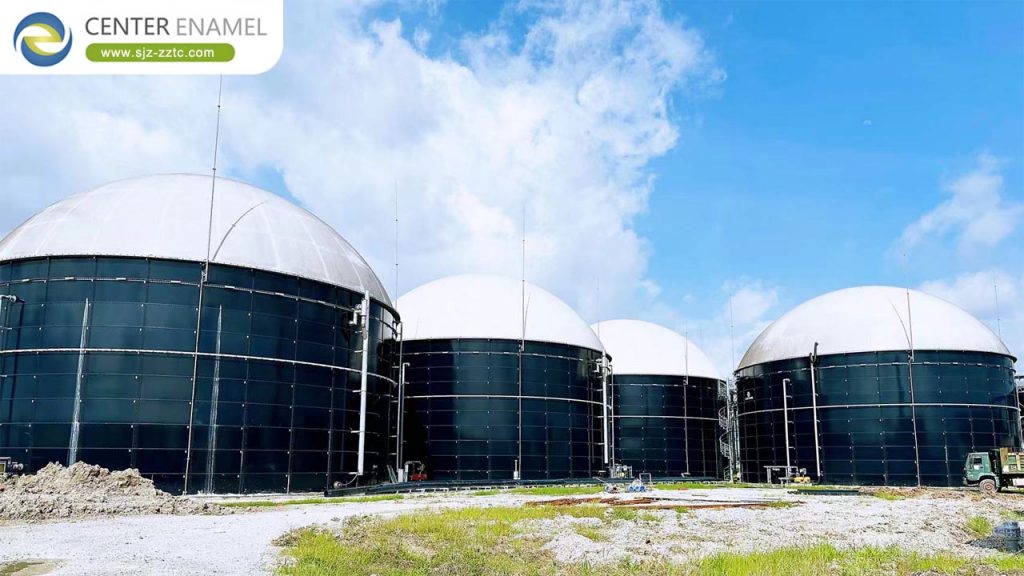
Step 1: Screening and Equalization
Coarse and fine screens strip bedding, hair, and纤维 before they clog later equipment, while an equalization tank buffers the large daily swings in concentration and flow from flushing. A steady feed protects the biology downstream and keeps removal predictable.
Step 2: Anaerobic Digestion
A UASB handles the soluble fraction and a CSTR handles thick slurry; both recover biogas at 0.30-0.45 m³ per kg COD removed and cut 80-90% of COD. This is where most of the energy value and odour control is captured, and where the bulk organic load is destroyed before the more expensive aerobic stage.
Step 3: Aerobic Polishing
An AOAO (anaerobic-anoxic-oxic) or A²O stage takes the anaerobic effluent and removes residual COD, ammonia nitrogen (via nitrification-denitrification), and total phosphorus (via precipitation). It is the stage that turns a treated stream into one that meets discharge or reuse limits.
Step 4: Disinfection and Reuse
The clarified water is disinfected and then either recycled for pen flushing or applied as nutrient-rich irrigation. Closing the loop with reuse is what turns manure water from a liability into a managed on-farm resource.
Process Parameter Table
| Stage | Target | Typical result |
| Screening / equalization | Remove solids, buffer load | SS cut upstream |
| Anaerobic | COD 80-90% | Biogas recovered |
| Aerobic (AOAO) | NH₃-N, TP, residual COD | Meets discharge |
| Disinfection | Pathogens | Reuse or dispatch |
| Limitation | Cold climate needs heat | Insulate digester |
Project Case Study
Beijing 5S Pig Farm Wastewater Project. A 580 m³/day system using UASB + AOAO treats water-submerged manure, cutting COD from ≥10,000 to ≤200 mg/L and ammonia from ≥1,000 to ≤80 mg/L — a full demonstration of the staged manure train.
| Project | Beijing 5S Pig Farm Wastewater Project |
| Location | Beijing, China |
| Industry | Livestock / Pig Farming |
| Application | Manure water treatment train (UASB + AOAO) |
| Product | UASB + AOAO tankage |
| Result | COD ≥10,000 → ≤200 mg/L; NH₃-N ≥1,000 → ≤80 mg/L |
| Status | Delivered 2020 |
About Shijiazhuang Zhengzhong Technology Co., Ltd (Center Enamel)
Shijiazhuang Zhengzhong Technology Co., Ltd (Center Enamel) brings the installation and project experience that turns a process train into a built plant: GFS tanks ship flat-pack and are erected on site, as demonstrated across dairy, pig, and municipal projects. The team coordinates tankage with the biological stages so the manure train is delivered as one scope rather than as disconnected packages.
Advantages and Limitations
A staged train recovers energy and meets strict nutrient limits that any single step cannot. Limits: the anaerobic stage wants heat in cold regions, and equalization is essential — skipping it is the most common cause of upsets.
Comparison: With vs Without Anaerobic Stage
| Factor | With anaerobic | Without anaerobic |
| Energy | Biogas recovered | None |
| Sludge | Lower | Higher |
| Operating cost | Lower aeration OPEX | Higher |
| COD cut | 80-90% then polish | Slower, costlier |
Manure water is best treated as a four-step train — screen and equalize, digest anaerobically, polish aerobically, then disinfect and reuse. The anaerobic front end pays for the plant through biogas and lower sludge. Send your herd size and flushing volume and we will lay out the tank sizes for each stage.
Frequently Asked Questions (FAQ)
Q1: What is the first step in treating manure water?
A: Coarse screening and equalization to remove bedding solids and buffer concentration swings before biology sees the load.
Q2: Which anaerobic reactor fits manure?
A: CSTR for thick slurry (8-12% TS) and UASB for the soluble fraction; farms often combine both.
Q3: What does the aerobic stage remove?
A: An AOAO/A²O stage cuts residual COD plus ammonia nitrogen and total phosphorus to meet discharge.
Q4: Can treated manure water be reused?
A: Yes, after disinfection it is commonly recycled for pen flushing or applied as nutrient-rich irrigation.
Q5: How much COD does the train remove?
A: Anaerobic alone removes 80-90% COD; with aerobic polishing, high-strength manure (≥10,000 mg/L) reaches ≤200 mg/L.
Q6: Does manure treatment need heat?
A: Mesophilic digestion at 35-38°C does; cold regions add insulation and heat recovery.
Suggested CTA
Tell us your manure type, daily volume, and target limits. We will size the equalization, anaerobic, and aerobic tankage as one coordinated train.