
What Produces the Most Biogas? Comprehensive Feedstock Comparison, Anaerobic Processes, and GFS Tank Solutions
In the global transition toward renewable energy and circular economies, anaerobic digestion has emerged as a premier technology for converting organic waste into clean green energy. However, not all organic materials yield energy at the same rate. Understanding what produces the most biogas is essential for optimizing biogas plant design, maximizing methane output, and achieving commercial viability.
Fundamentals of Biogas Generation and Organic Yields
Biogas is a renewable fuel produced through the microbial breakdown of organic matter in the absence of oxygen. The composition typically consists of 50% to 70% methane (CH4) and 30% to 50% carbon dioxide (CO2), alongside trace gases.
The volume and quality of biogas produced depend heavily on the biochemical composition of the feedstock. Materials rich in carbohydrates, lipids (fats), and proteins offer high theoretical methane potentials. Lipids yield the highest gas volume per unit of volatile solids, followed by proteins and carbohydrates, though complex molecular structures require specific retention times and pre-treatment methods to digest efficiently.
Livestock Manure: The Industrial Heavyweight of Biogas Production
Among all organic feedstocks, animal manure from livestock farms is the single largest and most reliable source of mass biogas generation globally.
Intensive agricultural operations-including dairy cattle, swine, and poultry farms-generate massive volumes of daily manure. While cattle manure has a moderate specific methane yield, the sheer volume produced makes it the backbone of the agricultural biogas sector. Swine manure, rich in volatile fatty acids, degrades rapidly, while poultry manure delivers high nitrogen and solid concentrations that make it ideal for co-digestion systems.
Co-Digestion Strategies: Boosting Yields with Food Waste and Grease
While livestock manure provides a steady baseline volume, raw manure alone often has a low carbon-to-nitrogen ratio. To maximize efficiency, modern facilities utilize co-digestion, blending manure with high-energy organic wastes.
Food waste, commercial restaurant leftovers, and processing byproducts possess exceptionally high Chemical Oxygen Demand (COD) and volatile solid content. When co-digested with animal manure, these food scraps supercharge microbial activity, significantly boosting overall daily methane production and improving the economic return of the biogas plant.
Energy Crops and Agricultural Residues as High-Yield Feedstocks
Beyond animal manure and food waste, dedicated energy crops and agricultural residues represent another powerful class of high-yield biogas substrates:
Silage Crops: Maize (corn) silage is widely regarded as a premium energy crop due to its high starch content and rapid degradability, yielding massive quantities of high-quality methane per hectare.
Crop Straw and Stalks: Lignocellulosic residues like wheat straw, corn stover, and rice husks provide substantial biomass volumes, though they require mechanical or biological pre-treatment to break down tough plant fibers.
Agro-Industrial Effluents: Wastewater streams from sugar mills, distilleries, and starch processing plants offer continuous, liquid-phase organic loads suited for high-rate anaerobic reactors.
Overview of Anaerobic Digestion Technologies for High-Output Systems
Converting high-yield feedstocks into maximum biogas requires advanced reactor configurations designed to maintain dense microbial populations:
Continuous Stirred Tank Reactors (CSTR): Ideal for handling high-solid substrates such as livestock manure and solid food waste mixtures, ensuring continuous internal blending.
Upflow Anaerobic Sludge Blanket (UASB) Reactors: Specialized for high-strength liquid effluents, utilizing a dense granular sludge bed to achieve rapid organic degradation and high gas yields.
Multi-Stage Systems: Separating hydrolysis/acidogenesis from methanogenesis optimizes microbial growth rates, preventing system acidification when processing high-sugar substrates.
Application Advantages of GFS Storage Tanks in High-Yield Biogas Projects
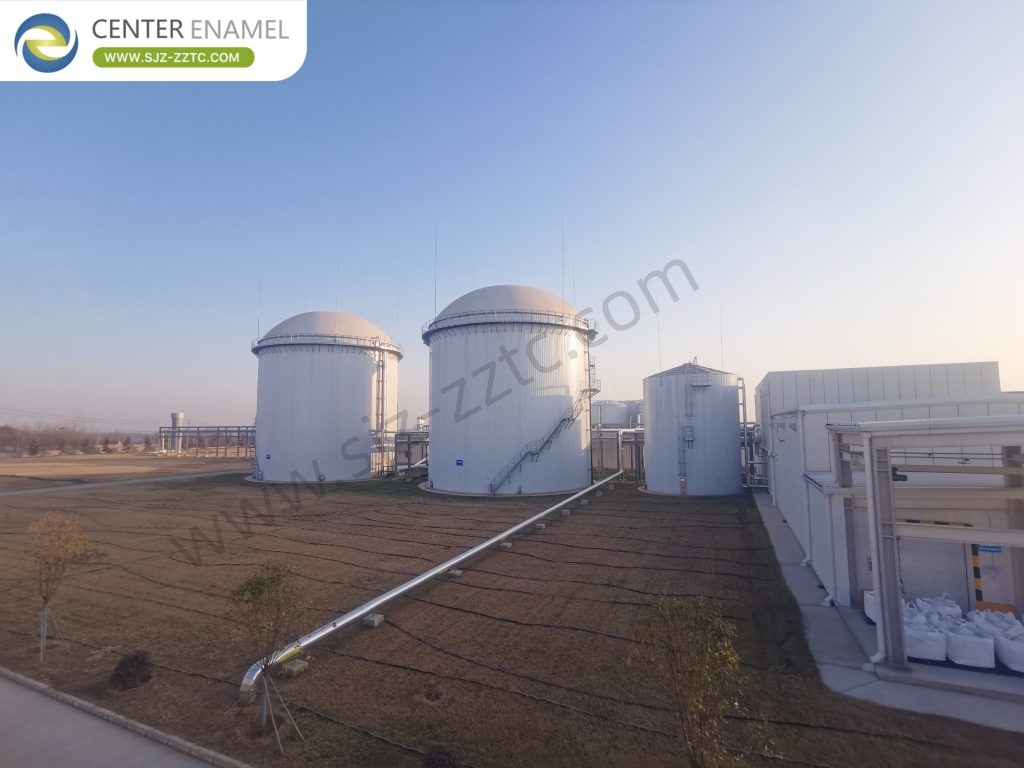
In large-scale biogas engineering, containment selection dictates structural longevity and operational safety. Glass-Fused-to-Steel (GFS) tanks-also known as Glass-Lined-Steel tanks-have become the global industry benchmark for anaerobic digesters and buffer tanks.
The structural and operational advantages of GFS tanks include:
Superior Corrosion Resistance: Fusing molten glass to high-strength steel at extreme temperatures (820∘C−930∘C) creates an inert, chemical-resistant barrier completely immune to volatile organic acids and corrosive hydrogen sulfide (H2S) gases generated during high-output digestion.
Zero-Leakage Gas Tightness: GFS tanks provide exceptional airtight integrity, ensuring optimal anaerobic conditions and preventing the escape of potent methane gas.
Rapid Modular Construction: Bolted panel assembly cuts down construction time drastically compared to traditional cast-in-place concrete, allowing large agricultural and municipal projects to be commissioned faster.
Extended Service Life: GFS tanks offer a design life exceeding 30 years with minimal maintenance requirements, delivering an optimal Total Cost of Ownership (TCO).
Center Enamel: Professional Wastewater and Biogas Project Solution Provider
Center Enamel is a globally recognized leader and premier manufacturer specializing in bolted tanks and comprehensive environmental engineering solutions. Backed by decades of manufacturing expertise, Center Enamel provides advanced Glass-Fused-to-Steel (GFS) tanks, Epoxy Coated Tanks, and specialized Double Membrane Roofs tailored for complex industrial wastewater and agricultural biogas applications.
Serving clients across municipal and agricultural sectors worldwide, Center Enamel integrates cutting-edge material science with robust structural design. Their turnkey solutions empower biogas plants, livestock farms, and waste-to-energy facilities to achieve strict environmental compliance, maximize renewable energy recovery, and drive long-term sustainability.
Frequently Asked Questions (FAQ)
Q1: Why do animal manure and food waste produce more effective biogas results when combined?
A: Animal manure provides a stable, buffered environment rich in trace elements and active microbial populations, but it often has a low carbon-to-nitrogen ratio. Food waste is rich in lipids and sugars, providing high energy density but risking system acidification if digested alone. Combining them (co-digestion) balances nutrient levels, stabilizes pH, and substantially increases overall methane yields.
Q2: How do Glass-Fused-to-Steel (GFS) tanks protect against biogas corrosion?
A: GFS tanks are manufactured by fusing specialized glass enamel onto structural steel plates at temperatures between 820∘C and 930∘C. This creates a permanent molecular bond combining the strength of steel with the absolute chemical inertness of glass, safeguarding the tank interior against volatile acids and H2S gas corrosion.
Q3: What makes Center Enamel an ideal engineering partner for biogas projects?
A: Center Enamel combines world-class manufacturing capabilities for modular containment systems (such as GFS tanks and bolted steel structures) with deep technical expertise in anaerobic digestion applications. Their customizable, high-durability solutions ensure rapid deployment, absolute gas-tight integrity, and long-term asset security for global energy projects.