
What Products Use Captured Biogas CO2?
Captured biogas CO₂ is used in beverage carbonation, dry ice production, greenhouse crop enrichment, methanol and synthetic-fuel feedstock, water-treatment pH control, and algae or fungal cultivation. Because it is biogenic and low-carbon, it is increasingly preferred by brands trying to cut the footprint of their CO₂-intensive products.
Beverage Carbonation
The single largest use of food-grade CO₂ is carbonating soft drinks, sparkling water, and beer. Biogenic CO₂ that meets ISBT PASC or FCC specs is a drop-in substitute for fossil CO₂ here, letting beverage makers claim a renewable, lower-carbon fizz. This is the highest-value outlet and the one that justifies a polishing train.
Dry Ice and Cold Chain
Liquefied and frozen CO₂ becomes dry ice, used for cold-chain shipping, food freezing, and blast cooling. Biogenic dry ice serves the same physical role as fossil-derived dry ice but carries a lower embedded emissions label—relevant as logistics firms report Scope 3.
Greenhouse Enrichment
Plants grow faster with higher CO₂; commercial greenhouses inject CO₂ to lift yields. Using on-site biogas CO₂ (even at lower grade) for enrichment is a neat closed loop—the gas that would be vented feeds crops next door. This is often the most economical use for plants without food-grade certification.
Comparative Data Table: CO₂ Product Outlets
| Product / use | CO₂ grade | Value driver |
| Beverage carbonation | food / ISBT | highest value |
| Dry ice | food / industrial | cold chain |
| Greenhouse enrichment | industrial ok | on-site loop |
| Methanol / e-fuels | industrial | Power-to-X |
| Water treatment | industrial | pH / dosing |
| Algae / fungi | industrial | growth boost |
Advanced Outlets: Methanol and Power-to-X
At larger scale, biogenic CO₂ can be hydrogenated into methanol or fed into synthetic-fuel and chemical pathways (Power-to-X). These routes turn a waste gas into a storable, transportable carbon carrier—still emerging commercially but strategically attractive where cheap renewable hydrogen exists.
Advantages and Limitations
The upside is a second revenue line from a gas that would otherwise be vented, plus a strong sustainability story for buyers. The limits are that high-value uses need food-grade purity and certification, while lower-grade uses (greenhouse, water treatment) cap the price you can charge.
Best Practices / How to Match Use to Plant
Map your CO₂ volume and achievable grade to the best outlet: food/dry-ice if certified and near buyers; greenhouse or water treatment if not; Power-to-X only with a hydrogen strategy. Capture the stream from day one so you can upgrade the outlet later as markets develop.
Captured biogas CO₂ feeds beverages, dry ice, greenhouses, methanol and e-fuels, water treatment, and cultivation—a versatile, low-carbon product. Match the outlet to your purity and proximity, and the gas that upgrading once wasted becomes a genuine asset.
Frequently Asked Questions (FAQ)
Q1: What products use captured biogas CO2?
A: Beverage carbonation, dry ice, greenhouse enrichment, methanol/synthetic fuels, water-treatment dosing, and algae or fungal cultivation—all draw on renewable biogenic CO₂.
Q2: Is it used in drinks?
A: Yes—carbonated soft drinks, sparkling water, and beer are the largest food-grade CO₂ use; biogenic CO₂ meeting ISBT/FCC is a drop-in, lower-carbon substitute.
Q3: Can it make dry ice?
A: Yes. Liquefied biogenic CO₂ is frozen into dry ice for cold-chain and food freezing, carrying a lower embedded-emissions label than fossil dry ice.
Q4: What else uses renewable CO2?
A: Greenhouses (yield boost), methanol and Power-to-X e-fuels, water-treatment pH control, and algae/fungi growth all use industrial-grade biogenic CO₂.
Q5: Which outlet pays most?
A: Beverage carbonation (food/ISBT grade) commands the highest value; greenhouse and water-treatment uses are lower-grade but often the easiest on-site loop.
Q6: Do I need food grade for all uses?
A: No. Greenhouse enrichment, water treatment, and algae growth accept industrial-grade CO₂; only beverages, dry ice, and food contact need food grade.
Project Case Reference
Zhenyuan Group Biogas Project in Henan — Xinzheng, Henan, China · 2013
650 T/D · CSTR Process · 3M m³ Vehicle-grade CH₄/Year
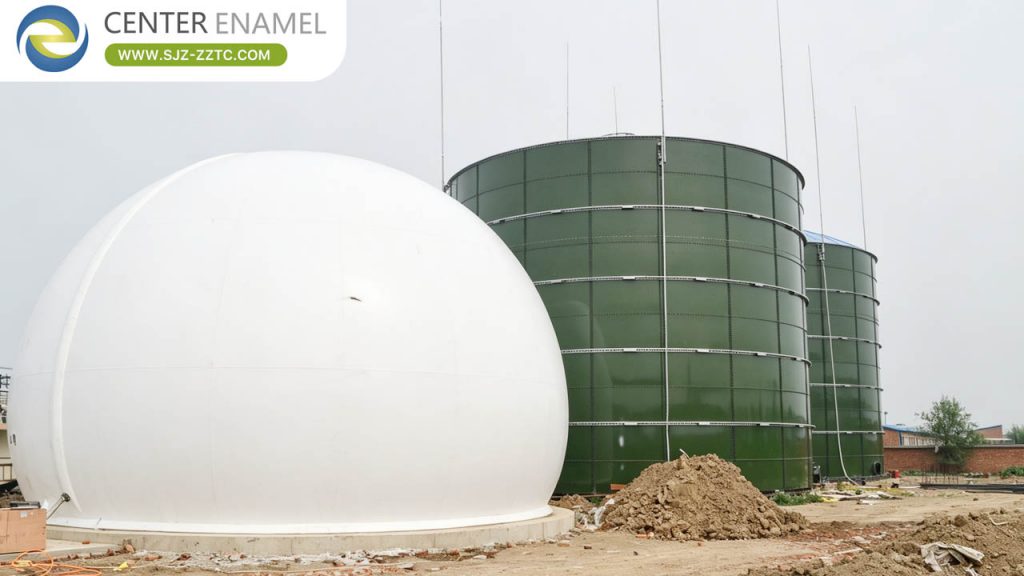
A vehicle-grade methane production project for Zhenyuan Group in Henan Province. Using medium-temperature anaerobic fermentation with CSTR technology, the plant treats 650 T/D of farm animal manure and washing wastewater, producing 3 million cubic meters of methane annually for vehicle fuel. The system includes 3 primary and 1 secondary anaerobic reactors for two-stage digestion.
Technical Specifications
Handling Capacity: 650 T/D (manure + washing wastewater)
Treatment Type: Medium Temp. Anaerobic Fermentation
Reactor Type: CSTR (Continuous Stirred-Tank Reactor)
Primary Reactors: 3 sets, Φ15.29 × 15 m
Secondary Reactor: 1 set, Φ5.22 × 6 m
Annual Methane Production: 3,000,000 m³ (vehicle-grade)