
What Should a Feedstock Supply Contract Include in Biogas Project?
A biogas feedstock supply contract should include nine core clauses: defined volume and delivery schedule, substrate quality and contamination limits, a transparent price formula, term and termination rules, sampling and dispute resolution, force majeure, penalties for non-compliance, environmental and hygiene warranties, and a right of audit. These turn a handshake into an enforceable supply you can size a digester around.
The Nine Clauses, Explained
Volume and schedule set the plant’s baseline: minimum and maximum monthly tonnes, agreed moisture and total-solids bands, and a delivery window so the receiving pit is never overwhelmed. Quality specs cap inerts, plastics, sand, and antibiotics—manure should typically arrive below agreed limits of foreign material and with a consistent total solids of 8–15%. The price formula should index to a transparent base (e.g., per tonne at standard moisture) with adjustments, not a fixed number that ignores season. Term (3–10 years) and termination rules protect the capex behind the digester, while penalties and a right of audit keep suppliers honest.
Comparative Data Table: Contract Clauses and Why They Matter
| Clause | What it sets | Why it matters |
| Volume & schedule | min/max tonnes, delivery window | sizes digester and avoids pit overflow |
| Quality & contamination | TS 8–15%, inert/plastic caps | protects biology and equipment |
| Price formula | indexed base + adjustments | survives season and inflation |
| Term & termination | 3–10 yr, exit rules | protects capex |
| Sampling & disputes | who samples, how resolved | prevents silent quality drift |
| Force majeure | weather / crop failure | shares unavoidable risk |
| Penalties | shortfall / contamination | enforces compliance |
| Hygiene warranty | pathogen / antibiotic limits | protects digestate end-use |
| Right of audit | supplier records access | verifies claims |
Drafting Tips That Prevent Disputes
Specify the sampling point and method in writing—samples taken at the farm and at the plant weigh differently once water is added in transit. Tie payment to delivered, accepted tonnes rather than promised tonnes, and define a clear cure period before penalties apply. Finally, name the governing law and a dispute forum up front; a contract that cannot be enforced locally is just a letter of intent.
Frequently Asked Questions (FAQ)
Q1: What should a feedstock supply contract include?
A: Nine clauses—volume and schedule, quality and contamination limits, a transparent price formula, term and termination, sampling and dispute rules, force majeure, penalties, hygiene warranties, and a right of audit.
Q2: What quality specs belong in it?
A: Total solids of roughly 8–15% for manure, caps on inerts, plastics, sand, and antibiotics, and a consistent substrate mix. These protect digester biology and downstream equipment.
Q3: How is price set?
A: Use an indexed formula—a base rate per tonne at standard moisture with seasonal and inflation adjustments—rather than a fixed price that ignores reality over a multi-year term.
Q4: What penalties protect the plant?
A: Shortfall penalties for missed minimum tonnes and contamination charges when inert or toxic loads arrive, plus a cure period and a clear dispute forum so the clauses are actually enforceable.
Project Case Reference
Zhaqi Biogas Project in Inner Mongolia — Xing'an, Inner Mongolia, China · 2017
900 m³/D Capacity · 4 CSTR Reactors · 20,000 m³ Biogas/Day
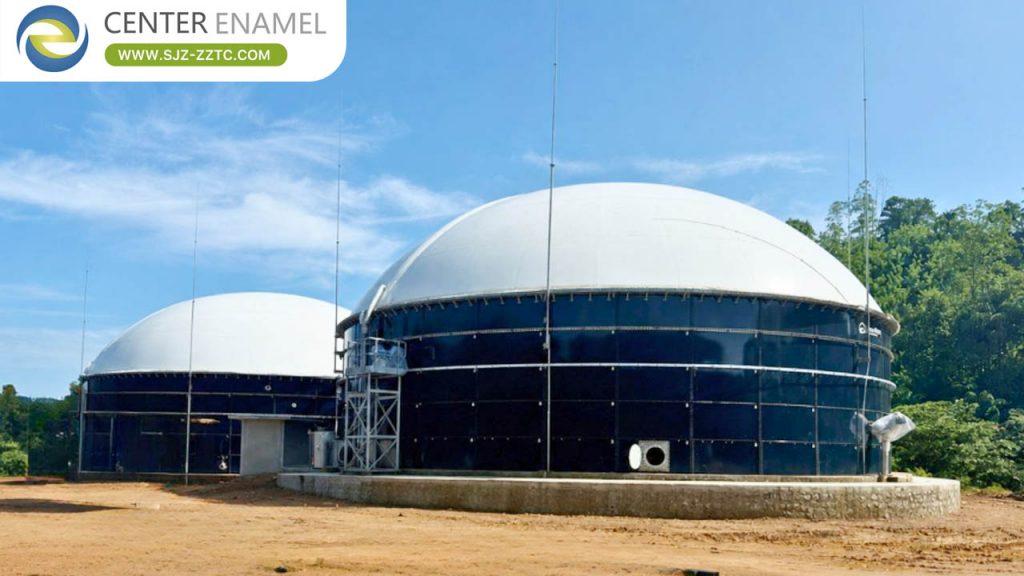
A medium-temperature anaerobic fermentation biogas project in Zhaqi, Inner Mongolia. The plant processes 900 m³/day of farm animal manure and agricultural waste including grass straw, producing 20,000 m³ of biogas daily. The project features 4 sets of CSTR (Continuous Stirred-Tank Reactor) anaerobic reactors specifically designed for cold climate operation.
Technical Specifications
Handling Capacity: 900 m³/D (manure + agricultural waste)
Treatment Type: Medium Temperature Anaerobic Fermentation
Reactor Type: CSTR (Continuous Stirred-Tank Reactor)
Reactor Size: 4 sets of Φ25.98 × 8.4 m
Daily Biogas Output: 20,000 m³/day
Feedstock: Animal manure + grass straw